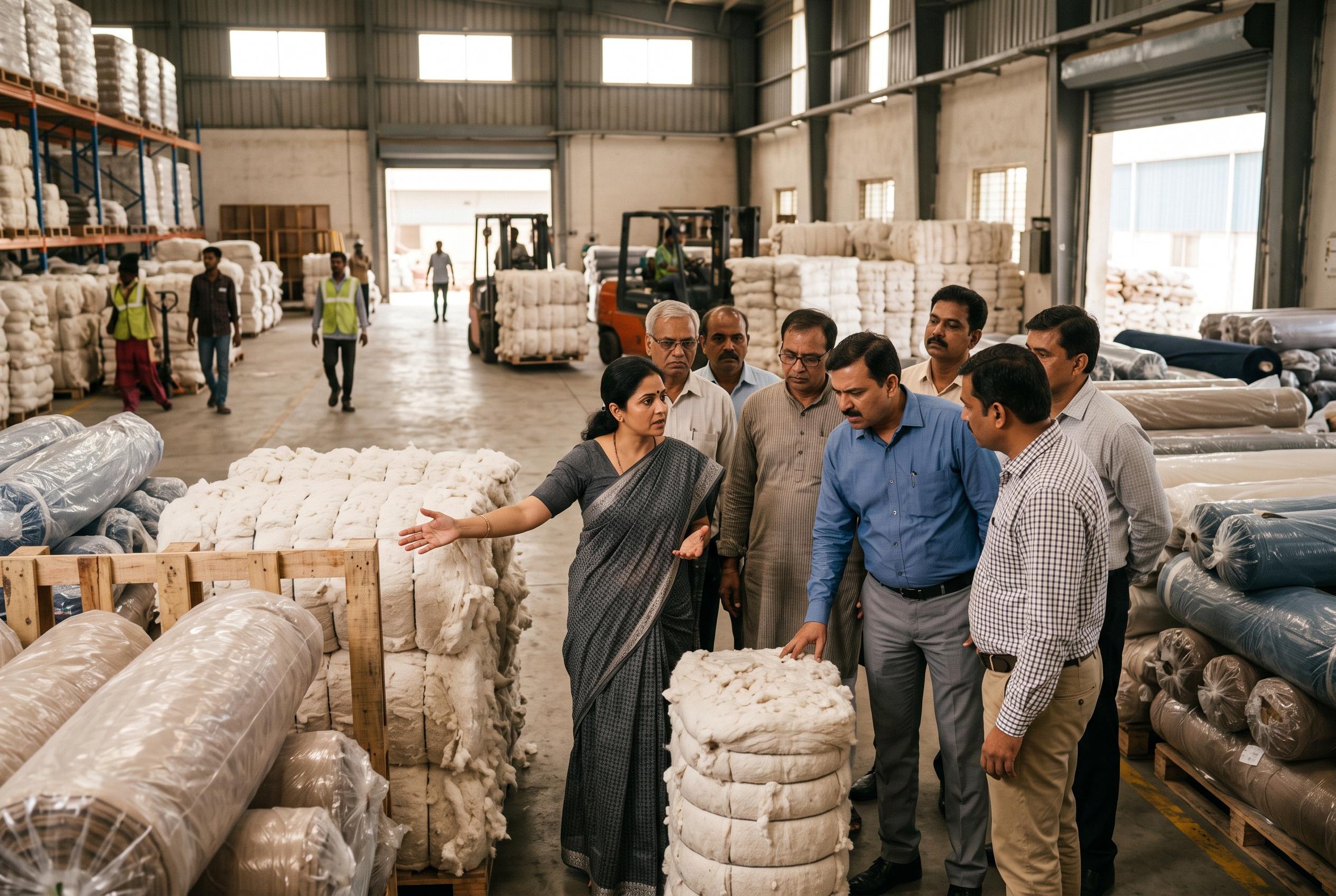

Indian apparel exporters have called on government authorities to regulate cotton yarn exports amid a 60% surge in prices, driven by supply shortages and US restrictions linked to China’s Xinjiang region, threatening sector’s export viability.
Indian apparel exporters have asked the Commerce and Industry Ministry and the Textile Ministry to intervene in the cotton yarn market, warning that a sharp rise in prices is squeezing manufacturers and weakening the sector’s export competitiveness. According to the appeal, the pressure has intensified as US restrictions on cotton linked to China’s Xinjiang region have pushed more buyers towards Indian supply, tightening availability at home.
The Apparel Export Promotion Council said cotton yarn prices have risen by about 60%, from roughly Rs 250 a kilogram in early 2026 to about Rs 400 now. It wants the government to curb exports of cotton yarn, especially 20s count and above, so that domestic garment makers can still obtain the material at affordable rates.
The council has also pointed to tighter supplies from ginners, weaker arrivals and greater dependence on auctions run by the Cotton Corporation of India. It says much of the crop has already left farmers’ hands and is now in the possession of traders, creating room for hoarding and speculative buying. ApparelResources and other trade reports say the council has taken the issue directly to Union Commerce and Industry Minister Piyush Goyal, arguing that the surge in yarn costs is undermining the industry’s ability to compete.
The timing matters because demand is being reshaped by forced-labour rules in the US, particularly the Uyghur Forced Labour Prevention Act, which has made manufacturers more cautious about cotton traceability. AEPC secretary general Mithileshwar Thakur told The Indian Express that this has encouraged sourcing from India, even as domestic yarn supplies remain tight. The pressure is being felt against the backdrop of India’s low cotton productivity: although the country produces 23.8 million bales a year, it does so across 11.2 million hectares, far more land than rivals such as China, Brazil and the US, according to figures from the US Department of Agriculture.
The wider policy context is also important. The Directorate General of Foreign Trade inserted a new provision into the Foreign Trade Policy on July 13 prohibiting imports of goods produced wholly or partly with forced labour. Separately, a White House report earlier this month alleged that more than 40 countries, including India, are part of a shadow transhipment network that obscures the real origin of China-made goods. For Indian exporters, the immediate concern remains more basic: whether cotton yarn can be kept available at prices that do not erode margins further.
Disclaimer: This article is intended to inform and educate, not to recommend or endorse any financial product, investment or strategy. Please consider your own financial circumstances and seek professional advice where appropriate before making financial decisions.