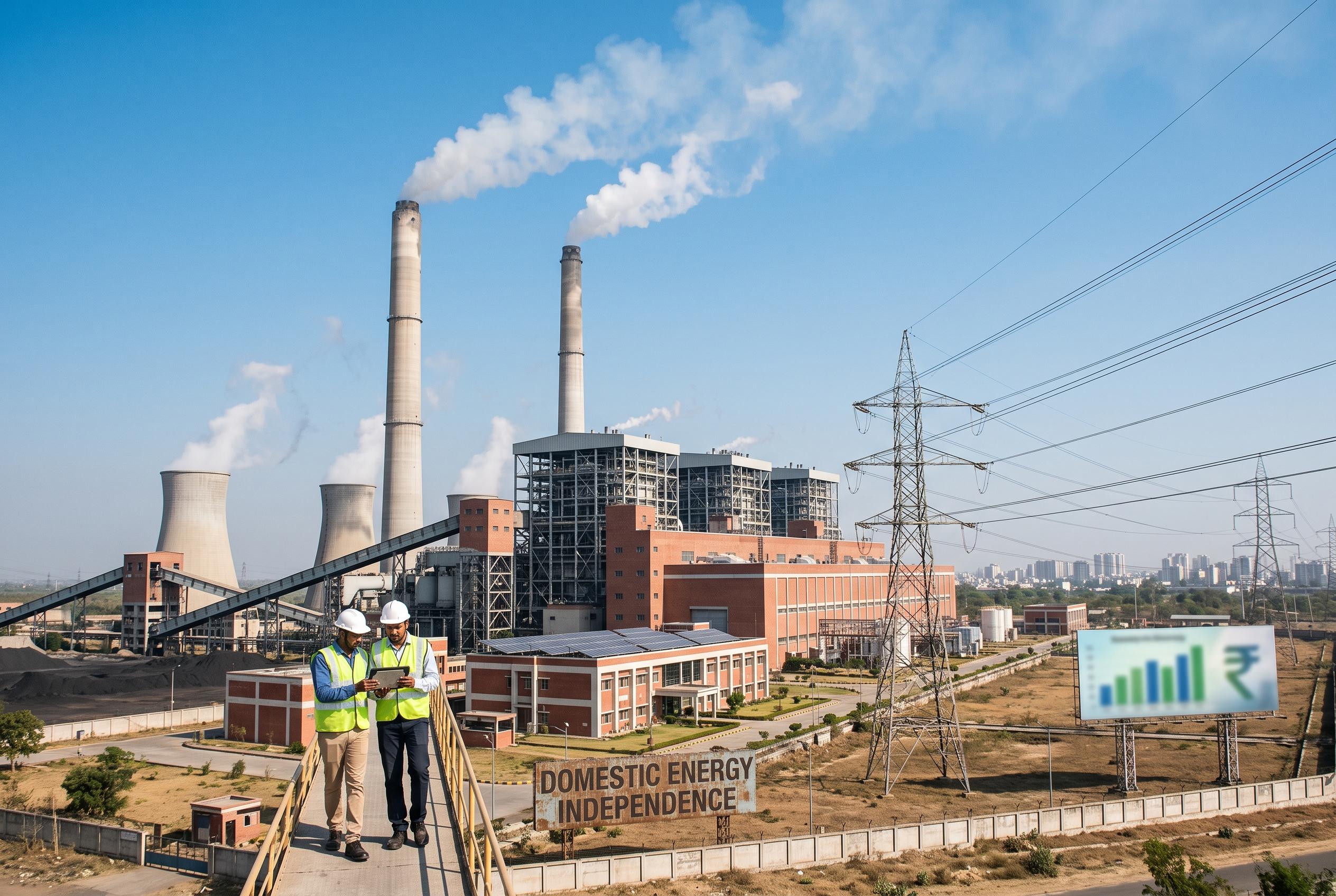

India’s coal-fired power stations have significantly cut their use of imported coal for blending, reflecting a strategic shift towards increased domestic production and reduced foreign dependence amid government initiatives to bolster self-sufficiency.
India’s coal-fired power stations have sharply cut their use of imported coal for blending, as the government steps up efforts to lift domestic output and ease reliance on overseas supplies. Minister of State for Coal and Mines Satish Chandra Dubey told the Rajya Sabha that blending imports fell 71.5% from 23.9 million tonnes in 2023-24 to 6.8 million tonnes in 2025-26.
The decline has continued into the current financial year. Between April and June 2026-27, coal imports for blending stood at 1.7 million tonnes, according to figures presented in the Upper House. Dubey said imports still serve specific needs, including coking coal for the steel industry and high-grade thermal coal where domestic availability remains constrained.
According to the ministry, imports are also used by imported coal-based power stations built to run on foreign coal and by domestic coal-based plants when blending is technically or operationally necessary. The government allows such purchases under the Open General Licence policy, which gives power producers flexibility to source coal according to plant requirements.
The trend fits a wider fall in India’s coal imports over the past year. The Press Information Bureau said coal imports dropped 7.9% in fiscal 2024-25 to 243.62 million tonnes, saving about $7.93 billion in foreign exchange, while blending imports by thermal power plants fell 41.4%. S&P Global reported that thermal coal imports by power plants fell further to 45.38 million metric tonnes in fiscal 2025-26, the lowest level in four years, after stronger domestic supply and improved logistics reduced the need for imported fuel.
Officials have linked the shift to policies aimed at building self-sufficiency. The government has cited initiatives such as Commercial Coal Mining, the Mission Coking Coal programme, the Coking Coal Mission and the CoalSETU window for coal washery linkages as part of that push. Dubey said these measures are intended to expand domestic availability, particularly for the steel sector, and keep import dependence in check.
Disclaimer: This article is intended to inform and educate, not to recommend or endorse any financial product, investment or strategy. Please consider your own financial circumstances and seek professional advice where appropriate before making financial decisions.