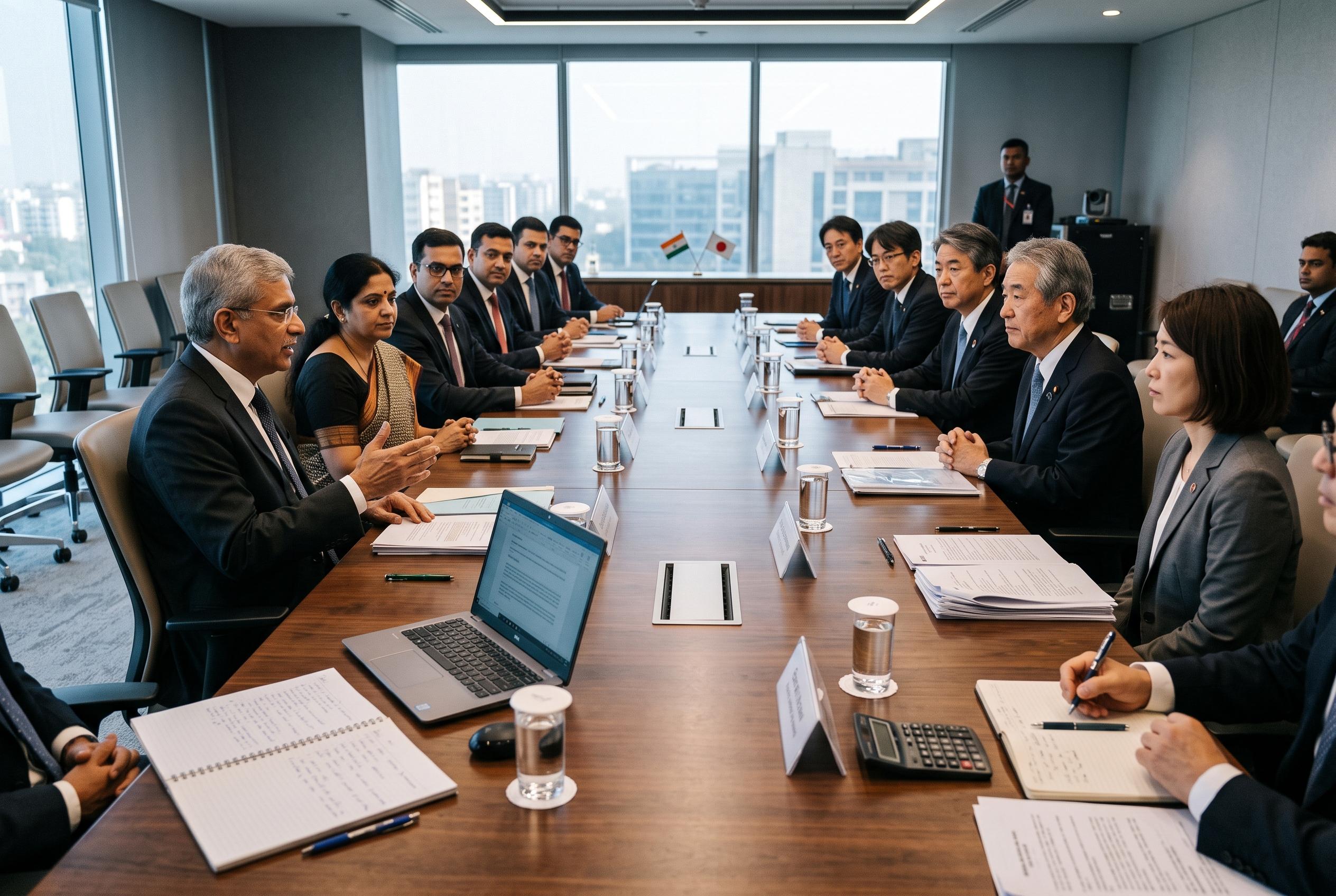

A high-level meeting in New Delhi signals a transformation in India-Japan relations, highlighting collaboration on economic security, technology, and regional stability amid rising geopolitical tensions in the Indo-Pacific.
The meeting in New Delhi between Narendra Modi and Sanae Takaichi underlined how quickly India-Japan ties are changing. What was once a relationship defined mainly by trade, aid and investment is increasingly shaped by economic security, technology and the shared need to protect stability in the Indo-Pacific.
That shift is visible in the numbers. During the visit, Japan announced investment plans worth about $12 billion in India, while expectations were set for the number of Japanese companies operating there to rise sharply over the next decade. The message, according to the summit’s framing, was that the relationship is no longer one of giver and recipient, but of two large powers trying to use each other’s strengths to offset their own weaknesses.
Official Indian material on the partnership shows that this broader agenda has already been building for some time. New Delhi says the two countries held their first dialogue on economic security, strategic trade and technology in November 2024, reflecting concerns about supply chains, technology controls and the foreign-policy risks created by deeper economic interdependence. Japan’s foreign ministry likewise said earlier talks between S. Jaishankar and Yoko Kamikawa were meant to advance cooperation on a free and open Indo-Pacific and to deepen bilateral ties.
The wider strategic backdrop also matters. Reporting by The Guardian last year showed Japan and the United States stepping up military coordination in response to what both described as China’s growing threat, including closer command-and-control arrangements and expanded missile cooperation. For India, which has long sought to balance economic growth with strategic autonomy, Japan’s evolving role reinforces a larger pattern: the two countries are drawing closer not just because they trade well, but because both now see themselves as equal stakeholders in a more contested region.
Disclaimer: This article is intended to inform and educate, not to recommend or endorse any financial product, investment or strategy. Please consider your own financial circumstances and seek professional advice where appropriate before making financial decisions.