

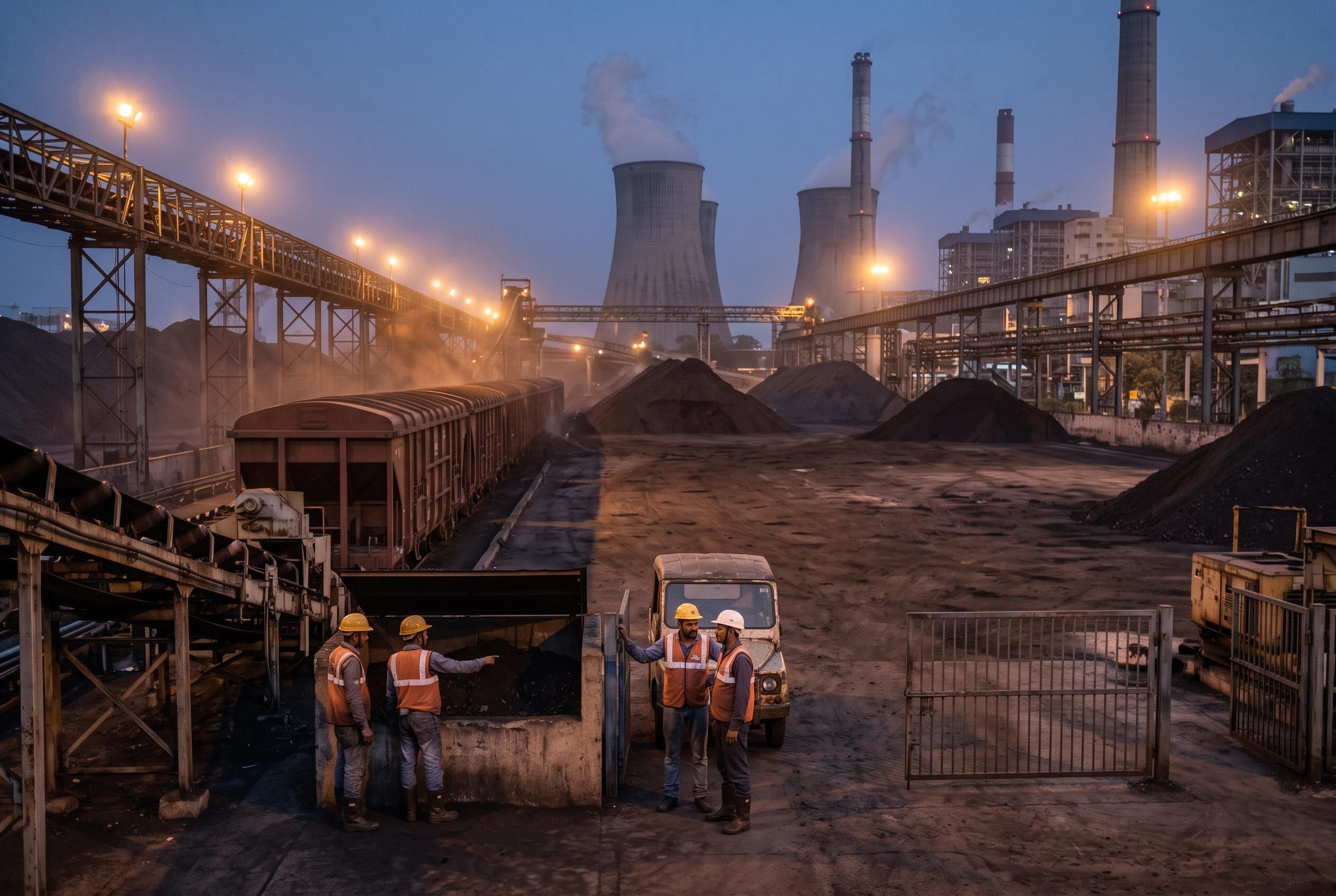

India’s thermal coal stocks have plummeted by 66% since April, sparking urgent concerns over energy security as power plants struggle to rebuild inventories amidst rising demand and logistics challenges ahead of next summer.
India’s coal stockpiles at domestic coal-fired power stations have fallen sharply this year, underscoring the strain that a hot, demand-heavy summer and uneven rains have placed on the electricity system. Officials told The Indian Express that inventories dropped by about 66% between the start of April and the end of September, from roughly 54.9 million tonnes to 18.6 million tonnes, marking the steepest decline in three years. Business Standard reported earlier that by August thermal coal stocks had already fallen to a nine-day cover, the weakest level in 34 months, as coal-fired generation climbed to meet stronger power demand.
The immediate concern in New Delhi is no longer this summer, but next year’s. A senior power-system official told The Indian Express that the market is effectively in a “neck-to-neck situation” and that rebuilding stocks before the onset of next summer is the priority. With rainfall easing temperatures in parts of northern and eastern India, officials expect demand to moderate further as the country moves out of the peak summer pattern, giving power plants room to rebuild their inventories before March.
The pressure has not been uniform. Business Standard reported in late September that nearly half of India’s thermal power plants were operating with coal stocks below 25% of required levels, a threshold considered critical by the Central Electricity Authority. Another report by the same publication said 77 of 190 thermal plants faced critical inventories by September 26, with combined stocks enough for only about seven days of consumption. EnergyMap has noted that national averages can disguise severe shortages at plants dependent on long rail journeys, where deliveries are more vulnerable to congestion and delays.
Officials told The Indian Express that better rail availability and stronger coal production should help stabilise the situation. Coal India, which supplies the bulk of fuel to the power sector, reported a 9.18% rise in September output from a year earlier and said supplies to the power sector increased 10.63% to 48.90 million tonnes. Even so, logistics remain central to the problem, because much of India’s coal-based generation is located far from the mines and depends on timely railway rakes to keep boilers fed.
The government has already moved to maximise generation from existing assets. According to The Indian Express, the power ministry has directed around 112 captive coal-based plants to run at full capacity from October 1 to December 31, while officials are also discussing whether thermal stations should blend imported coal with domestic supplies. At the same time, the system is leaning more heavily on battery energy storage, with several renewable developers said to be planning as much as 10GW of new capacity by March to help cover the evening hours after solar output fades.
Disclaimer: This article is intended to inform and educate, not to recommend or endorse any financial product, investment or strategy. Please consider your own financial circumstances and seek professional advice where appropriate before making financial decisions.



