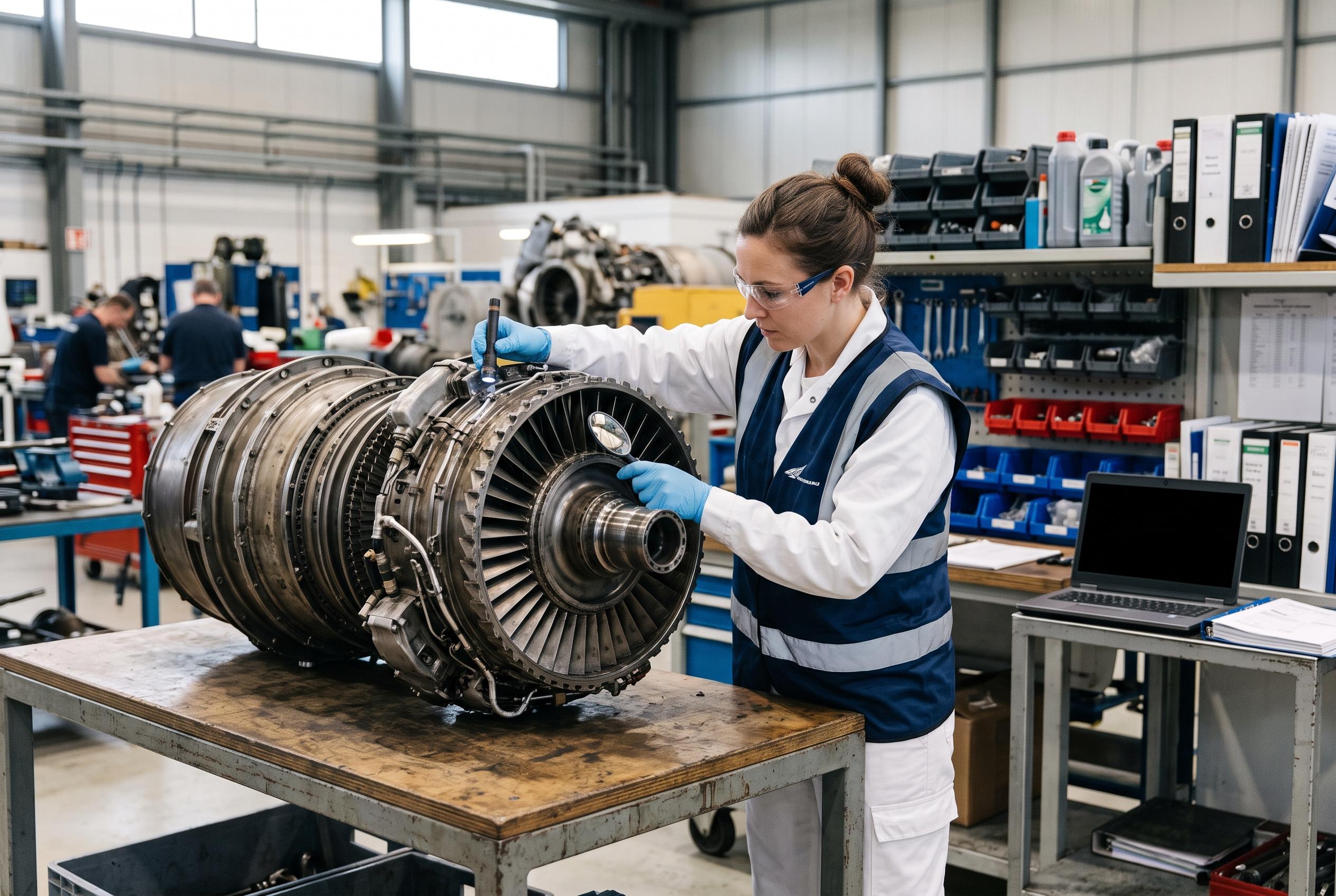

Major engine manufacturers are investing heavily in India’s new MRO facilities to address growing maintenance bottlenecks driven by the surge in single-aisle aircraft fleet expansion, positioning the country as a vital player in the global aerospace industry.
When Willie Walsh took over as chief executive of IndiGo in early August, he stepped into a business that sits at the sharp end of a global engine maintenance squeeze. Leeham News reported that the former IATA chief had already warned manufacturers that maintenance, repair and overhaul bottlenecks were disrupting airline operations, and that the problem would worsen as the latest generation of single-aisle aircraft expands across the market.
The pressure is being driven by the rapid ramp-up in Airbus A320neo and Boeing 737 Max flying, which is pushing engine shops beyond their old operating model. According to Leeham News, annual narrowbody engine shop visits are expected to surge sharply by 2040, while turnround times have stretched to around 230 days for CFM Leap overhauls and more than 300 days for Pratt & Whitney geared turbofan work.
That is helping explain why major engine makers are pouring money into India. Safran opened its largest engine MRO facility at the GMR Aerospace & Industrial Park in Hyderabad in November 2025, covering 43,700 square metres on a 23.5-acre site. Aviation Week said the plant is designed to handle up to 300 Leap engine shop visits a year, while other industry reports said Safran has invested as much as $200 million in the project.
The Hyderabad build-out also reflects a broader effort to pull maintenance capacity closer to fast-growing airline fleets. GMR and industry groups have said the site supports India’s “Make in India” and “Atmanirbhar Bharat” push for local manufacturing and self-reliance, while AI Engineering Services Ltd. remains the country’s largest domestic MRO provider with a wide airport footprint and a claimed technical dispatch reliability of more than 99%. Taken together, the developments suggest India is moving from a dependency on overseas engine work towards becoming one of the industry’s key maintenance hubs.
Disclaimer: This article is intended to inform and educate, not to recommend or endorse any financial product, investment or strategy. Please consider your own financial circumstances and seek professional advice where appropriate before making financial decisions.