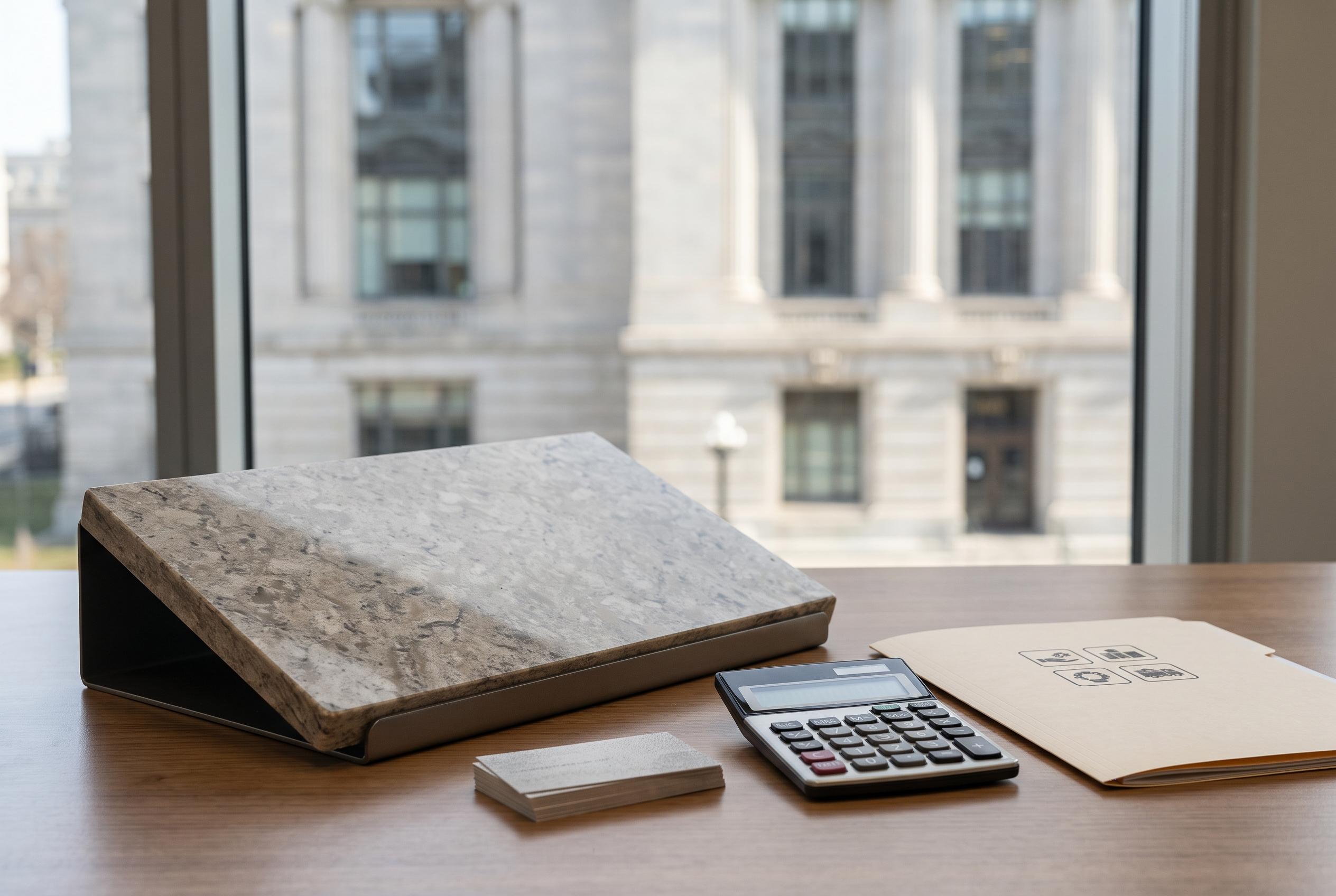

India has officially initiated a WTO dispute to contest US safeguard tariffs on quartz surface products, risking further trade tensions amid its heavy reliance on American exports.
India has taken the first formal step towards challenging Washington’s new safeguard duties on quartz surface products at the World Trade Organisation, after the Trump administration moved to impose tariffs of 25% to 55% on the material from August 15. The action matters because the United States is India’s biggest market for these exports, and the higher duties threaten a business that has become heavily dependent on American demand.
Quartz surface products are engineered stone slabs made from crushed quartz or silica blended with resins and pigments, then pressed and polished for use in kitchen worktops, bathroom vanities, flooring and wall cladding. According to trade data cited by the Global Trade Research Initiative, the US took 72.5% of India’s quartz surface-product exports in financial year 2026, equal to $233.3 million of shipments. Most Indian production is concentrated in Gujarat, Rajasthan and Telangana, with additional capacity in Andhra Pradesh, Tamil Nadu and Karnataka.
The WTO says the US notified its safeguard investigation on November 17, 2025, after a prior review of antidumping and countervailing duties on quartz surface products from India and Turkey. The US International Trade Commission later found on April 1, 2026, that imports were entering in such increased quantities as to be a substantial cause of serious injury to domestic producers, and on May 5 it recommended remedies. Under the safeguard now in force, imports within the first-year quota face an extra 25% duty, while volumes above the limit are hit with 50%; for covered glass products, the total burden rises to 30% to 55%.
India requested consultations with the US on August 14 under WTO safeguards rules, saying it had a substantial interest in the measure and wanted access to the information used by Washington. If talks fail to resolve the dispute within 60 days, India can seek a WTO panel. The move also comes against the backdrop of wider trade talks between the two countries, including a framework for an interim agreement announced in February, although Washington’s separate tariff actions have added fresh strain to the negotiations.
Disclaimer: This article is intended to inform and educate, not to recommend or endorse any financial product, investment or strategy. Please consider your own financial circumstances and seek professional advice where appropriate before making financial decisions.