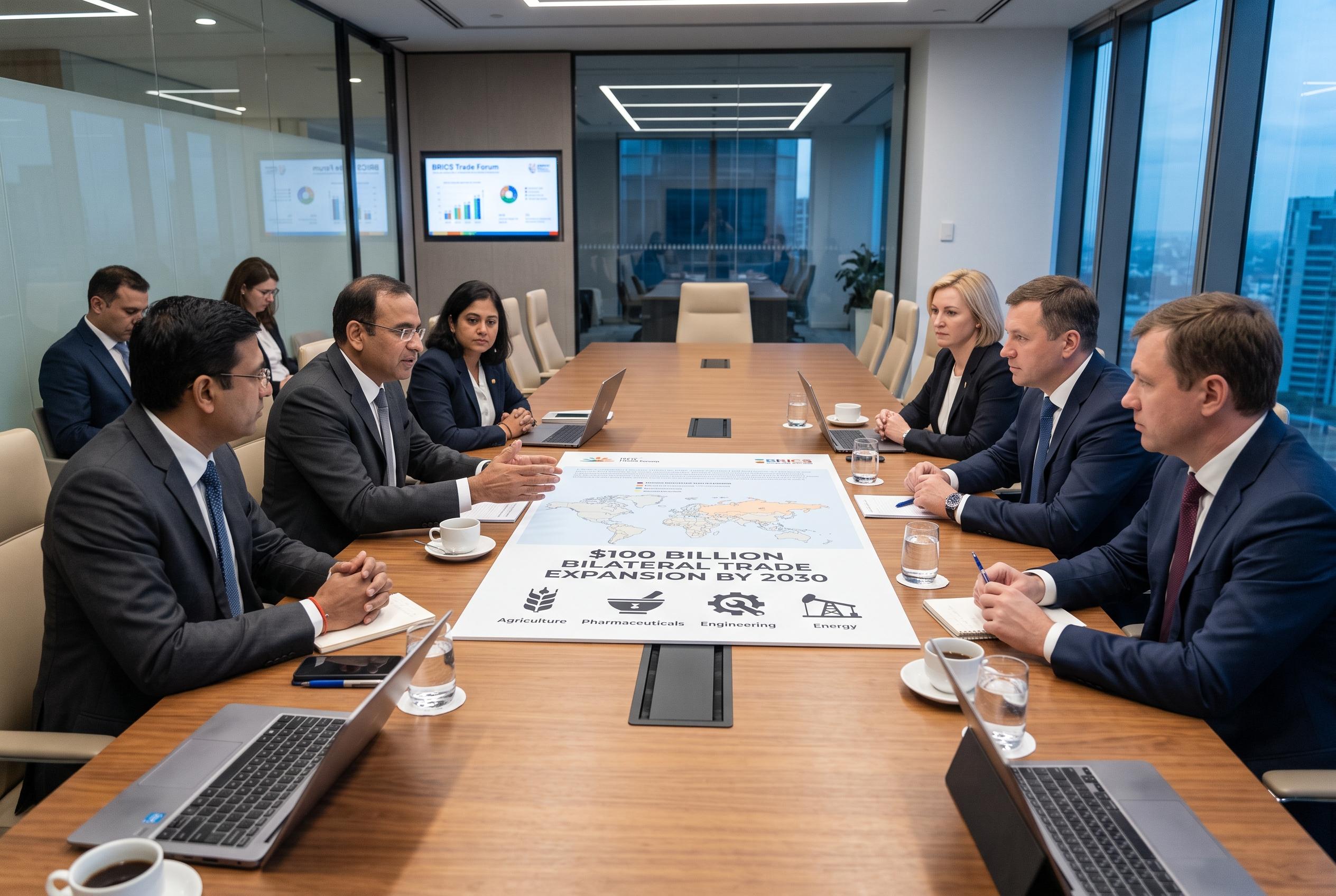

India and Russia are actively working to double their bilateral trade to $100 billion by 2030, expanding beyond energy to include agriculture, pharmaceuticals, and engineering, amid growing labour and civil nuclear ties.
India and Russia are pushing to lift annual bilateral trade to $100 billion by 2030, with both sides looking beyond their long-standing energy ties to broaden commerce into areas such as agriculture, fertilizers and engineering goods. India’s ambassador to Moscow, Vinay Kumar, said the goal was set by Prime Minister Narendra Modi and President Vladimir Putin and that trade was expanding steadily as the two countries searched for fresh areas of cooperation.
Kumar said energy remains the backbone of the relationship, with the Kudankulam Nuclear Power Project in Tamil Nadu still a major symbol of that partnership. According to reports from ANI and The Economic Times, Russia’s state nuclear corporation Rosatom has advanced construction of units 3 and 4 at the plant, while broader civil nuclear cooperation remains under discussion.
The trade push is also being tied to labour and industrial links. Kumar said the number of Indian workers in Russia has risen sharply in recent years, from roughly 10,000 to 15,000 a few years ago to more than 100,000 now. The Economic Times also reported that the two sides are considering a free trade agreement to help accelerate commerce further, while Indian and Russian officials have separately discussed expanding access for marine and pharmaceutical products.
The next meeting of the India-Russia Intergovernmental Commission on Trade, Economic, Scientific, Technological and Cultural Cooperation is due later this year and is expected to review progress and set fresh targets. The renewed momentum comes as India prepares to host the 18th BRICS summit in New Delhi on September 12 and 13 as the grouping’s 2026 chair, adding another diplomatic setting for the two countries to advance their economic agenda.
Disclaimer: This article is intended to inform and educate, not to recommend or endorse any financial product, investment or strategy. Please consider your own financial circumstances and seek professional advice where appropriate before making financial decisions.