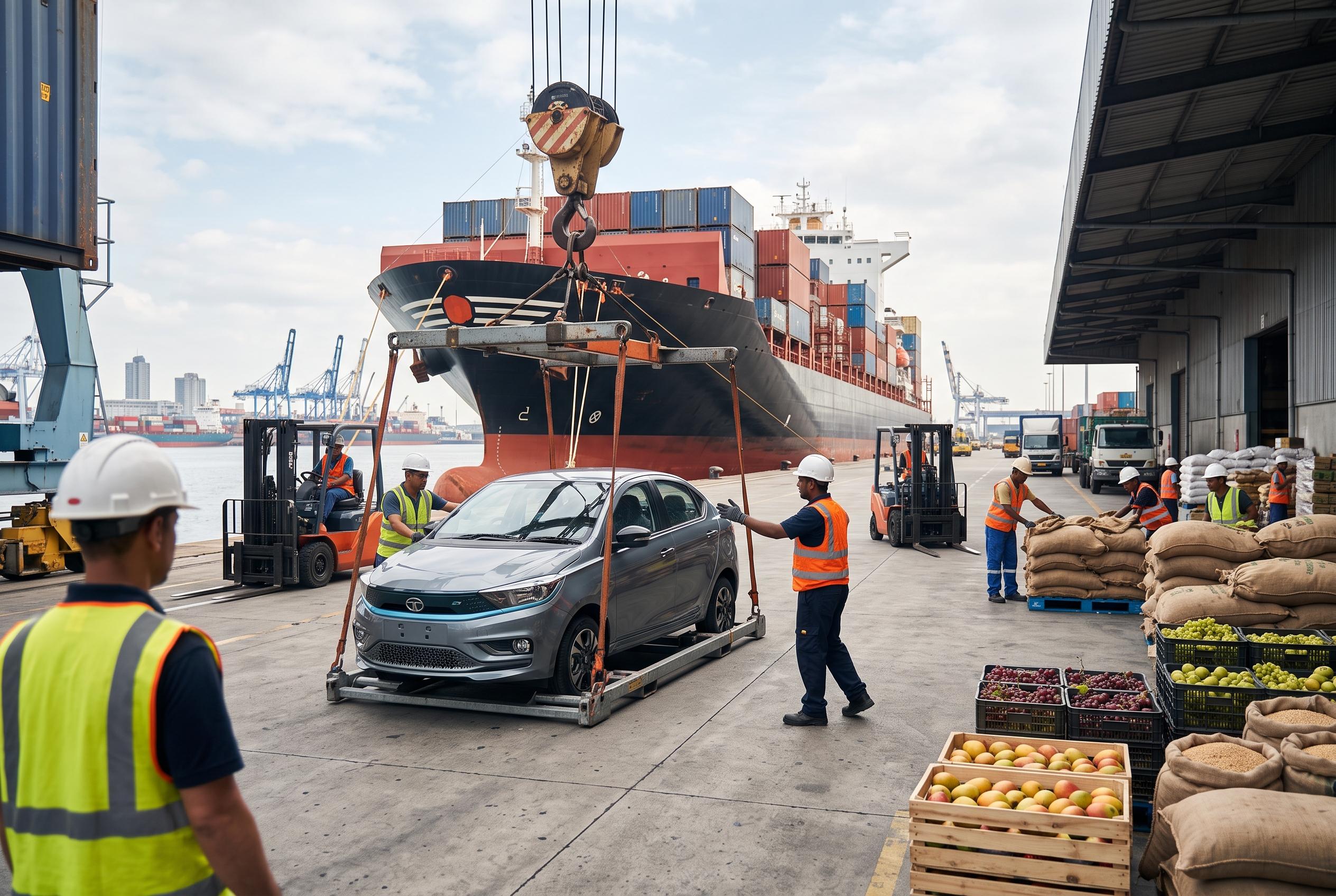

A forthcoming trade agreement between India and the European Union may significantly boost exports of Indian cars, farm goods, and electric vehicles, with phased tariff reductions and quota arrangements designed to foster gradual market access for both sides.
India and the European Union are close to finalising a trade pact that could open a meaningful new export channel for Indian cars and farm goods, according to draft terms reported by several Indian outlets. The agreement, first reached in principle on January 27 this year, is expected to be signed before year-end and could begin taking effect next year, if both sides complete ratification on schedule.
For the auto industry, the draft points to a phased tariff reduction that would give Indian-built passenger cars access to the European market under a quota system. The initial allowance is understood to be 250,000 vehicles a year, with import duty starting at 8 per cent and then falling step by step over five years until it reaches zero. By the tenth year, the annual quota would rise to 400,000 vehicles. Any exports above the quota would face the normal most-favoured-nation tariff.
The relief, however, is narrower than it may first appear. NDTV reported that the duty cuts are aimed at completely built units, or CBUs, rather than completely knocked down kits used for local assembly. That means the draft appears designed to benefit exporters shipping finished cars from India, while leaving the economics of domestic assembly in Europe largely unchanged. The New Indian Express and The Economic Times also said the package gives European carmakers a larger but still capped opening into India’s market, beginning with 100,000 passenger vehicles a year and rising to 160,000 by the tenth year.
Electric vehicles are covered separately, with price bands and quota limits that differ from those for petrol, diesel and hybrid models. According to the draft described by the newspapers, battery-electric and plug-in hybrid vehicles priced up to 40,000 euros would start receiving concessions from the fifth year, while higher-priced EVs would have smaller quotas and would only see duties removed later in the transition. The structure appears intended to give both sides gradual market access while limiting disruption to domestic manufacturers.
The agreement is not limited to the motor sector. The same reporting says Indian agricultural and food products, including grapes, dried onions, cucumbers, ghee and certain rum made from jaggery, would also gain improved access. The draft reportedly includes a yearly quota of 1,000 metric tonnes for ghee, with a 50 per cent reduction from the base customs duty. For exporters, the broader message is clear: if the pact is signed and implemented as outlined, Europe could become a far more important destination for Indian goods across several sectors.
Disclaimer: This article is intended to inform and educate, not to recommend or endorse any financial product, investment or strategy. Please consider your own financial circumstances and seek professional advice where appropriate before making financial decisions.