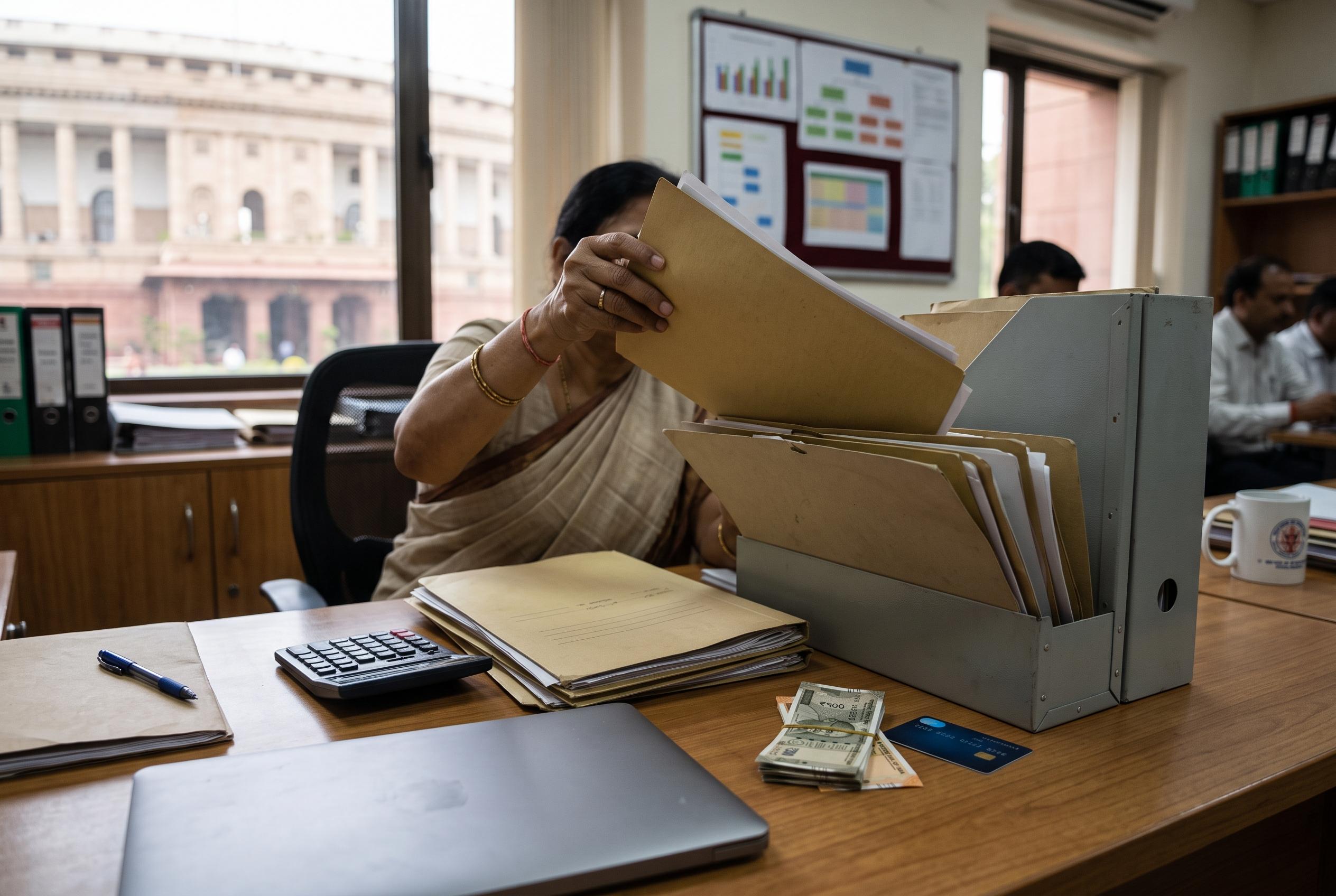

India’s revised policy framework, the National Entrepreneurship Mission, seeks to create 10 lakh new enterprises and up to 36 lakh direct jobs over five years by enhancing support systems and improving coordination across government programmes.
India’s latest attempt to solve its jobs puzzle comes in the form of a blueprint, not a scheme. A policy framework released on 17 August proposes a National Entrepreneurship Mission designed to help create 10 lakh enterprises and 30 lakh to 36 lakh direct jobs over five years by linking together programmes the country already has rather than adding another layer to the system.
The document, Building India’s Next 10 Lakh Entrepreneurs, was written by Shradha Sharma, founder and chief executive of The Bharat Project and YourStory Media. Its central argument is that India has built support at almost every stage of a founder’s journey, but has left the transitions between those stages to chance. A business can receive seed support, for example, without any structured handover to mentoring, market access or follow-on customers.
That gap is especially important because the employment numbers remain stubborn. Industry leaders behind a separate Hundred Million Jobs initiative said earlier this year that India needs to generate about 8 million to 9 million jobs annually to keep pace with a labour force that adds roughly 12 million people a year. Startup India also marked the 10th anniversary of the original Startup India push in 2026 by noting that more than 2 lakh DPIIT-recognised startups now operate in the country, underscoring how far the ecosystem has come and how narrow the base still is beneath the best performers.
The new framework tries to turn that ecosystem into a connected rail rather than a series of separate registries. It proposes an Entrepreneurship Passport tied to the existing BHASKAR identity, district-level Opportunity Maps, a national Idea Bank, compulsory mentoring for publicly funded ventures, and a stronger route to market through public procurement. It also calls for outcomes to be checked against GST and EPFO data, rather than left to self-declaration, so that survival, revenue and job creation can be measured more rigorously.
The paper says the Mission could work without major fresh spending because much of the money is already allocated across different ministries and funds, including the Research, Development and Innovation Fund and Fund of Funds 2.0. Its case is that India does not mainly have a funding problem; it has a coordination problem. That is why it places such emphasis on district-level demand, first-customer access and a published scorecard for ministries and public sector firms.
The idea also lands in a policy climate where entrepreneurship is increasingly being used as a route to inclusion. The Adani Foundation has expanded its Swabhimaan programme with a goal of supporting 10 lakh women entrepreneurs, while Uttar Pradesh’s MYUVA push aims to build 10 lakh self-reliant entrepreneurs over a decade through interest-free, collateral-free loans. Taken together, these efforts point to a broader shift in thinking: the question is no longer whether India should back entrepreneurs, but how to make that support reach scale, survive contact with the market and translate into durable jobs.
Disclaimer: This article is intended to inform and educate, not to recommend or endorse any financial product, investment or strategy. Please consider your own financial circumstances and seek professional advice where appropriate before making financial decisions.