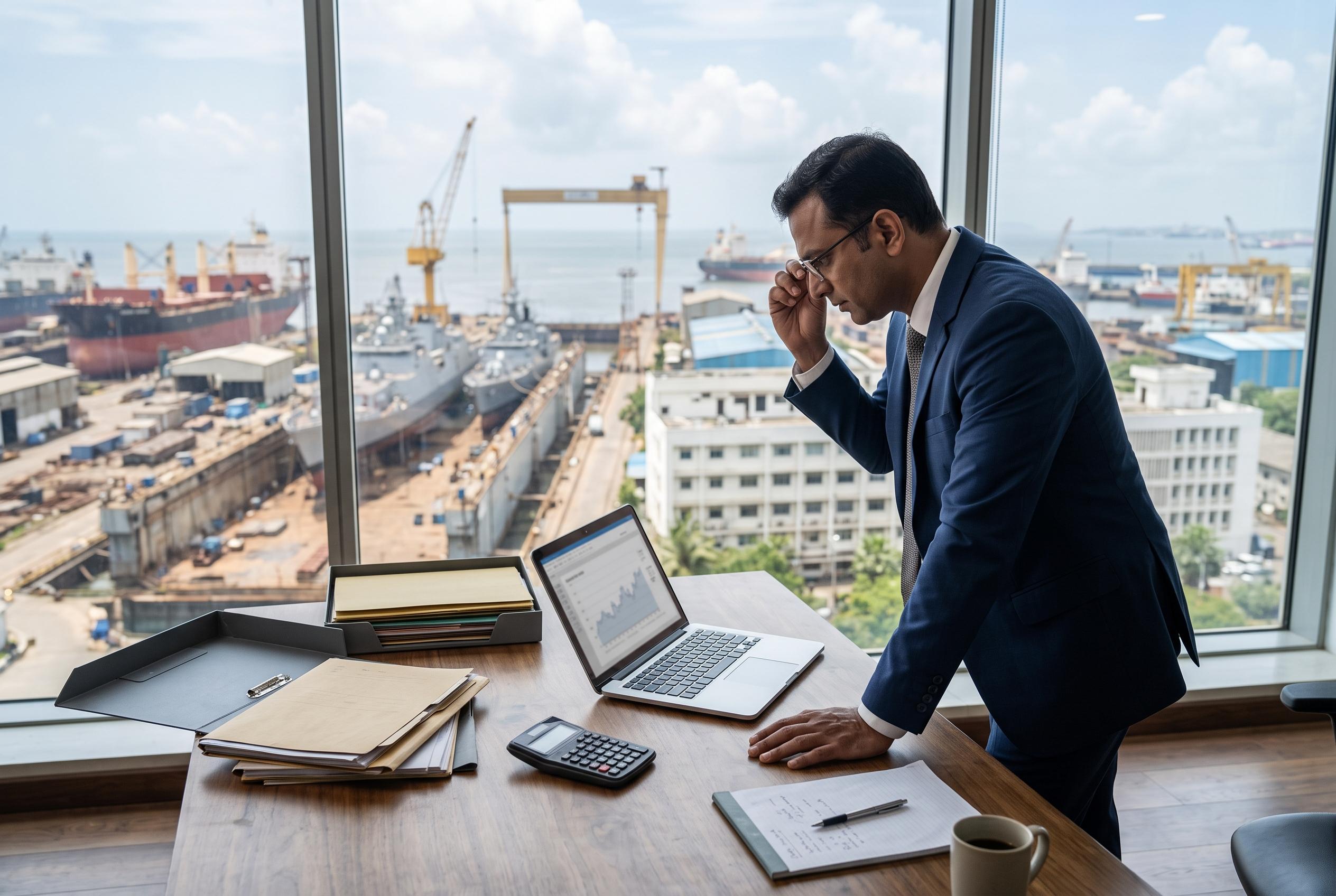

As India strives for developed economy status by 2047, it is ramping up its shipbuilding industry to strengthen maritime capacity, support naval modernisation, and secure a larger share of global trade and strategic influence.
India’s ambition to become a developed economy by 2047 cannot rest on factories and services alone. The country’s trade still moves overwhelmingly by sea, making maritime security and shipping capacity central to its long-term growth plans. The argument now taking shape in policy circles is that the path to a richer India runs through ports, shipyards and the Indian Ocean as much as through finance, technology and domestic consumption.
That is why the scale of India’s shipbuilding gap matters. Industry assessments say the country holds only about 0.06 per cent of global shipbuilding output, while China, South Korea and Japan dominate the market. Maritime analysts also note that India ranks far below the leading shipbuilding nations and remains a minor player in ship repair, even though its coastline and commercial traffic give it obvious advantages. In practical terms, the country still relies heavily on foreign vessels to carry its own trade.
The government has begun to respond with a more aggressive industrial push. A new shipbuilding package worth ₹69,725 crore is intended to replace the earlier policy framework and lift India into the world’s top five shipbuilding nations by 2047. Officials are also backing a broader build-out of shipping capacity, including a plan to add 62 vessels and about 2.85 million gross tonnes in a single financial year. Gujarat has moved early, launching a shipbuilding and repair policy aimed at drawing investment into a greenfield cluster in Porbandar.
This push is not only about commercial freight. A stronger shipbuilding base would also support naval modernisation, because the same yards, engineers and supply chains are needed for both merchant vessels and warships. That is one reason the delayed Indigenous Aircraft Carrier-2 matters beyond defence circles: programmes of that kind help sustain technical skills, industrial capacity and specialised production that commercial yards can later use. In that sense, a larger fleet is both an economic asset and a strategic one.
India also has an often overlooked advantage in people. According to the BIMCO-ICS Seafarer Workforce Report 2026, India has become the world’s second-largest supplier of seafarers, with 311,936 maritime professionals and 12.16 per cent of the global workforce. That gives the country a labour pool many competitors would envy. But analysts say the next step is harder: building a more integrated maritime ecosystem with shipyards, suppliers, research capacity and faster project execution. Without that, India may keep supplying crews to other nations’ ships rather than building and commanding enough of its own.
Disclaimer: This article is intended to inform and educate, not to recommend or endorse any financial product, investment or strategy. Please consider your own financial circumstances and seek professional advice where appropriate before making financial decisions.