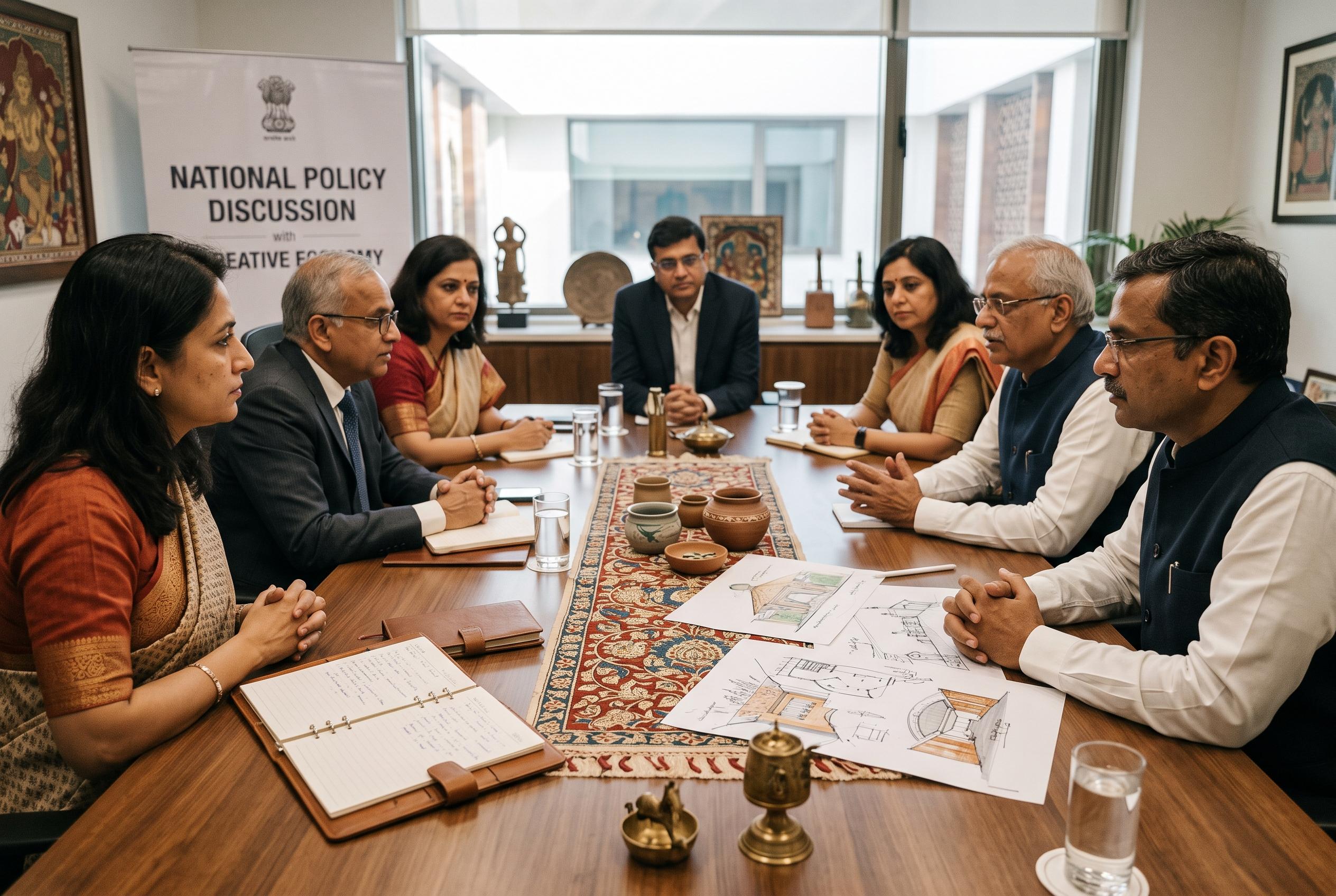

India’s Ministry of Information and Broadcasting advocates for enhanced centre-state coordination to deepen the country’s creative industry, focusing on WAVES 2027, live events, film permissions, and skills development.
India’s Ministry of Information and Broadcasting has pushed for tighter co-ordination between the centre and state governments as it seeks to deepen the country’s creative economy and media ecosystem. At a national conference in New Delhi on August 25, officials discussed a wide-ranging agenda that included WAVES 2027, live events, public service broadcasting, film permissions and skills development.
According to the ministry, secretary Chanchal Kumar said the creative economy can do more than support culture: it can also create jobs, draw investment and strengthen India’s international profile. He argued that states and union territories should build on their own cultural strengths, institutions and local talent rather than follow a single template for development.
The conference also examined practical ways to improve the business environment for creators and media firms. Among the areas flagged for closer co-operation were infrastructure, easier approvals, capacity building, regional content and the wider creative ecosystem. Officials discussed the roadmap for WAVES 2027, efforts to widen access through WAVES Bazaar, and the role of the Create in India Challenges and WaveX in connecting creators and start-ups with markets, investors, technology partners and overseas opportunities.
Live events and film facilitation were also high on the agenda. The ministry said it is looking at closer integration between the Indian Cine Hub and Film Facilitation Office portals, alongside a single-window system for shooting and event permissions. Public broadcasting featured prominently too, with discussion of co-production, state-specific programming and broader outreach through Prasar Bharati units, as well as cable right-of-way rules, digital transition under the Press and Registration of Periodicals Act, and training for state information officers at the Indian Institute of Mass Communication.
Disclaimer: This article is intended to inform and educate, not to recommend or endorse any financial product, investment or strategy. Please consider your own financial circumstances and seek professional advice where appropriate before making financial decisions.