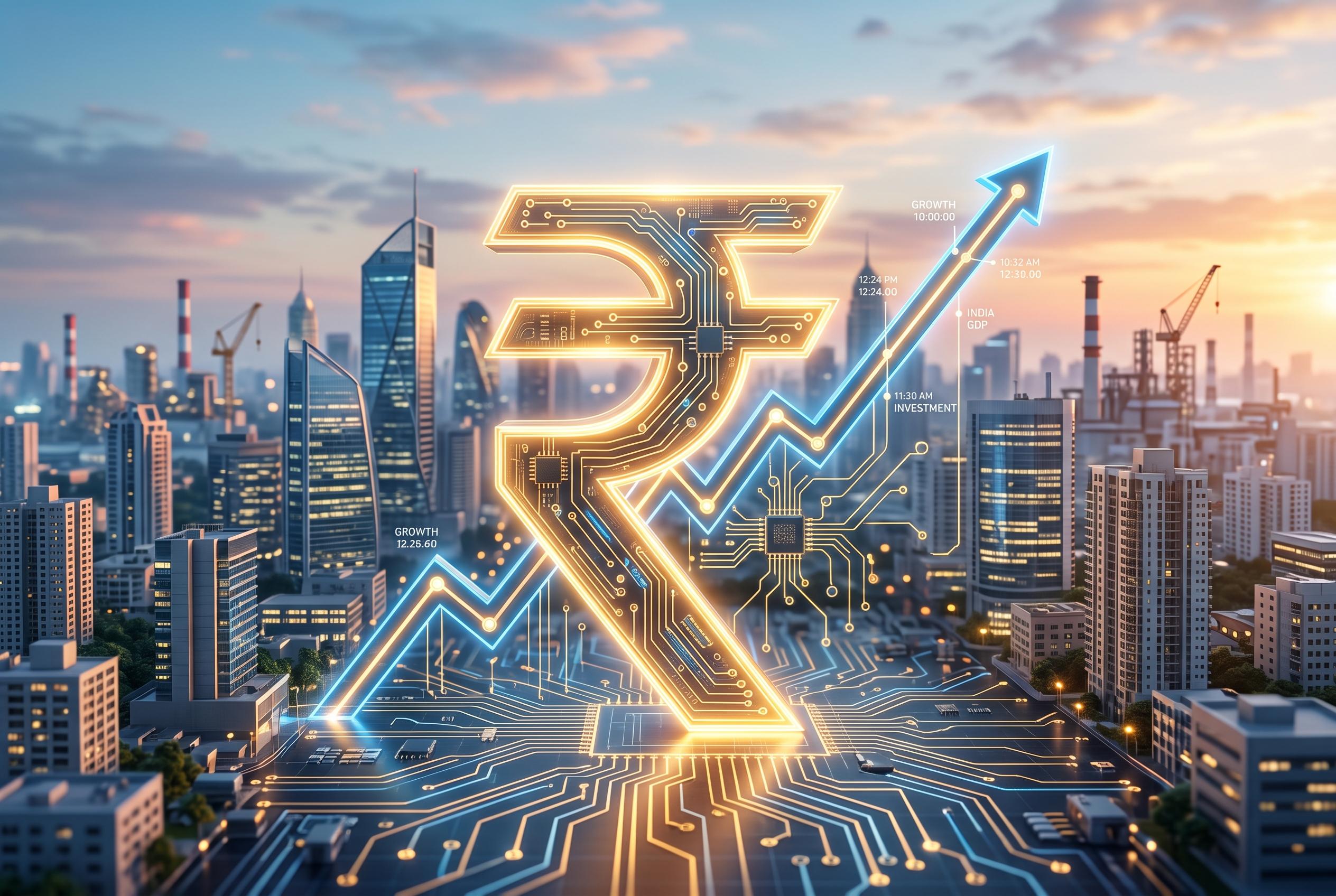

India’s government unveils an ambitious blueprint to transform the nation into a $40 trillion economy by 2047, highlighting a focus on manufacturing, digital infrastructure, and social inclusion.
India’s government is backing an ambitious plan to turn the country into a developed economy by 2047, with officials now talking about a gross domestic product of $30 trillion to $40 trillion, according to material from the NITI Aayog and reporting by Indian government-linked outlets. The target would mark a dramatic expansion from today’s economy and rests on the belief that India can sustain unusually fast growth over the next two decades.
The strategy, called Viksit Bharat 2047, sets out a broad blueprint that ties together economic, industrial, social, technological and environmental goals. According to the plan, India would need annual growth of about 7.8% on average to reach its long-term objectives, while per-capita income would have to rise into the $15,000 to $18,000 range, a level associated with advanced economies. An India Business portal summary of the NITI Aayog’s vision says the country aims for sustained growth of 7% to 10% over the next 20 to 30 years.
Manufacturing is at the centre of the push. Officials want India to become a stronger global production hub by expanding the role of industry in GDP, reinforcing the Make in India campaign, extending production-linked incentives and attracting more foreign investment. The plan also places heavy emphasis on logistics, transport networks and supply chains, alongside efforts to upgrade skills for a young and growing workforce.
A major feature of the strategy is the use of Digital Public Infrastructure, including systems such as Aadhaar and UPI. NITI Aayog’s DPI@2047 roadmap says these platforms should be used to improve public services and widen economic inclusion. The approach also depends on large-scale infrastructure spending, public-private partnerships and stronger investment in roads, railways, ports, airports, energy, digital connectivity and smart cities.
The wider development agenda is framed around four priority groups: young people, the poor, women and farmers. It also includes poverty reduction, better health care, stronger education and research, and a transition to cleaner energy. India has pledged to reach net-zero emissions by 2070, and the plan points to bigger investments in solar and wind power, green hydrogen, electric transport and cleaner technologies. The World Bank has said the country will need higher investment rates, bigger labour-force participation, faster productivity growth and less inequality between states if it is to meet those ambitions.
Disclaimer: This article is intended to inform and educate, not to recommend or endorse any financial product, investment or strategy. Please consider your own financial circumstances and seek professional advice where appropriate before making financial decisions.