

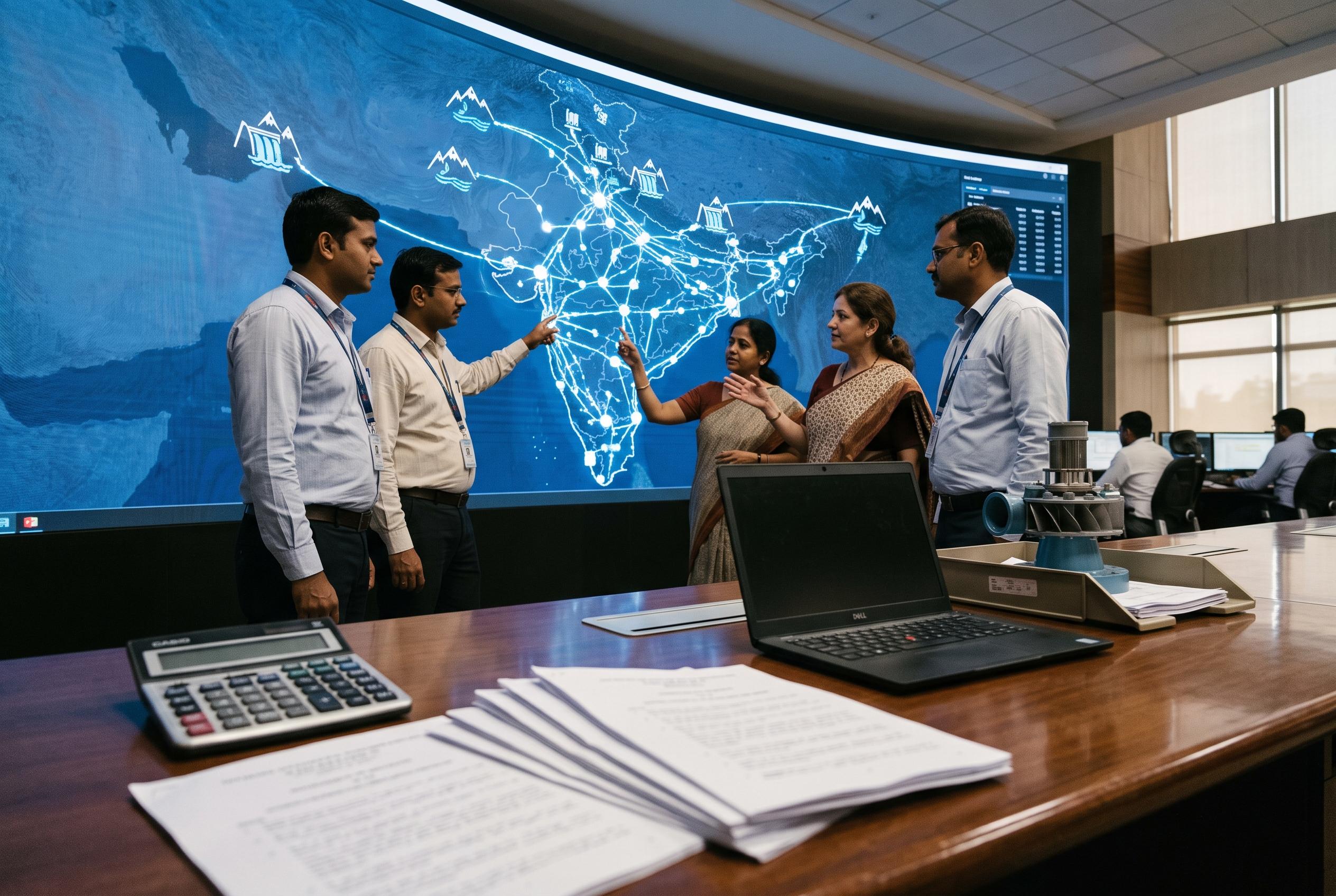

India’s pumped storage sector is shifting from niche to pivotal in grid stability plans, with ambitious targets set against persistent development challenges, as policymakers enhance incentives and frameworks.
India’s pumped storage sector is moving from the margins of the renewable-energy debate towards the centre of grid planning. As solar and wind make up a larger share of generation, policymakers are treating long-duration storage as essential to keeping electricity available when demand peaks and renewable output drops. The growing role of pumped storage projects, or PSPs, reflects that shift: they can absorb surplus power and release it later, helping to steady the grid and reduce renewable curtailment, according to Renewable Watch and recent industry reporting.
The scale of the opportunity is sizeable. Renewable Watch says India has nearly 290 GW of identified pumped-storage potential across more than 260 sites, while the Central Electricity Authority has set out a roadmap aiming for 100 GW of pumped storage by 2035-36. A separate CEA-linked roadmap reported by Powerline in February said the target was designed to support grid stability as variable renewable energy expands. Industry estimates cited by Financial Express put potential at 267 GW, underscoring how large the resource base is, even if assessments differ slightly.
Policy support has sharpened quickly. The Ministry of Power’s April 2023 guidelines created a more formal development framework, with states able to award projects by nomination or auction and developers expected to begin construction within two years of allotment. Renewable Watch says the government has also moved to improve project economics through measures such as waiving free power obligations, avoiding double taxation on stored electricity, setting benchmark storage costs and allowing PSPs to participate more fully in power markets. Certain projects awarded before June 30, 2028, are also eligible for a full waiver of interstate transmission charges.
The state framework is also starting to expand. Madhya Pradesh has issued its own PSP implementation guidelines, with a 10-year policy window and a nodal office to oversee allotments and investment, according to Energetica India. At the national level, the Ministry of Power has been positioning storage, including both PSPs and battery systems, as a key tool for frequency control, voltage support, congestion management and black-start services, according to Energdive’s report on the government’s storage strategy.
Even so, execution remains the hard part. Renewable Watch says only about 7.4 GW of PSP capacity is operating, with roughly 15.9 GW under construction, and the wider pipeline still faces land, forest, wildlife, water and transmission hurdles. Financial Express reported that developers continue to struggle with clearance delays and financing risk, particularly for capital-heavy projects with long payback periods. Research cited by Trustbridge also suggests that private-sector participation has risen sharply, but the share of projects that progress from planning to completion remains low. For India to reach the CEA’s 2035-36 target, the next stage will depend less on announcing projects than on getting them built.
Disclaimer: This article is intended to inform and educate, not to recommend or endorse any financial product, investment or strategy. Please consider your own financial circumstances and seek professional advice where appropriate before making financial decisions.



