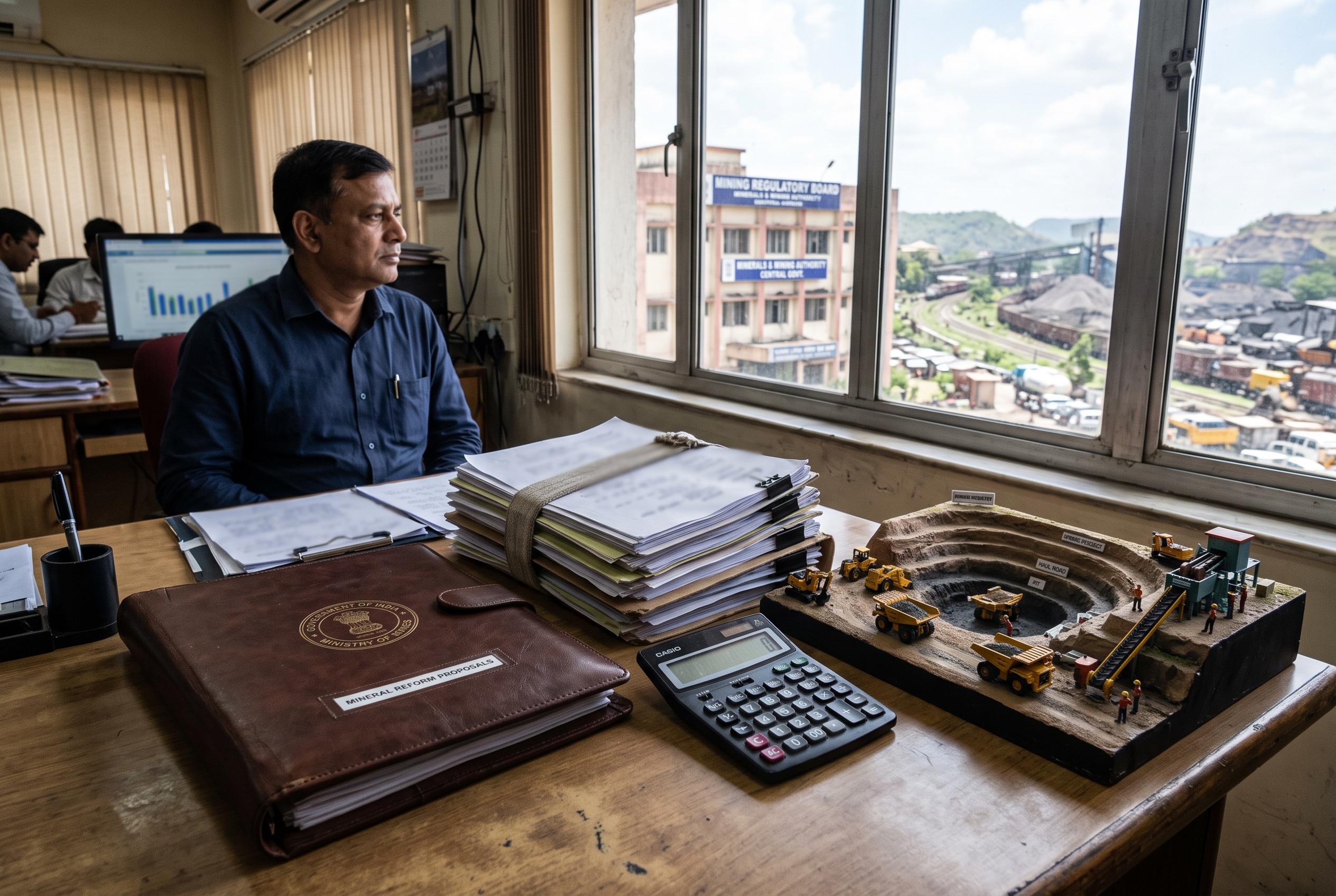

India’s parliament approves a major amendment to its mining laws aimed at boosting domestic mineral production, stabilising policies, and reducing dependence on imports amid broader reforms for energy security and industrial growth.
India’s parliament has passed a sweeping amendment to the country’s mining law that the Ministry of Mines says is designed to give the major minerals sector greater policy certainty and a more stable fiscal backdrop for investment. According to the ministry, the Mines and Minerals (Development and Regulation) Amendment Bill, 2026, was approved by both Houses on August 13 and is meant to support domestic mining at a time when India continues to rely heavily on imported minerals. The government argues that a more predictable regime is essential to strengthening supply chains tied to infrastructure, manufacturing and energy security.
The ministry has sought to reassure state governments that the changes do not strip them of control over land or mineral taxation. It said states will retain their powers over minor minerals, while around 90% of the taxes and statutory payments from mining operations will still flow to state coffers. Between FY16 and FY26, the ministry said, major mining states received more than Rs 5 lakh crore from mining revenues, compared with Rs 82,000 crore for the Centre, and that split is not expected to change under the amended framework.
The government’s case rests partly on the scale of India’s mineral import bill. The ministry said the country imported minerals worth Rs 10.12 lakh crore in FY26, warning that excessive and uneven taxation can make local minerals less competitive and encourage further imports even when domestic resources exist. It noted that states currently levy about 14 different taxes, fees and charges on mining, including royalty, auction premium, dead rent, District Mineral Foundation contributions, GST and transit fees. Since the auction system was introduced in 2015, it said, states have also collected more than Rs 96,000 crore in auction premiums between FY21 and FY26.
The amendment fits into a broader reform push that has been gathering pace across India’s minerals policy. The International Energy Agency has described the change as part of an effort to accelerate production, improve operational flexibility and deepen the country’s minerals market, including wider financing for exploration at home and overseas. Separate rule changes notified by the government this year have also aimed to expand mining lease areas and increase output of critical, strategic and deep-seated minerals, underscoring New Delhi’s effort to secure raw materials for industry and the clean energy transition.
Disclaimer: This article is intended to inform and educate, not to recommend or endorse any financial product, investment or strategy. Please consider your own financial circumstances and seek professional advice where appropriate before making financial decisions.