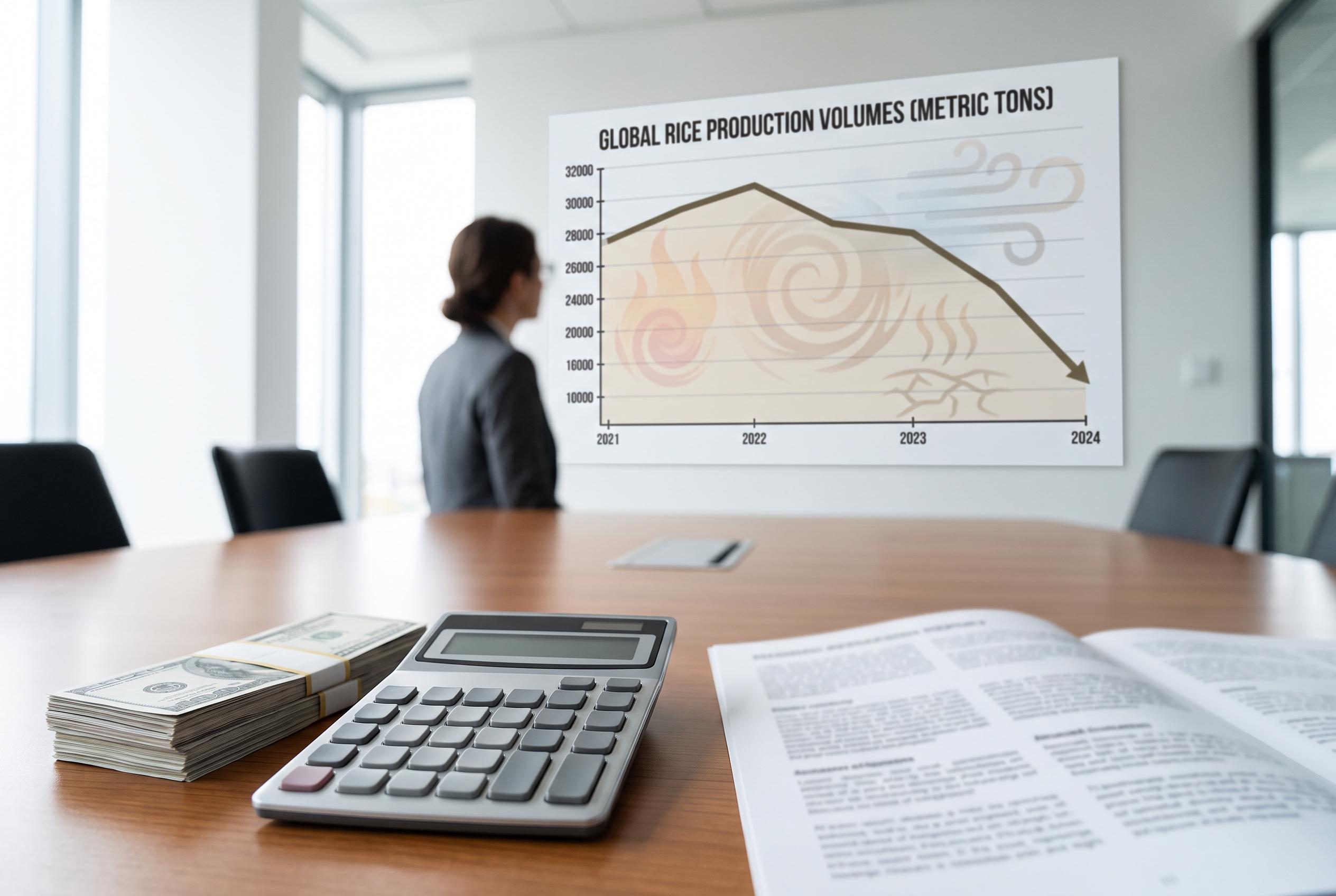

The Indian Rice Exporters Federation and S&P Global Energy highlight the risk of a 9 million tonne fall in rice output by 2026-27 due to prolonged El Niño, signalling potential disruptions and shifting trade flows amid rising production costs.
The Indian Rice Exporters Federation has joined with S&P Global Energy to examine how El Niño could disrupt the world rice market, as traders and growers brace for tighter weather conditions, higher costs and shifting trade flows.
In a statement, the federation said global rice output could fall by 9 million tonnes in the 2026-27 marketing year, which runs from October to September, if the weather pattern persists alongside elevated fertiliser, fuel and transport costs. It added that the US National Oceanic and Atmospheric Administration sees a 97% chance that El Niño will continue into early 2027, a forecast that would leave most major rice-growing areas exposed to volatile rainfall and weaker harvests. S&P Global’s assessment puts global rice production at 536.4 million tonnes, while imports are expected to rise to 59.7 million tonnes as buyers seek to secure supply.
The federation said the impact is likely to reach well beyond a single planting season. With El Niño expected to last until at least April 2027, farmers across Asia could face tougher growing conditions and may alter sowing plans if input costs remain high. S&P Global Energy will present its findings at the Bharat International Rice Conference in New Delhi on October 24, where it plans to map the regions most at risk, identify possible new importers and assess how traditional trade routes may shift over the next 52 weeks.
Recent commentary from S&P Global has already flagged Asian rice markets as vulnerable to renewed weather disruption, with attention focused on monsoon patterns, water availability and demand that remains firm. NOAA’s Climate Prediction Centre said in March that El Niño was likely to emerge in mid-2026 and remain in place through at least the end of the year. More broadly, agriculture analysts note that El Niño often brings drier conditions to parts of India, Australia and south-east Asia, where even small rainfall disruptions can hit yields and push food prices higher.
Disclaimer: This article is intended to inform and educate, not to recommend or endorse any financial product, investment or strategy. Please consider your own financial circumstances and seek professional advice where appropriate before making financial decisions.