

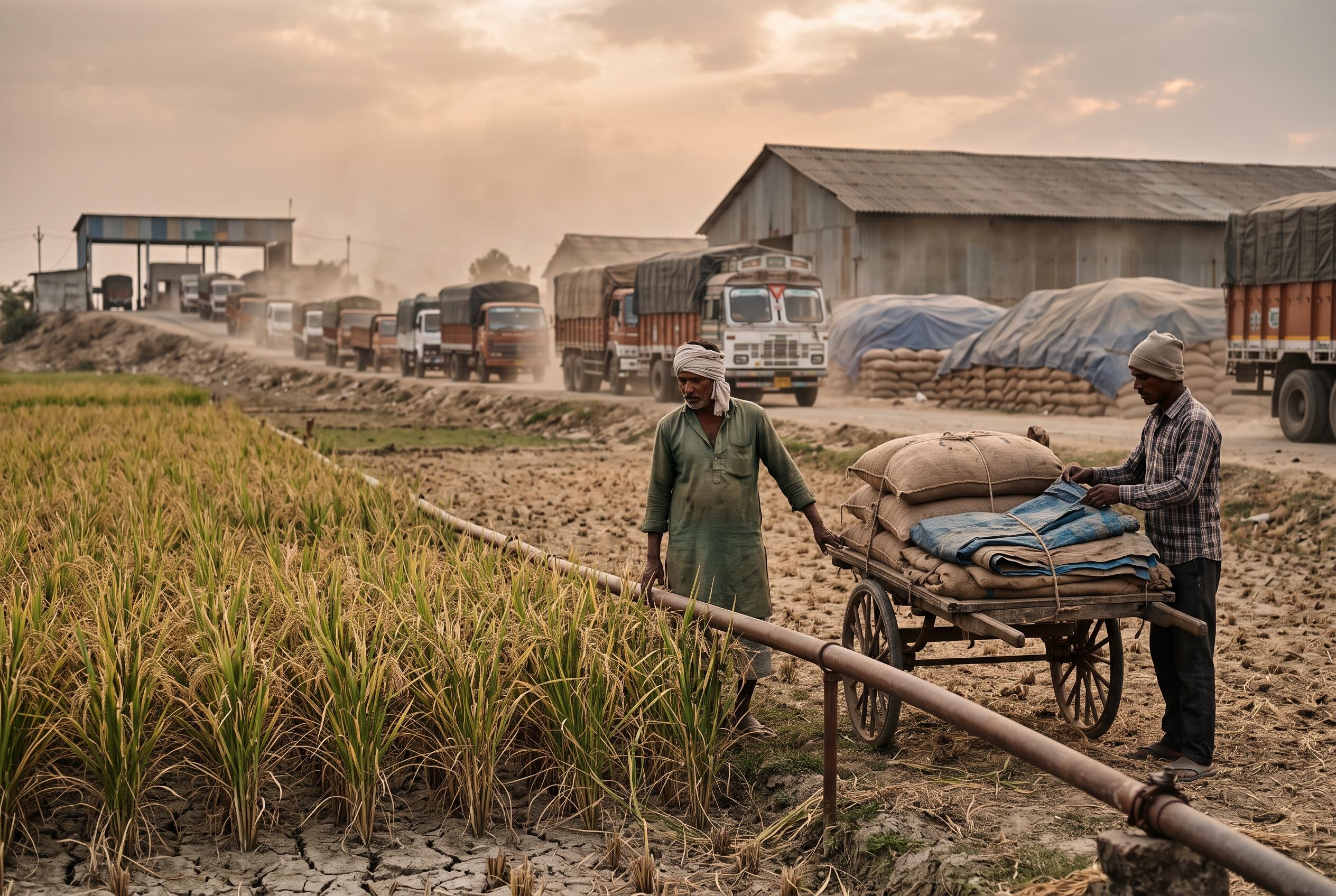

Growing concerns over a potentially strong El Niño from late 2026 threaten crop yields and supply chains across South Asia, prompting traders and policymakers to brace for disrupted food markets and increased import reliance.
South Asia’s animal feed industry is heading into another period of strain as forecasters warn that El Niño could strengthen through the second half of 2026 and persist into 2027, adding weather risk to a sector that has only just begun to recover from earlier fertiliser disruption linked to the war in Iran. Climate and market analysts say the threat is not uniform across the region, but the combination of hotter conditions, erratic rainfall and supply-chain stress could affect harvests of corn and soyabeans, two of the most important raw materials for feed makers. Reuters-style reporting on climate-market links has increasingly stressed that El Niño’s economic impact depends less on the headline forecast than on where rainfall changes collide with crop calendars and local water stress.
The latest warnings point to a potentially strong event. The World Meteorological Department said in May that elevated El Niño conditions were likely from that month onwards and could continue into early 2027. The World Resources Institute said in August that NOAA had already reported the pattern was strengthening, with a very high probability of a strong or even “Super El Niño” during the Northern Hemisphere autumn and winter. The United Nations has also warned that Asia and the Pacific are entering a period of overlapping climate and market risks, with the Indian Ocean Dipole also expected to turn more consistently positive, a combination that could make rainfall patterns even less predictable.
Sri Lanka sits near the centre of that uncertainty. Vimlendra Sharan, the FAO representative for Sri Lanka and the Maldives, said the island is likely to see evolving El Niño conditions in the coming months, with a stronger event probable towards the end of 2026. He said historical patterns suggest the weather system can shift rainfall across the country, including weaker rain during parts of the south-west monsoon and greater seasonal volatility. Buddhi Marambe, a senior professor at the University of Peradeniya, offered a more cautious reading, saying the Indian Ocean Dipole could bring heavy inter-monsoon rain during the peak corn harvest in October and November. He said farmers need to time plantings carefully to reduce the damage, but still advised poultry producers to consider earlier-than-usual corn imports in 2027 because lower fertiliser availability could hit yields and wet weather may raise moisture levels and aflatoxin risk in grain.
Akeel Ahamed, a digital agriculture specialist with FAO Sri Lanka, said the Yala crop season normally covers about 15,000 hectares of corn, but the government expects only 10,000 hectares to be harvested this year because of fertiliser costs. He added that the main Maha season usually involves about 100,000 hectares, much of it rain-fed, and said domestic production could still exceed 400,000 tonnes if fertiliser supplies improve and weather stays favourable. Even so, he said climate conditions will remain decisive. The practical result for feed mills is that Sri Lanka may need to secure imports earlier and from a broader range of suppliers if local harvest quality deteriorates.
India enters the El Niño period with stronger buffers. The Indian Meteorological Department has forecast below-normal rainfall for the June-to-September south-west monsoon, which supplies roughly 70% of annual rainfall and supports more than half of the country’s cultivated land during the kharif season. Yet the United States Department of Agriculture says India’s 2025/26 corn output reached a record 55 million tonnes, up 27% from a year earlier, and that large carryover stocks should cushion the initial impact. The USDA has raised India’s corn consumption estimates to 48 million tonnes in 2025/26 and 50 million tonnes in 2026/27, helped by feed demand and ethanol use, while exports are expected to rise to 2.4 million tonnes this year before falling to 1 million tonnes next year. Local media reports indicate that some farmers are already shifting acreage from corn towards less water-intensive oilseeds such as soyabeans, a sign that weather concerns are beginning to influence planting decisions. Bangladesh, Vietnam, Nepal, Sri Lanka and Bhutan have been major buyers of Indian corn this year, but they may need to look beyond India next year if domestic supply tightens.
Pakistan faces a tougher outlook. The FAO considers it highly exposed to El Niño, and the USDA forecasts production of 9.6 million tonnes in 2026/27 only on the assumption of adequate irrigation and continued expansion in planted area. Domestic use, however, is also expected to rise to 9.3 million tonnes as Pakistan’s poultry sector expands, leaving little room for exports. The USDA sees shipments at 400,000 tonnes in 2025/26 and just 200,000 tonnes in 2026/27. Between July 2025 and February 2026, Pakistan’s biggest corn customers were Sri Lanka, Vietnam, Afghanistan and Malaysia, underscoring how regional feed markets are already linked. If El Niño intensifies as forecast, South Asian buyers may have to compete harder for grain, diversify suppliers and carry larger inventories to manage the next weather shock.
Disclaimer: This article is intended to inform and educate, not to recommend or endorse any financial product, investment or strategy. Please consider your own financial circumstances and seek professional advice where appropriate before making financial decisions.



