

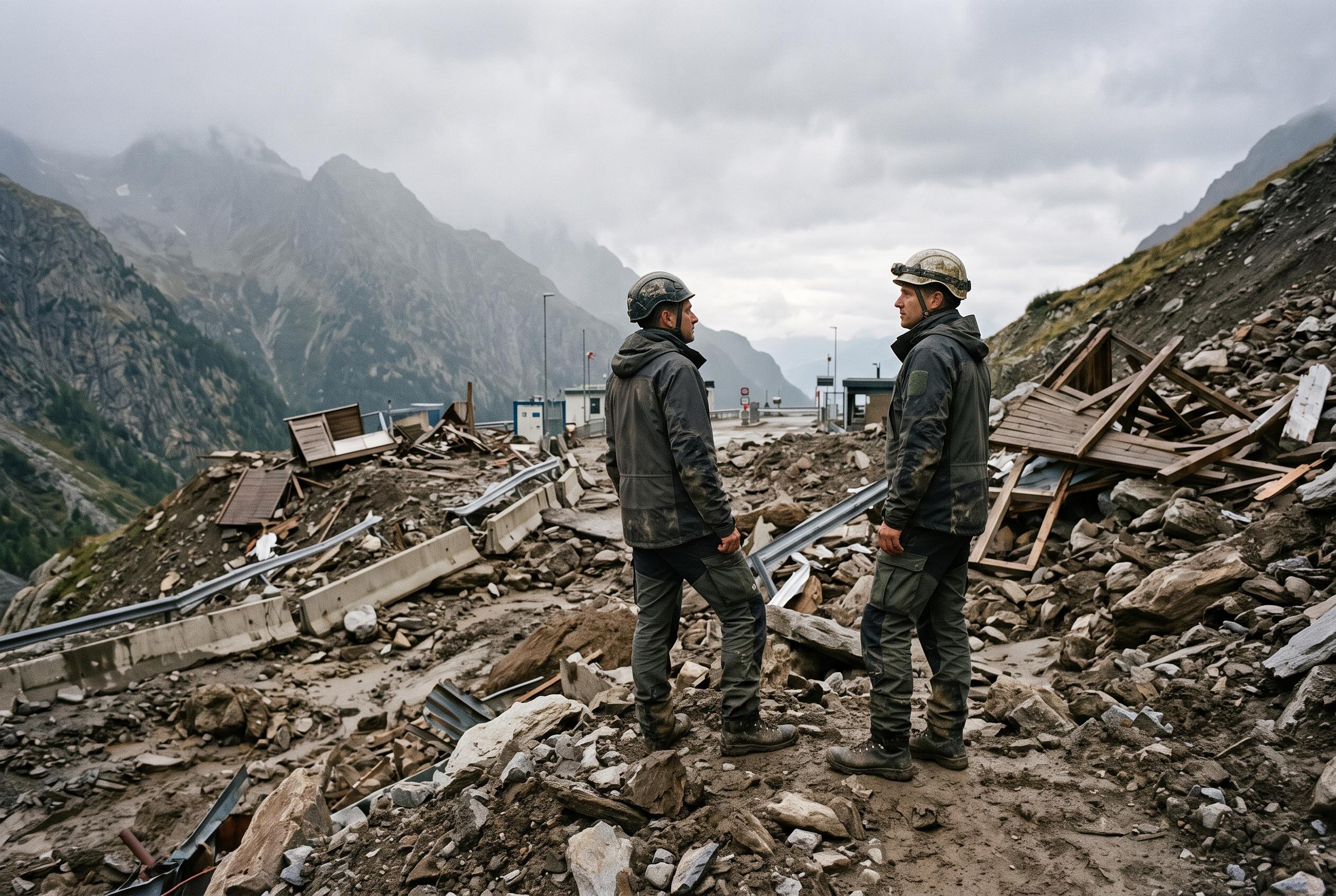

China has revised the death toll from the Gyirong Port flood to 31, while critics highlight the ongoing opacity and limited access for international observers in the aftermath of the devastating landslide at Tibet’s border with Nepal.
China has lifted its official toll from the disaster at Gyirong Port on the Nepal border to 31 dead and 531 missing, more than a week after the torrent of water, mud and debris tore through the crossing on 26 August. The new figure, issued by Xinhua late on 4 September, came after days of sparse updates and amid mounting criticism over how little can be independently verified on the Tibetan side of the catastrophe. Xinhua said the destruction followed an ice-rock avalanche in Nepal that wrecked buildings, power supplies and part of the G216 highway into the port. (english.news.cn)
The revised Chinese figures matter not only because they raise the known toll, but because they underline how partial the public picture remains. The Associated Press reported that Beijing gave no fresh numbers between an update on Sunday and another on Wednesday, when it said 21 people had died and 541 were missing. Le Monde said no foreign reporter had been able to enter the disaster area, or Tibet more broadly, a week after the disaster, leaving the outside world dependent on official statements from Beijing. By contrast, reporting and public lists of the dead and missing have continued to emerge far more openly on the Nepali side. (apnews.com)
Earlier Chinese briefings had said 261 foreigners from 23 countries were among the missing on its side of the border, and those nationality figures have become a focus for several governments. The Economic Times, citing official Chinese data, said the missing included 104 Nepalis, 49 Indians, 33 Latvians, 18 Americans, 15 Britons and six each from Canada and Australia, along with others. The Guardian reported that Britain had sent consular staff to the region, while the US State Department challenged the Chinese tally for Americans, saying at one point that at least 85 US citizens were missing. (economictimes.indiatimes.com)
Chinese state media have concentrated heavily on the scale of the rescue effort. Xinhua said 2,300 rescue personnel, more than 400 search-and-rescue vehicles, over 8,000 pieces of equipment, more than 800 drone flights and 24 helicopter sorties had been deployed. It also said 172 experts and technical staff from meteorology, natural resources, water, emergency management and scientific institutes were working on site. Along the route into the area, inspections identified 58 potential geological hazard points, while authorities said they had assessed risks in three affected villages and chosen sites for two temporary emergency shelters. (english.news.cn)
Even with that mobilisation, families have described a painful information vacuum. In a report from the Guardian, relatives of missing Chinese workers said they were relying on fragments of information from Nepal, embassies and social media rather than direct updates from Chinese authorities. One woman searching for her husband, who had been working on a road project in Nepal near the crossing, said rescue attempts at that site had stalled and relatives wanted permission to use their own drones or helicopters to search for the missing. The same report detailed the disappearance of foreign travellers near the immigration area at Gyirong on the day the flood struck. (theguardian.com)
That vacuum has fed wider questions about censorship and disaster reporting in Tibet. AP said access has been limited to leading state outlets such as Xinhua and CCTV, with coverage focusing on logistics and rescue scenes rather than the missing and their relatives. AP and Le Monde both reported that at least 10 people had been punished, detained or fined for posts challenging the official account online. AP also pointed to a broader pattern in Chinese disaster communications, noting that after severe flooding in Guangxi in July, the official death toll was revised more than a month later from 39 to 159. (apnews.com)
Foreign ministries are meanwhile dealing with a case load that is still shifting as communications slowly resume. Global Affairs Canada said on 2 September that one Canadian previously reported missing had been found safe, but that about 29 Canadians and permanent residents in Nepal and Tibet still had unconfirmed whereabouts. The department said Nepali police had asked families to share local or foreign phone numbers to help with geolocation requests, and that DNA collection was being organised in case formal identification became necessary. Canada also said it was sending more than 18,000 emergency relief items to Nepal and had provided $5 million in humanitarian assistance. The Economic Times reported that Chinese officials were briefing embassies in Beijing on missing foreign nationals. (canada.ca)
For now, the search on the Chinese side remains an exercise in recovery as much as rescue. Xinhua said 987 personal belongings had been recovered from the disaster zone, and Chinese officials have not yet repeated the foreign-national breakdown in their latest casualty update. The Economic Times said hundreds of people had been waiting at the immigration post on 26 August, including many Indian pilgrims travelling for the Kailash Manasarovar Yatra, when the flood struck the border crossing. With the port destroyed and the surrounding terrain still unstable, the official numbers are likely to keep moving. (english.news.cn)
Disclaimer: This article is intended to inform and educate, not to recommend or endorse any financial product, investment or strategy. Please consider your own financial circumstances and seek professional advice where appropriate before making financial decisions.



