

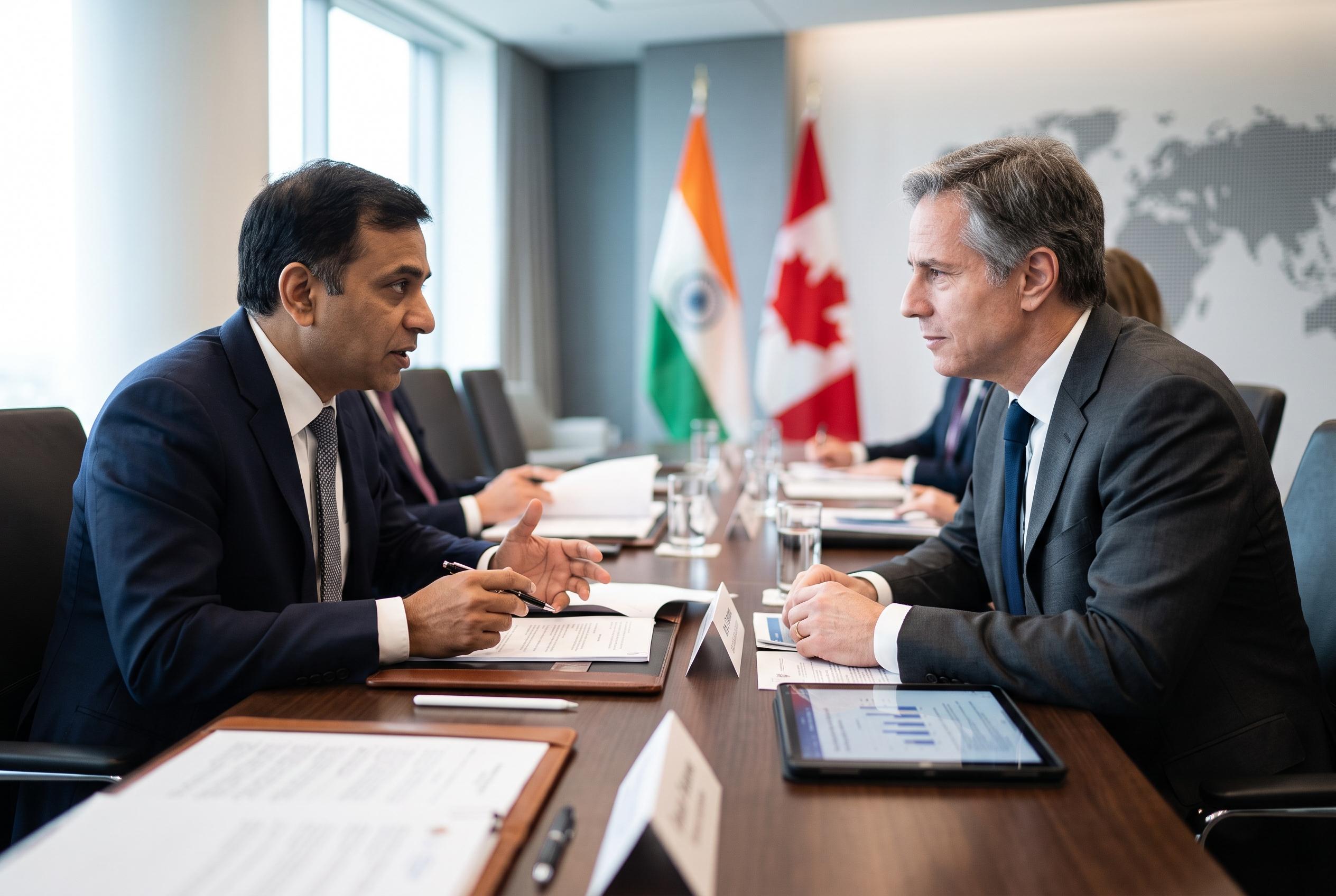

Ottawa and New Delhi are stepping up negotiations on a Comprehensive Economic Partnership Agreement, targeting a deal that could help more than double bilateral trade by 2030.
Canada and India are moving to accelerate talks on a long-discussed trade pact, with both sides signalling that they want a Comprehensive Economic Partnership Agreement finished by the end of the year. Canada’s international trade minister, Maninder Sidhu, said in Mumbai that negotiations were “gaining momentum”, while India’s commerce and industry minister, Piyush Goyal, also indicated that a free trade agreement could be concluded soon, according to reporting from The Hindu BusinessLine and statements released by Global Affairs Canada.
The renewed push follows a series of high-level exchanges over the past several months. In September, Sidhu met Goyal in Mumbai to advance CEPA discussions and said Canada remained committed to reaching a mutually beneficial deal by year-end, according to Global Affairs Canada. The same Canadian statement said Sidhu planned to lead a Team Canada trade mission to India the following month, after earlier visits in May brought the largest Indian trade delegation ever to Canada as both governments tried to deepen commercial links.
Officials on both sides have tied the talks to a larger effort to reset the economic relationship. LiveMint reported that the next round of negotiations was due to begin on October 5, 2026, while business and government statements have described the talks as productive and strategically important. The ministers have also framed the negotiations as part of a wider response to a more uncertain global trade environment, including the risk of higher US tariffs and pressure on supply chains.
Sidhu said a deal could help push bilateral trade to $70 billion by 2030 from about $30 billion now. That target has become a recurring benchmark in both countries’ messaging, though some Indian reporting has also cited a more conservative $50 billion goal. Either way, the direction of travel is clear: both governments want to expand commerce far beyond current levels and are treating the agreement as a practical way to do it.
Goyal, meanwhile, has used the talks to invite more Canadian capital into India, especially from long-term pension funds, and to encourage Canadian companies to consider manufacturing there. He has also pointed to India’s growth outlook, saying the economy could expand by 7.5 per cent in fiscal 2027. Sidhu, for his part, highlighted Canada’s role as a supplier of uranium and critical minerals, arguing that those resources could support India’s needs in electric vehicles, agriculture technology, clean technology and aerospace.
Disclaimer: This article is intended to inform and educate, not to recommend or endorse any financial product, investment or strategy. Please consider your own financial circumstances and seek professional advice where appropriate before making financial decisions.



