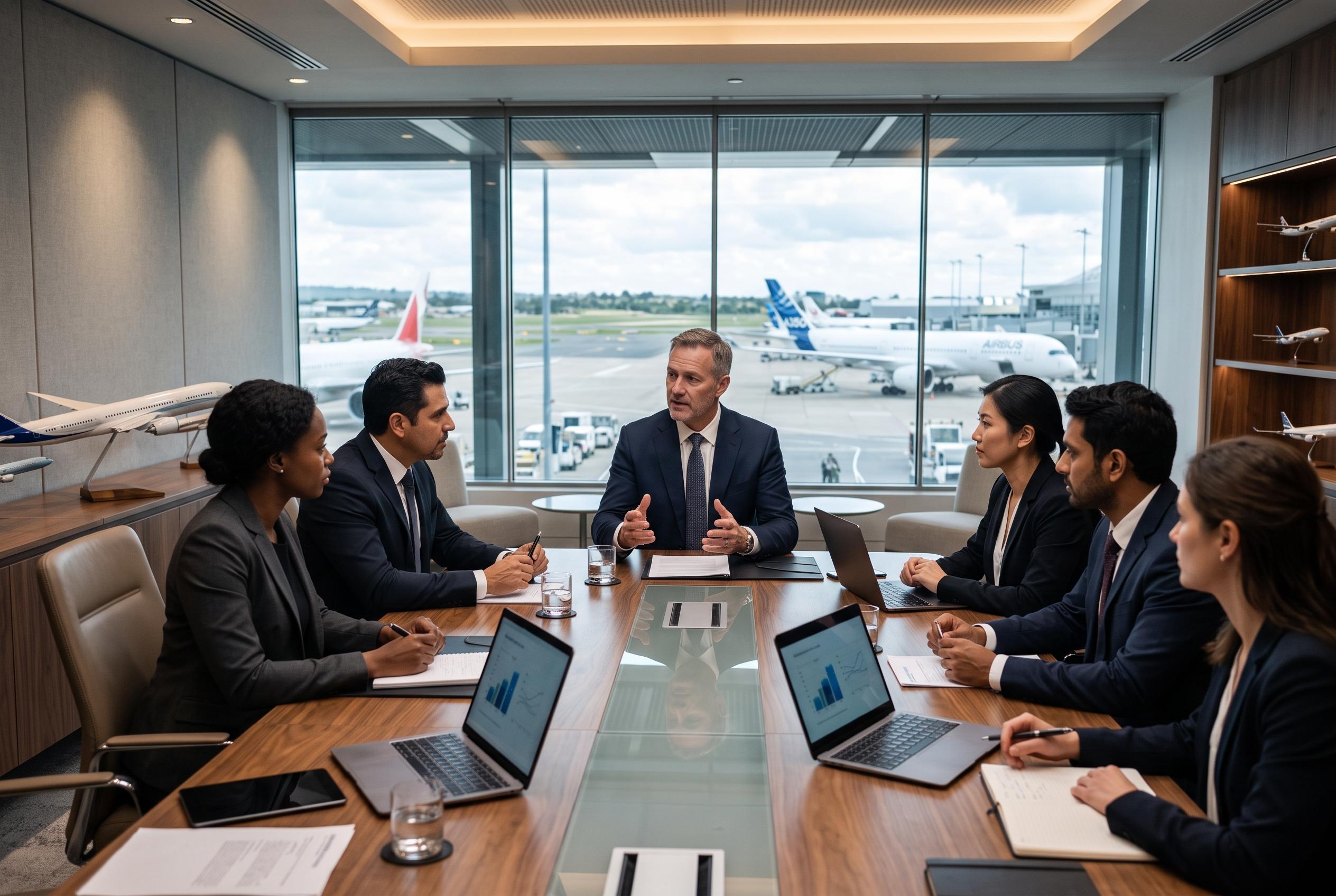

Tewolde Gebremariam has been appointed Air India’s chief executive and managing director as Tata Group seeks to restore reliability, profitability and growth discipline at the loss-making carrier.
Air India has named former Ethiopian Airlines chief Tewolde Gebremariam as its next chief executive and managing director as Tata Group tries to accelerate a turnaround at the state-backed carrier after a sharp deterioration in performance. The airline said Gebremariam would succeed Campbell Wilson following a global search for a leader with experience in large-scale restructuring and expansion, and said his track record at Ethiopian Airlines showed he had presided over a multi-billion-dollar growth story that made the carrier Africa’s largest and most profitable airline group.
The appointment comes against a difficult financial backdrop. According to figures cited by Live and Let’s Fly, Air India and its low-cost unit Air India Express together posted a loss of ₹22,238 crore in the fiscal year to 31 March, more than doubling the previous year’s deficit, while revenue fell almost 9% to ₹71,870 crore. Air India itself accounted for the bulk of the red ink, underscoring the scale of the challenge facing Tata’s flagship airline business.
Tata Sons chairman N Chandrasekaran has described the recovery as a five-to-10-year process, pointing to the carrier’s inherited problems, supply chain disruption, legacy technology, fleet renewal and shortages of trained technical staff. The broader Tata group’s latest results also suggest the airline remains the heaviest drag on the conglomerate’s unlisted subsidiaries, with Air India accounting for most of the losses. That said, the appointment of a veteran operator known for disciplined expansion signals that Tata still sees room for a major operational reset rather than a modest course correction.
Gebremariam’s first priorities are likely to be reliability, safety, profitability and tighter growth discipline. According to Live From A Lounge, he told employees at a town hall on 28 September that he wanted rewards tied to ideas that generated measurable savings. The challenge is not simply to add aircraft and routes, but to improve yields, strengthen the premium product and make the existing fleet more attractive to travellers while new jets arrive. Air India has more than 300 aircraft and roughly 600 on order, so the question now is whether a chief executive celebrated for building capacity can adapt that skill set to a far more demanding turnaround.
Disclaimer: This article is intended to inform and educate, not to recommend or endorse any financial product, investment or strategy. Please consider your own financial circumstances and seek professional advice where appropriate before making financial decisions.