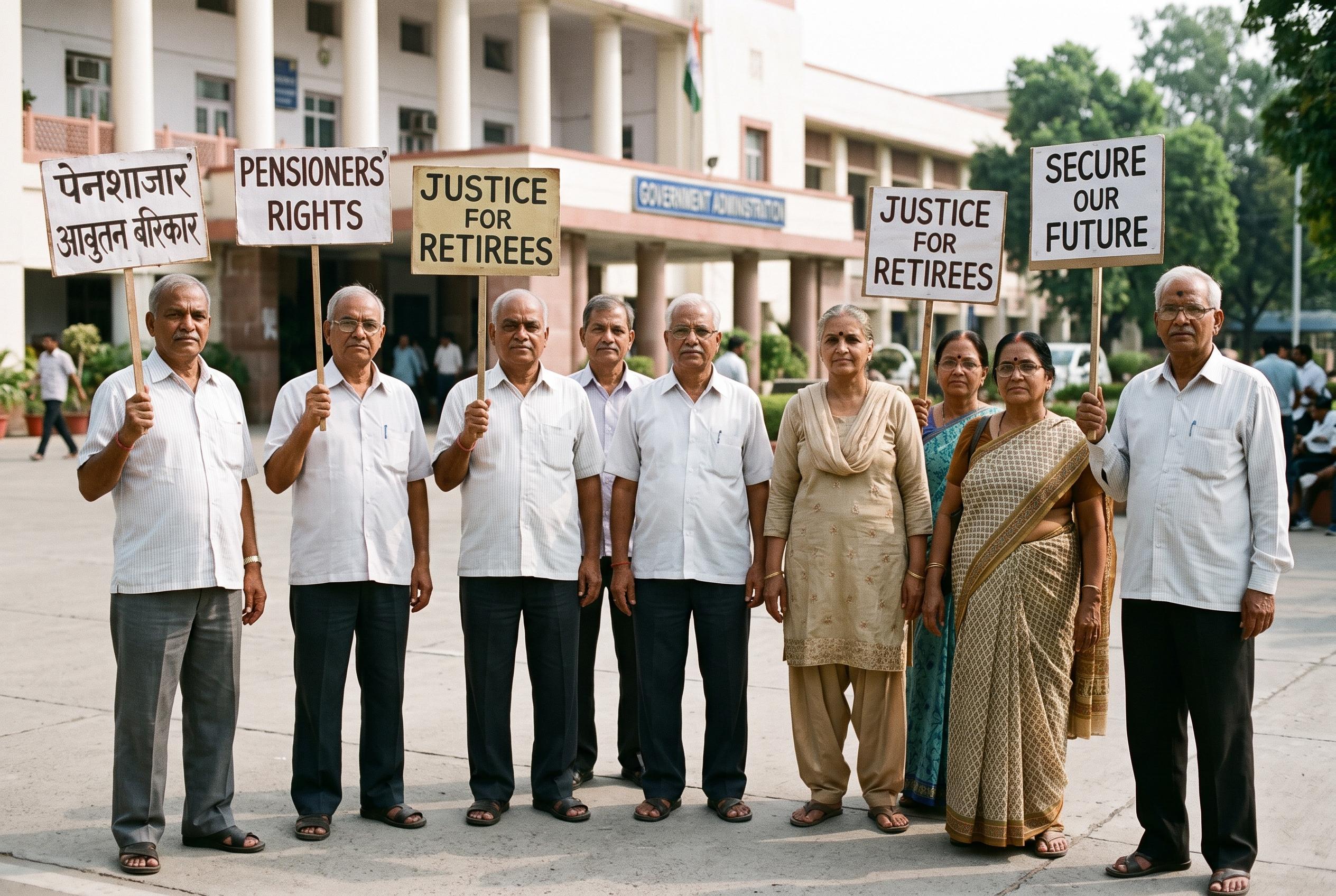

The Indian government has reiterated its stance against increasing the minimum pension from ₹1,000 to ₹7,500 under EPS-95, prompting protests from retired workers demanding better support amid rising living costs.
A renewed push to lift the minimum pension under the Employees’ Pension Scheme has brought fresh attention to a long-running grievance among millions of retired workers. In Parliament, the government has now said there is no immediate plan to raise the floor from ₹1,000 a month to ₹7,500, despite sustained pressure from pensioners’ groups who say the present amount is far below what is needed to cover food, rent and medicines.
The issue came up in the Lok Sabha on 10 August, when Ramvir Singh Bidhuri asked whether the government was considering a higher minimum under EPS-95. In her written reply, labour and employment minister Shobha Karandlaje said eligible pensioners are currently receiving the existing minimum of ₹1,000 a month and that the Centre continues to provide budgetary support to maintain it. She did not announce a timetable for any increase, effectively leaving the current framework unchanged.
That stance is likely to disappoint the EPS-95 National Agitation Committee and other pensioners’ organisations, which have stepped up demonstrations in Delhi and elsewhere. Their demands have widened beyond a higher minimum pension to include dearness allowance, or DA, which is the inflation-linked payment intended to protect incomes as prices rise. Reuters has reported on similar pensioner protests in the capital, with campaigners arguing that a modest monthly payout cannot sustain elderly households facing rising medical costs.
The fiscal scale of the scheme helps explain the government’s caution. According to the figures cited in Parliament, more than 85.8 lakh pensioners were receiving monthly benefits through EPS as of 31 March 2026, with cumulative disbursements exceeding ₹15,819 crore. At the same time, the government said 1,49,806 pension payment orders have been issued for eligible applicants who opted for higher pensions linked to actual basic salary after the Supreme Court’s 4 November 2022 ruling. That means some retirees have secured relief through the courts, while the broader demand for a much larger minimum pension remains unresolved.
Disclaimer: This article is intended to inform and educate, not to recommend or endorse any financial product, investment or strategy. Please consider your own financial circumstances and seek professional advice where appropriate before making financial decisions.