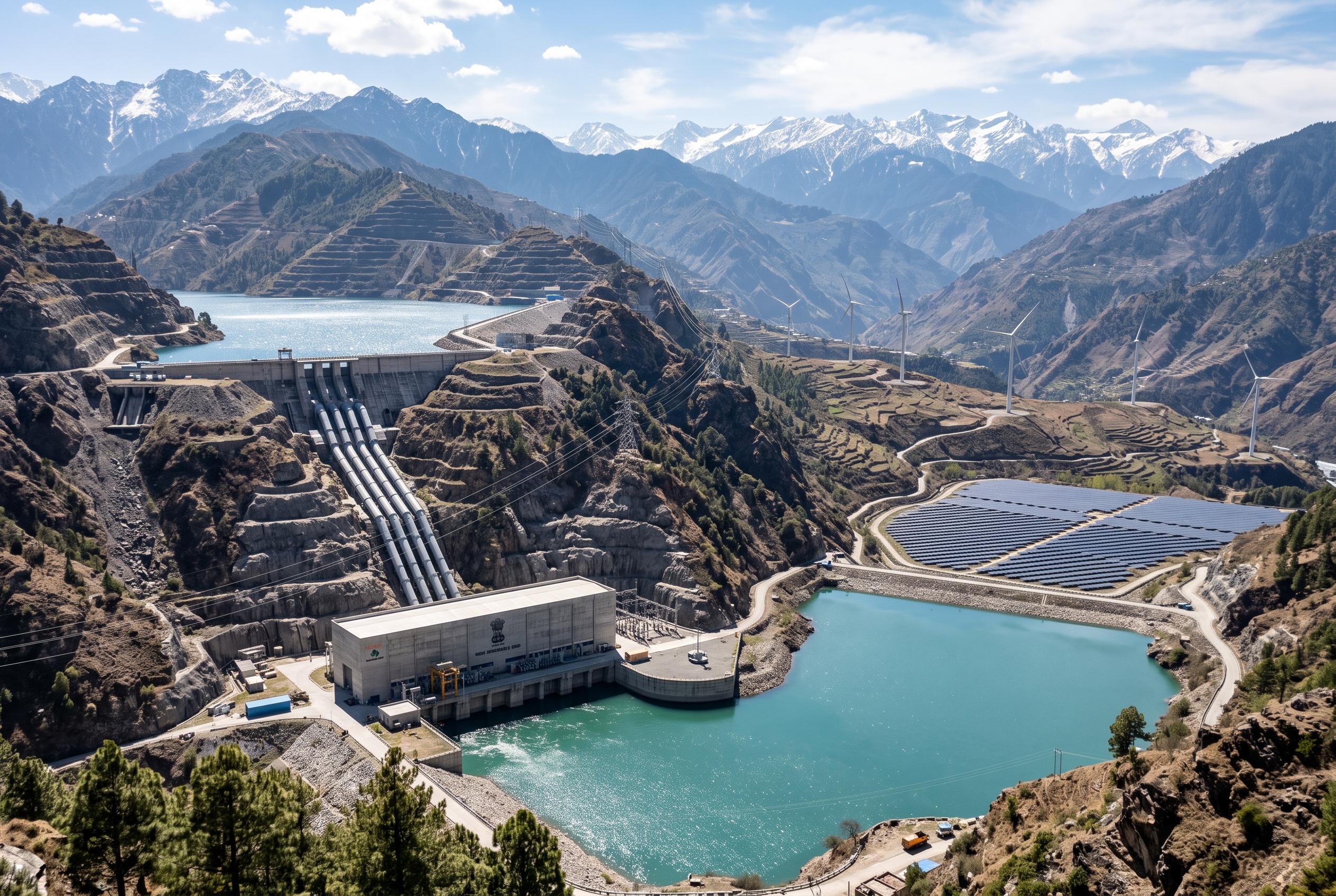

India is increasingly integrating pumped hydro storage into its renewable energy plans, shifting the technology from niche hydro projects to a vital component for long-duration energy storage, despite policy and execution hurdles.
India’s push to expand renewable power is giving pumped storage projects a sharper role in the country’s grid plans, as industry executives say the technology is moving from a niche hydro segment to a central pillar of long-duration energy storage. A recent report by the Central Electricity Authority laid out a pathway for scaling pumped storage capacity over the next decade, while industry discussions have increasingly framed these projects as a companion to batteries rather than a rival, with each expected to serve different durations of demand. Reuters-style market summaries and sector analysis have also pointed to a broader need for flexibility as renewable generation rises quickly across the system.
At a Renewable Watch conference on pumped hydro storage, executives from NHPC, Greenko, Odisha Hydro Power Corporation, the Central Electricity Authority and other developers said the sector has gained policy momentum, but execution remains difficult. Rajneesh Agarwal of NHPC said public sector developers still face slower decision-making because of board approvals and competitive procurement rules, even as the industry accelerates. He also warned that a wave of project awards could strain the availability of contractors, civil works teams and electromechanical suppliers.
The discussion also highlighted how project design is changing to match demand. P.M. Nanda said Greenko’s Pinnapuram project in Andhra Pradesh was originally planned around round-the-clock renewable supply, but shifting market requirements led to a redesign towards peak-power delivery. He said the project was built through the pandemic and had to adapt to logistical delays, land registration bottlenecks and unexpected geological conditions during underground work. That experience, he argued, underlined both the technical complexity of pumped storage and the need for stronger public understanding of its benefits.
Odisha, meanwhile, is emerging as one of the key states for future pumped storage expansion. Rajib Lochan Panda said the state has a technical potential of nearly 41 GW and three major projects under development, including Upper Indravati, Upper Kolab and Balimela. He said the Upper Indravati project has taken years to progress because pumped storage was not always treated as a strategic priority and because detailed project reports and feasibility studies required repeated technical review. Even now, he said, forest and environment clearances remain slow because proposals can move back through multiple layers of appraisal.
Several speakers pointed to improvements in the regulatory environment. Kumar Pritam said the Central Electricity Authority has taken steps to simplify development, strengthen technical scrutiny and speed up approvals, while Vivek Shrivastava said a dedicated monitoring framework has helped officials identify bottlenecks more quickly. Still, both said land aggregation, statutory clearances and coordination between agencies remain major obstacles. Industry analysis has echoed that view, describing land acquisition, environmental permissions and transmission planning as persistent barriers to timely delivery.
Revenue certainty is now emerging as one of the sector’s central commercial issues. Ankur Vashishtha said power purchase agreements remain essential for bankability, even as ancillary services, merchant markets and other revenue streams become more important. Sumit Verma added that industrial users, data centres and other large consumers are increasingly seeking reliable peak power, which could broaden demand for storage. He said project costs are typically in the range of Rs 50 million to Rs 70 million per MW, with tariffs generally between Rs 3 and Rs 5 per kWh, making the technology more competitive for long-duration storage than many market participants once assumed.
Disclaimer: This article is intended to inform and educate, not to recommend or endorse any financial product, investment or strategy. Please consider your own financial circumstances and seek professional advice where appropriate before making financial decisions.