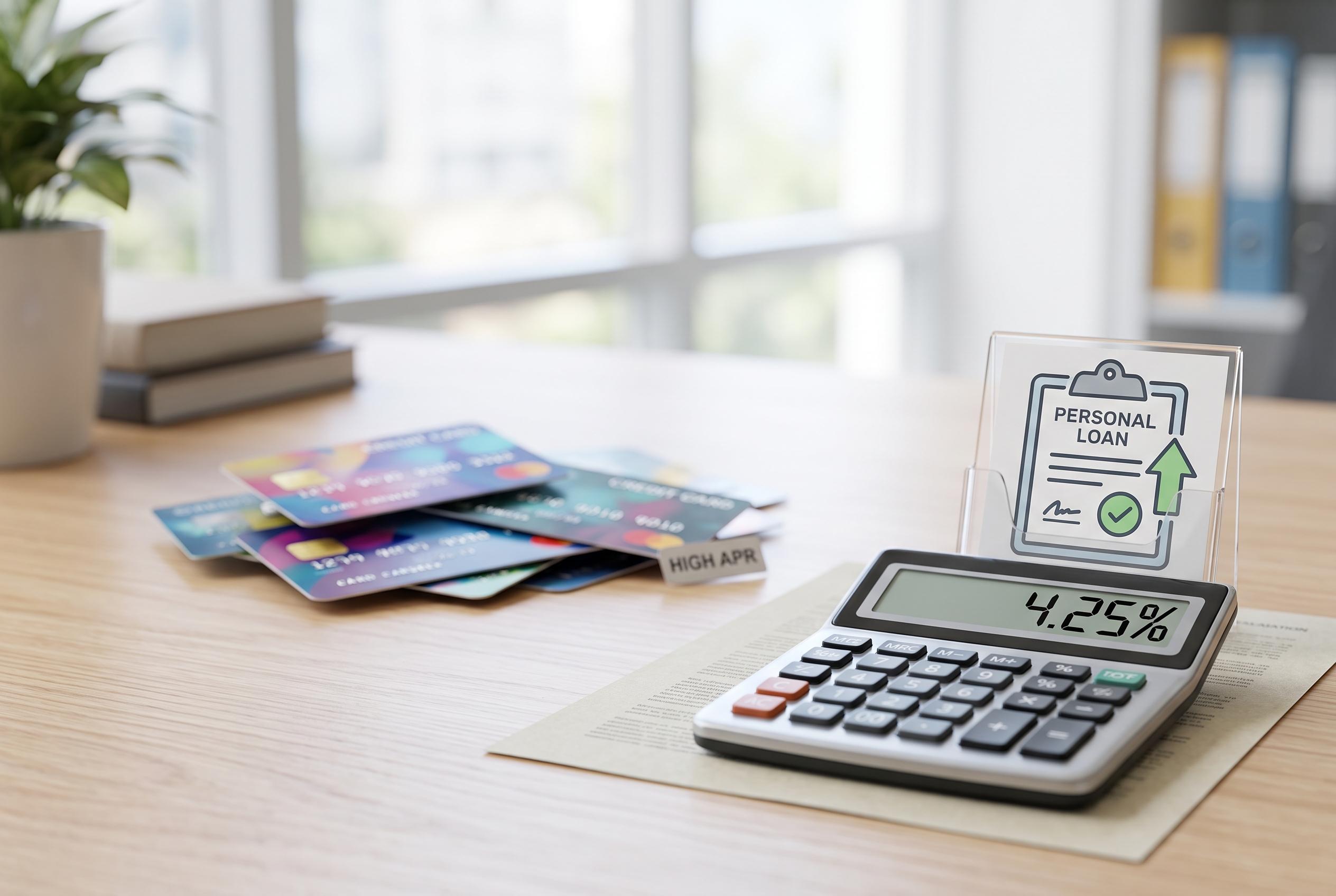

With credit card interest rates reaching an average of 21.52%, borrowers are increasingly turning to personal loans as a cost-effective alternative, provided they avoid accumulating new debt.
Carrying a balance on a credit card can quickly become expensive, with the Federal Reserve saying the average APR on accounts that are assessed interest was 21.52% in February 2026. For some borrowers, a personal loan can offer a cheaper way to roll several card balances into one fixed payment and a lower rate, although experts say the move only works if the borrower stops adding fresh debt. According to LendingTree’s Matt Schulz, the potential savings can be meaningful enough to justify the effort of comparing offers.
That comparison matters because rates vary widely by lender and borrower profile. NerdWallet said the average APR on a three-year personal loan from a credit union was 10.64% as of June 2026, while Bankrate, citing National Credit Union Administration data, put the average finance rate on three-year loans from commercial banks at 12.06% and the credit union average at 10.72%. On a larger balance, that gap can translate into roughly $1,000 or $2,000 in savings, Schulz said.
One Tulsa borrower, Mary King-Moore, told 2 News Oklahoma that she once used a personal loan to combine multiple credit card balances into a single fixed payment over about two years. She said the structure helped her stay on track and made the debt feel more manageable. Financial guides from Kiplinger and other consumer finance outlets say the appeal of debt consolidation lies in lower interest and predictable repayments, but only if the loan terms are affordable and the borrower avoids swapping one debt problem for another.
Disclaimer: This article is intended to inform and educate, not to recommend or endorse any financial product, investment or strategy. Please consider your own financial circumstances and seek professional advice where appropriate before making financial decisions.