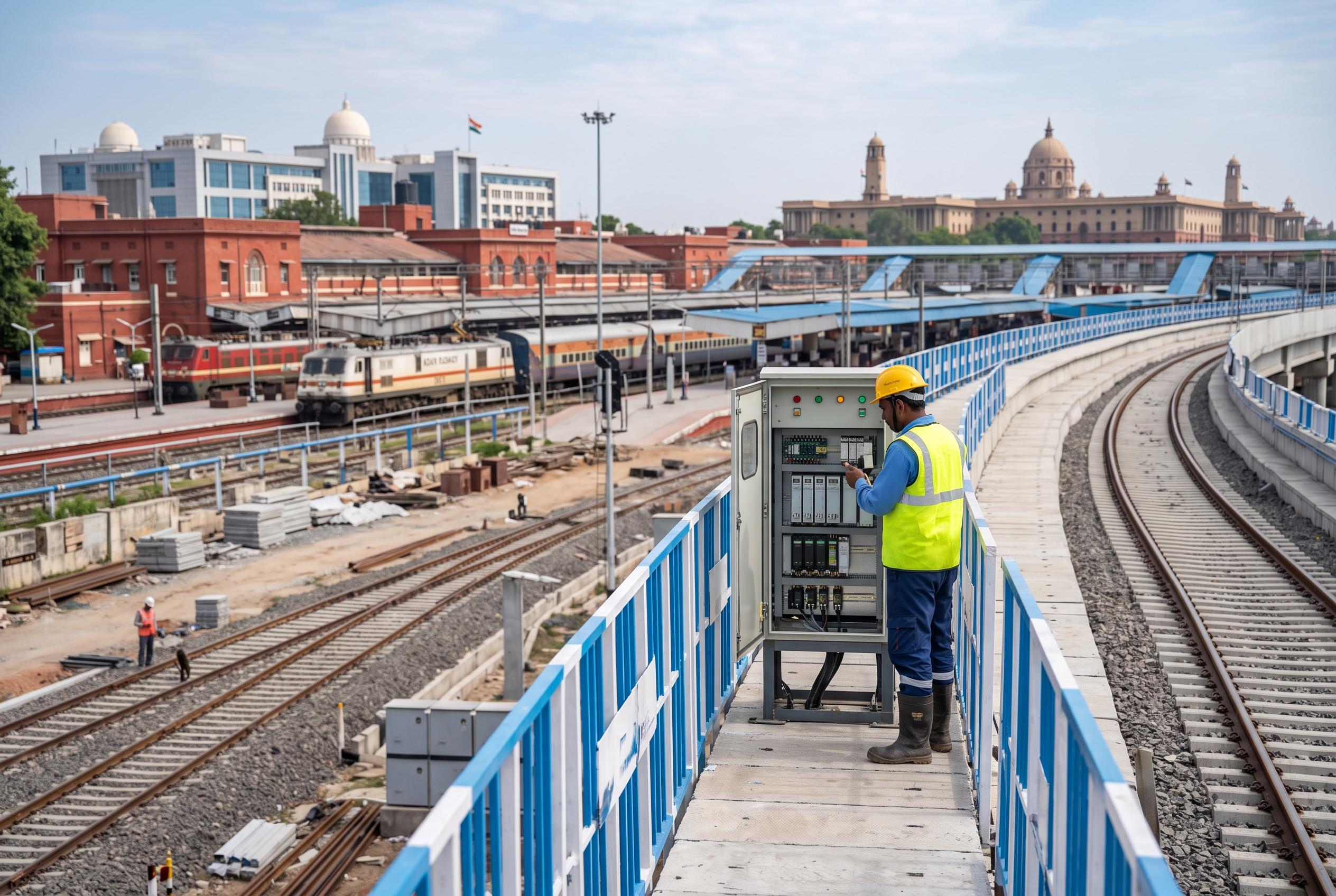

Indian Railways is significantly increasing investment in safety measures and high-speed infrastructure, including expanding the Kavach protection system and upgrading track speeds, while navigating financial challenges and heavy reliance on government funding.
Indian Railways is pouring more money into safety, speed and modernisation as it tries to keep pace with rising demand and ageing financial constraints. According to data cited by Business Today, the railway’s total capital grant for 2026-27 stands at ₹2,93,030 crore, with about 39% spent by July 2026, while the network continues to prioritise new lines, track upgrades, protection systems and staff training.
Safety spending has climbed sharply over the past decade. The Times of India and the Press Information Bureau both said railway safety expenditure has risen from ₹39,200 crore in 2013-14 to ₹1,17,693 crore in 2025-26, reflecting a sustained push to reduce accidents and improve operational reliability. Railway Minister Ashwini Vaishnaw has linked those investments to a steep fall in consequential accidents.
A central part of that effort is Kavach, the indigenous automatic train protection system that can limit speed and apply the brakes if a train exceeds safe limits. The Press Information Bureau said Kavach has now been extended across 23,360 route kilometres, while Business Today reported that, as of 31 July 2026, 2,633 route kilometres were active on key corridors including Delhi-Mumbai and Delhi-Howrah. Work is under way to fit more locomotives and electric multiple units, alongside wider deployment of optical fibre, telecom towers and station data centres.
The wider network is also being upgraded for higher speeds. Business Today said 81% of tracks now support speeds of at least 110 kmph, up from a much smaller base in 2014, as the railways push selected corridors such as Delhi-Mumbai and Delhi-Howrah towards 160 kmph under Mission Raftaar. The railway system is also expanding capacity through 514 sanctioned projects covering new lines, gauge conversion and doubling, with an estimated cost of ₹8.31 lakh crore.
Yet the spending surge has not removed the strain on the balance sheet. Business Today said internal revenue is projected at about ₹3.02 lakh crore in 2026-27, but most of that will be absorbed by salaries, pensions and lease payments. That leaves the railways heavily dependent on government support for capital outlays, even as it seeks to build a safer and faster network.
Disclaimer: This article is intended to inform and educate, not to recommend or endorse any financial product, investment or strategy. Please consider your own financial circumstances and seek professional advice where appropriate before making financial decisions.