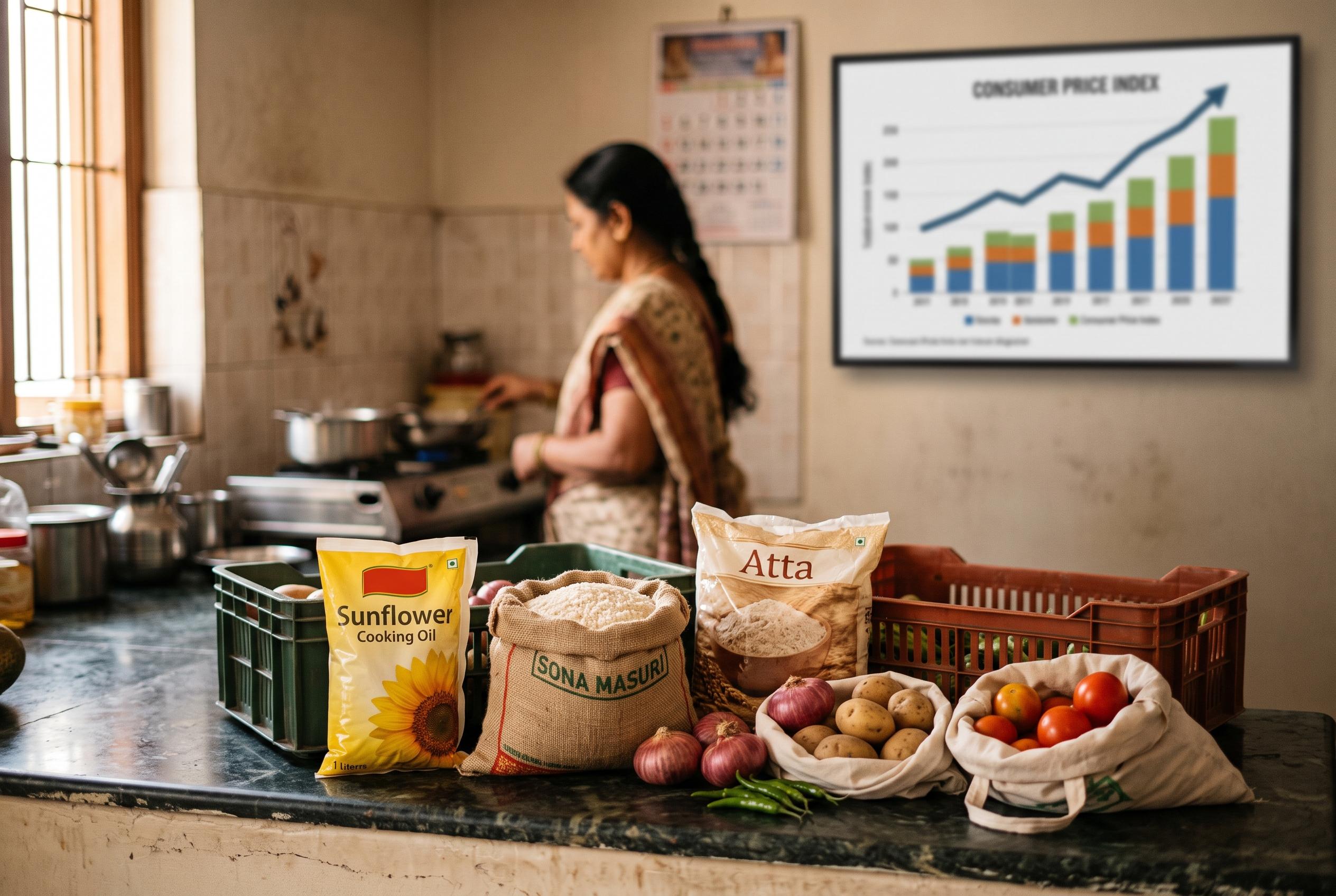

Telangana continues its streak as India’s inflation outlier for a seventh month, driven by rising prices in essential goods and a revised Consumer Price Index, highlighting shifting household expenditure patterns.
Telangana has remained India’s inflation outlier for a seventh straight month, with retail prices rising 6.32% in July, according to data released by the Ministry of Statistics and Programme Implementation. That was down only slightly from 6.36% in June and still comfortably above the national average of 4.45%, underscoring how persistent price pressures have become in the state.
The latest reading extends a run that began in January, when Telangana’s retail inflation was 4.92%. It climbed to 5.02% in February, 5.83% in March, 5.81% in April, 6.15% in May and 6.36% in June. Andhra Pradesh was next highest in July at 5.72%, followed by Tamil Nadu at 5.44%, Madhya Pradesh at 4.91% and Karnataka at 4.89%.
Inflation remains more acute in rural Telangana than in cities. The state’s rural rate stood at 6.86% in July, compared with 5.92% in urban areas. The broader trend marks a sharp reversal from 2025, when Telangana recorded deflation for five months, highlighting how quickly the price environment has changed.
Economists have linked part of the recent rise to India’s revised Consumer Price Index series, which was rolled out earlier this year and updated the base year to 2024. The new basket gives less weight to food and beverages and more to categories such as housing, transport, personal care and services. Separate reporting by The Times of India showed steep increases in items such as tomatoes, coconuts and lemons in June, alongside higher jewellery prices, illustrating how essential goods and other household purchases have continued to feed into the state’s inflation picture.
Disclaimer: This article is intended to inform and educate, not to recommend or endorse any financial product, investment or strategy. Please consider your own financial circumstances and seek professional advice where appropriate before making financial decisions.