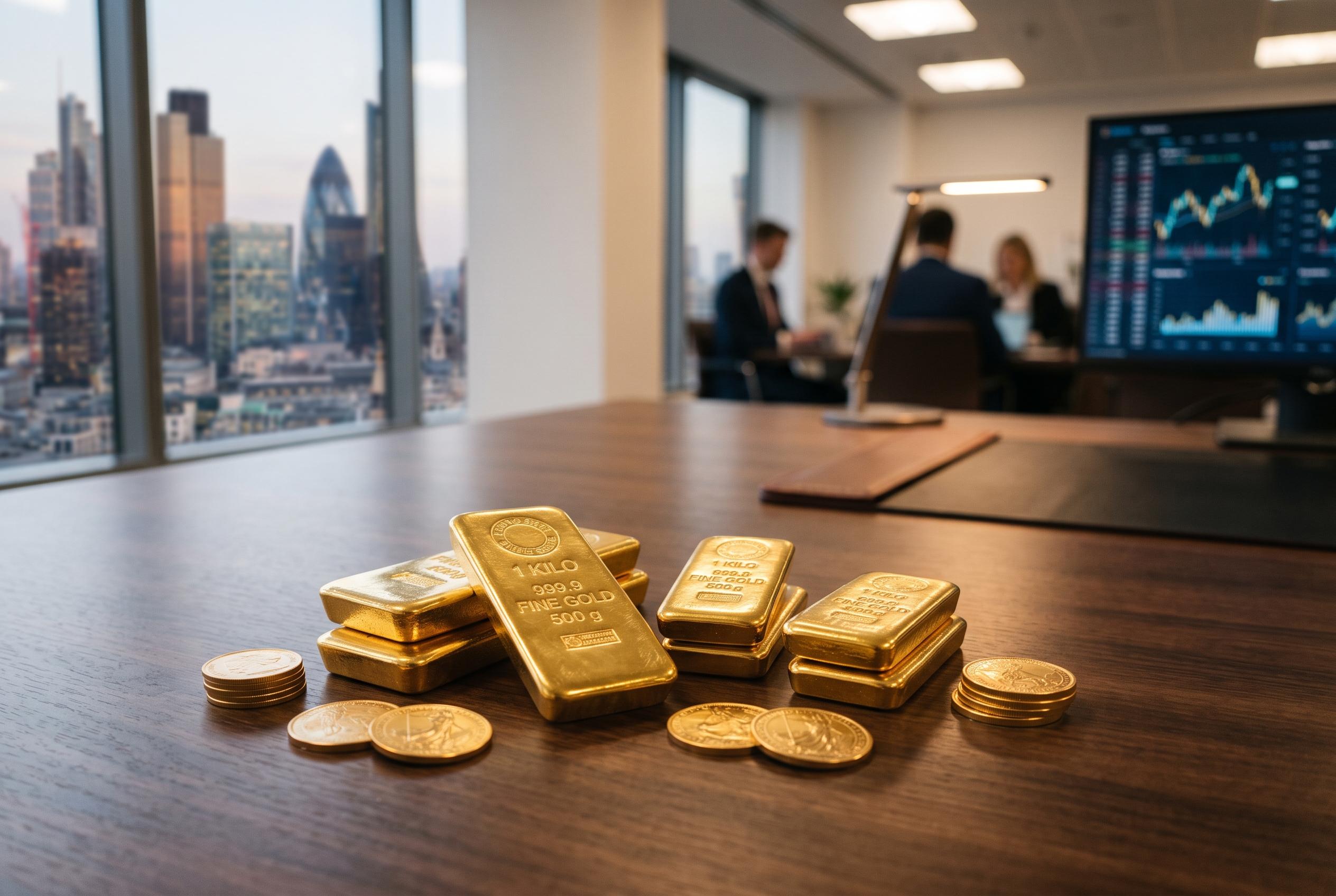

Gold enters 2026 supported by record central bank buying, geopolitical tensions, and inflation concerns, with prices near historic peaks as investors view it as a safe haven amid market volatility.
Gold has entered 2026 with its reputation intact, trading near record levels as investors continue to seek shelter from inflation, policy uncertainty and geopolitical friction. In January, bullion remained above $2,400 an ounce in the lead article’s framing, while other market commentary in early 2026 put prices even higher, underscoring just how forcefully the metal has extended its rally. The broader message is the same: gold is still being treated as a defensive asset at a time when confidence in other corners of the market remains uneven.
A major pillar of that strength has been central bank buying. The World Gold Council said net purchases by central banks reached 863 tonnes in 2025, down from the previous year’s record but still far above the 10-year average of 473 tonnes. The Council said Poland was the largest buyer for a second straight year, while emerging market central banks have continued to diversify reserves away from the dollar. Other industry reporting has suggested buying stayed exceptionally heavy late in the year, with some estimates pointing to 2025 net purchases close to 1,000 tonnes.
That demand has helped support a market that remains sensitive to macroeconomic shifts. The World Gold Council said gold typically benefits when financial markets are volatile and when geopolitical risk rises, although not every flare-up produces a clean response. In early 2026, bullion was also drawing support from expectations that the Federal Reserve could eventually ease policy, while analysts warned that a stronger dollar or firmer real interest rates could slow the advance. UBS has projected that gold could move to new highs above $5,600 in 2026 if central bank demand and rate-cut expectations persist.
For investors, the attraction remains familiar: gold is still seen as a portfolio diversifier and an inflation hedge, with exposure available through exchange-traded funds, mining shares or physical bars and coins. The appeal is not that gold generates income, but that it can hold its value when other assets wobble. For now, central bank demand, geopolitical anxiety and lingering doubts about the outlook for growth and rates all suggest that gold’s place in the investment conversation is unlikely to fade soon.
Disclaimer: This article is intended to inform and educate, not to recommend or endorse any financial product, investment or strategy. Please consider your own financial circumstances and seek professional advice where appropriate before making financial decisions.