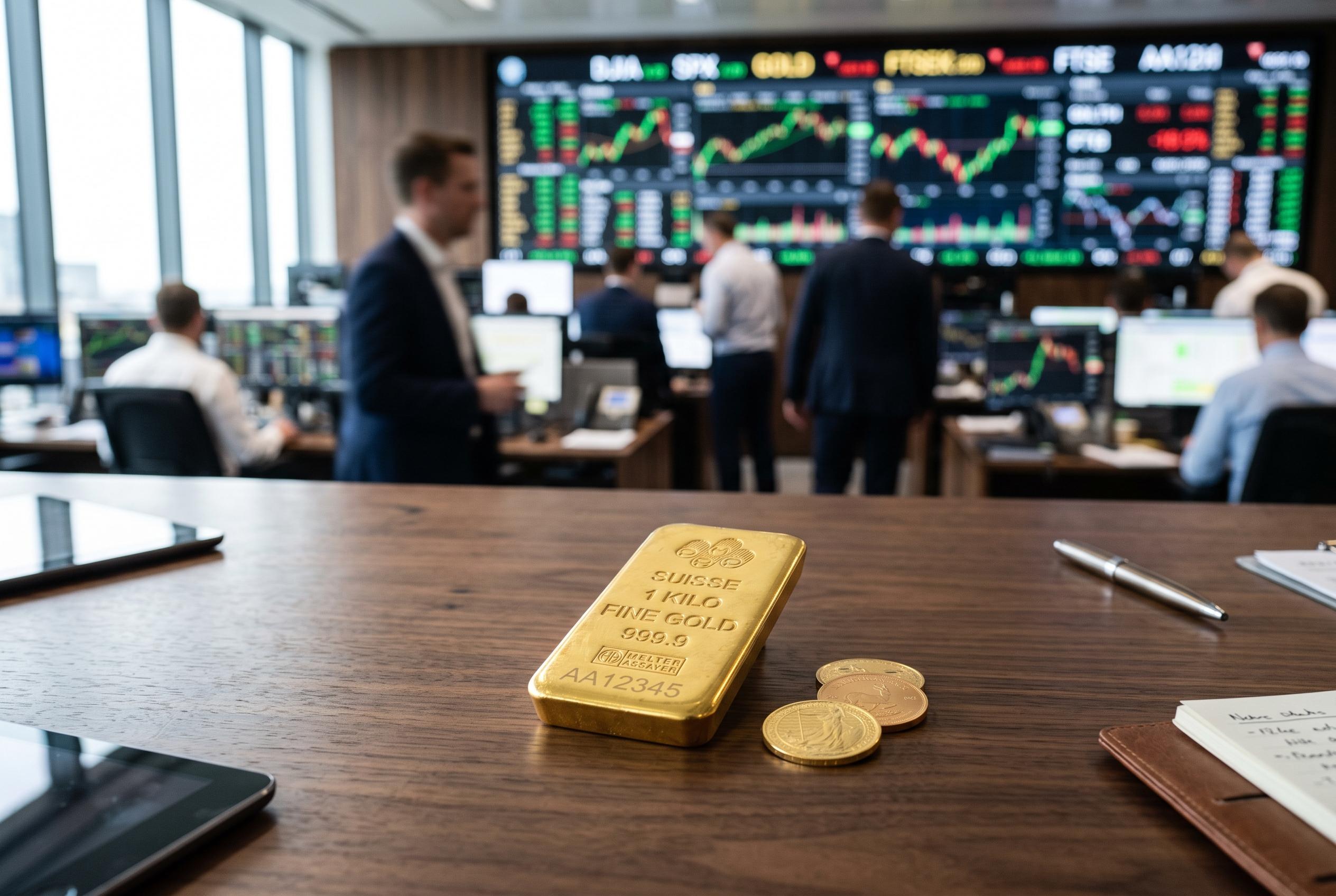

Gold’s price rises above $4,400 as investors brace for upcoming US inflation figures and possible Federal Reserve policy easing, driven by economic uncertainty and increased central-bank demand.
Gold’s rise above $4,400 an ounce reflects a market braced for the next US inflation reading and the possibility that the Federal Reserve could begin easing policy later this year. The metal has attracted fresh demand as investors look for shelter from economic uncertainty, with traders treating the inflation report as a key test of how quickly price pressures are fading. According to the World Gold Council, concern over fiscal strain, trade policy and market volatility has also helped steer capital towards bullion.
That support has been reinforced by the usual gold drivers. When real interest rates fall, the cost of holding a non-yielding asset declines, while a softer dollar makes the metal cheaper for overseas buyers. Analysts cited in market commentary say those forces remain important, but they have been joined by heavier central-bank buying and stronger flows from investors seeking to reduce risk. Industry reports also note that since 2022, those structural factors have mattered more than the traditional inverse link between real rates and gold.
The upcoming consumer price data matters because it could shape the Fed’s next move. Economists expect inflation to have cooled further, though core prices may remain sticky because of shelter and services. A weaker-than-expected reading would strengthen the case for rate cuts and could push gold higher again, while a hotter figure would argue for higher borrowing costs for longer and may trigger a pullback.
Even so, several firms say the broader backdrop remains favourable for bullion. Wells Fargo Investment Institute has argued that central-bank demand and geopolitical tension continue to offer long-term support, while Kitco has reported that market strategists see additional upside if the Fed follows through with cuts. For now, gold’s break above $4,400 signals that investors are still treating it as both an inflation hedge and a haven in a period of policy uncertainty.
Disclaimer: This article is intended to inform and educate, not to recommend or endorse any financial product, investment or strategy. Please consider your own financial circumstances and seek professional advice where appropriate before making financial decisions.