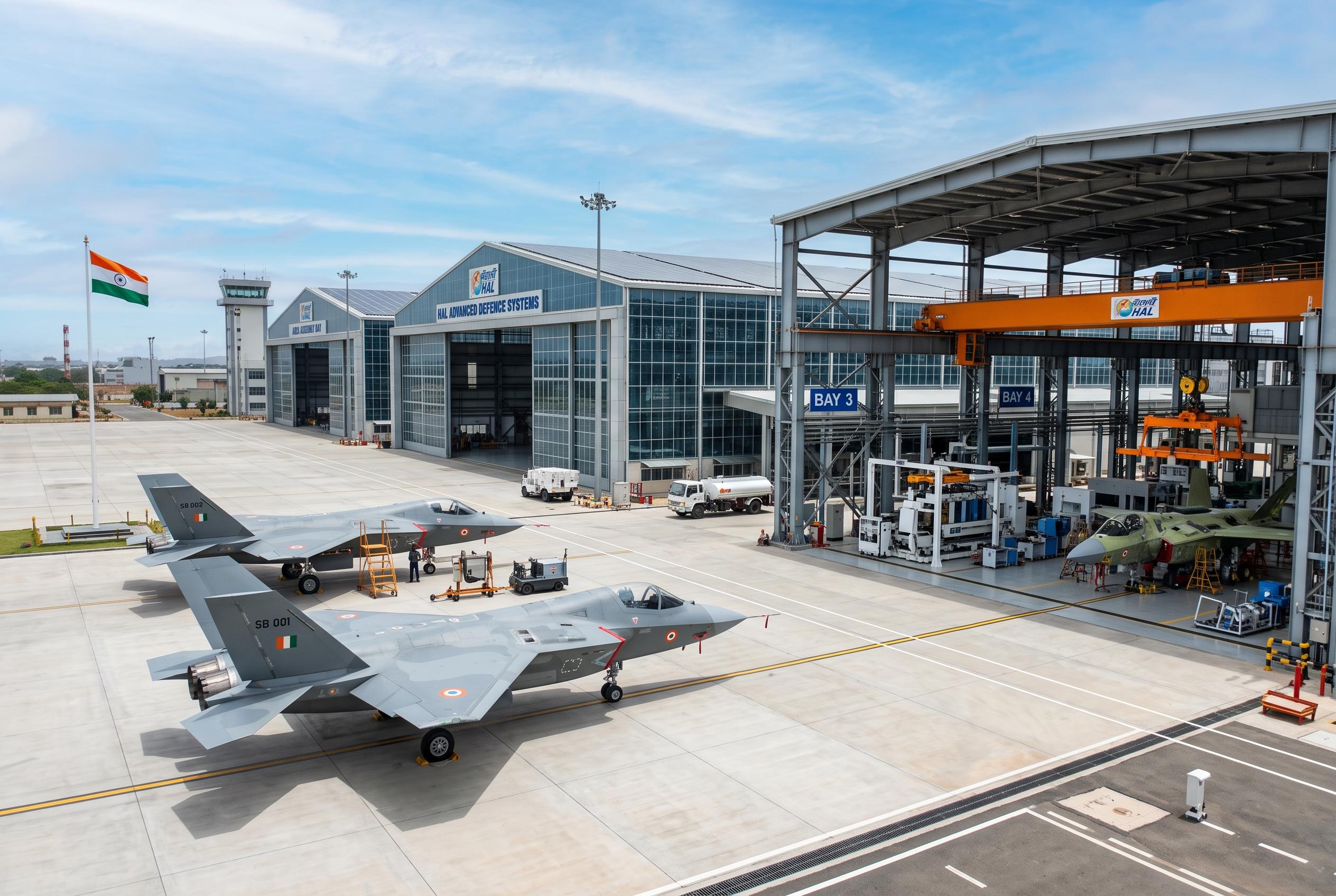

India’s defence industry is entering a new phase as private firms expand their presence, boost exports, and challenge state dominance with landmark projects like the stealth fighter and increased production milestones.
India’s defence manufacturing is moving into a new phase as private companies gain ground in a sector long dominated by state-owned firms, even though the public sector still controls the biggest platforms. Policy changes over the past three decades, from economic liberalisation in 1991 to more recent procurement reforms, have steadily widened the space for non-state players, according to industry executives and analysts quoted by Business Standard.
The turning point, observers say, came with a series of structural changes that began after the Kelkar Committee’s recommendations in 2005 and gathered pace with procurement rules that favoured indigenous design and production. Captain Vishal Kanwar, a retired officer and partner at PwC, told Business Standard that the shift from a system largely reserved for public undertakings to one open to private participation was the most important reform in defence manufacturing. He pointed to the Defence Acquisition Procedure 2020 and the Positive Indigenisation Lists, which bar imports of selected items after set dates, as key milestones.
The numbers show how far the industry has come. According to Business Standard, domestic defence production has risen from Rs 74,054 crore in FY17 to about Rs 1.78 trillion in FY26, while private-sector output has climbed even faster, from Rs 14,104 crore to roughly Rs 42,000 crore. That has lifted the private share of total production to about 23.6%, after years of hovering around 19% to 21%. New Indian Express reported in June that FY26 defence output hit a record high and that private firms accounted for 24% of the total, while export data cited by industry sources points to a similarly sharp rise in overseas sales.
Exports have become one of the clearest signs of the sector’s transformation. IBEF says defence exports increased from Rs 686 crore in FY14 to Rs 23,622 crore in FY25, with private companies contributing Rs 15,233 crore of that total. Business Standard also reported that defence exports reached Rs 38,424 crore in FY26, with private firms responsible for more than half in seven of the past ten years. Rahul Rawat of the Observer Research Foundation told Business Standard that such figures show the need for better benchmarks to track the sector’s industrial base, especially as private firms remain newer entrants than the defence public sector undertakings.
The private sector’s progress has been uneven. Surface ships, combat aircraft and submarines are still built only by state-owned firms, but private companies have made inroads in armoured vehicles, artillery and small arms. Business Standard said this imbalance reflects both the legacy of older programmes and the practice of nomination, under which contracts were handed directly to public firms without open bidding. The Defence Ministry has pledged to move away from that approach, although a few sensitive areas may remain exceptions.
A major test of that promise is the Advanced Medium Combat Aircraft, India’s first stealth fighter project. In May, the Aeronautical Development Agency invited private bidders to develop and build prototypes, excluding Hindustan Aeronautics Ltd after it failed to clear the initial stage. Tata Group, a Kalyani-led consortium and a Larsen & Toubro-led consortium are in the running. Industry voices quoted by Business Standard said the contest could end HAL’s long-standing hold over combat aircraft production and signal a broader commercial shift, with private equity and strategic investors already showing interest in drones, electronics, missile systems and maintenance, repair and overhaul.
Disclaimer: This article is intended to inform and educate, not to recommend or endorse any financial product, investment or strategy. Please consider your own financial circumstances and seek professional advice where appropriate before making financial decisions.