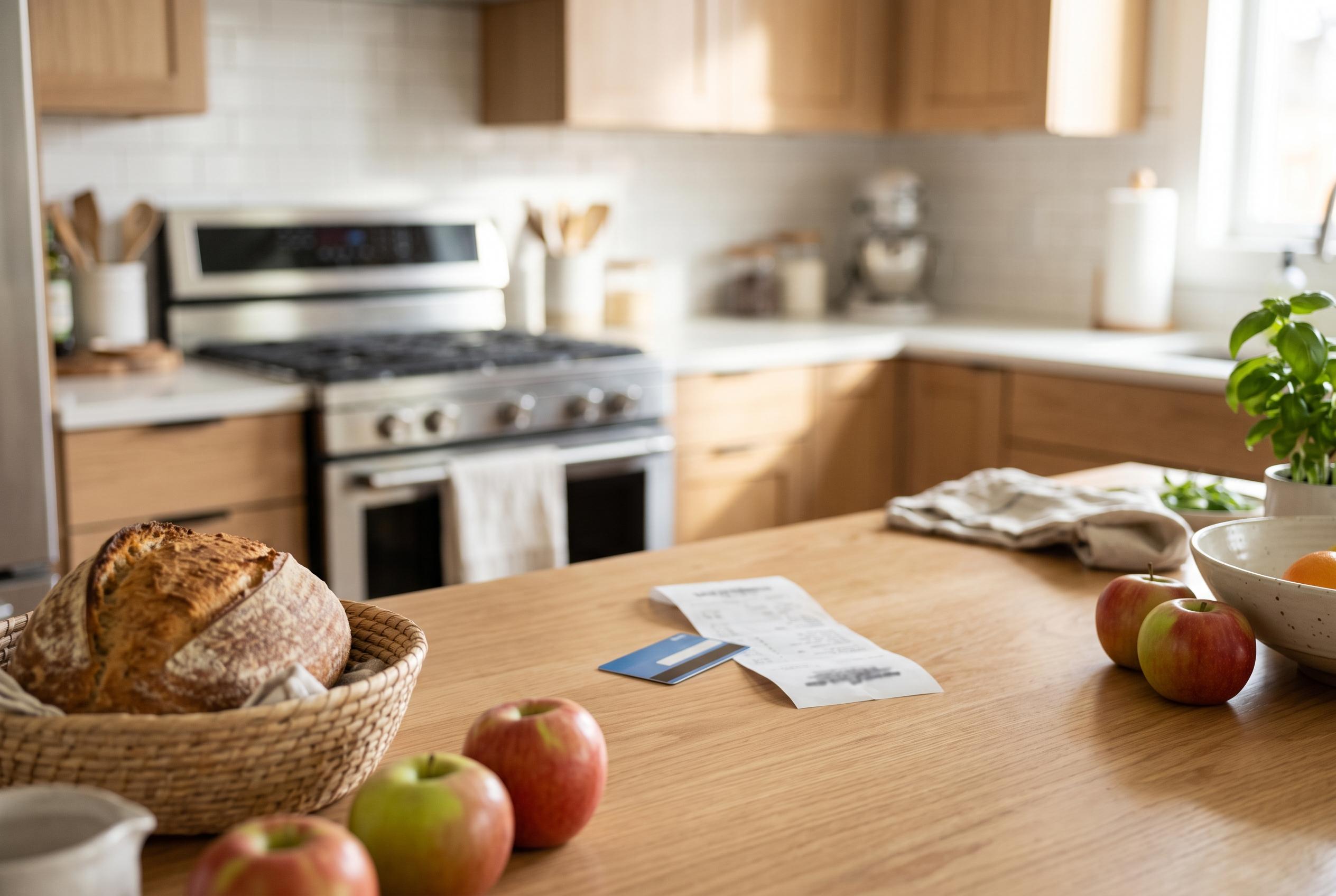

With credit card interest rates climbing, everyday grocery shopping on credit can unexpectedly turn into long-term debt, especially for vulnerable households relying on minimum payments.
Putting everyday food shopping on a credit card can look harmless in the moment, but the cost rises quickly once interest starts to compound. The SavingAdvice calculation shows how a $1,344 grocery bill can become $1,371.53 after just one month on a card carrying a 24.92% annual percentage rate, and how the balance keeps growing until it is cleared in full. That is a warning worth heeding at a time when rates remain elevated: NerdWallet said the average APR on credit card accounts assessed interest stood at 21.52% in February 2026, while Experian put the average at 19.35% in July 2026.
For a family of four, the article uses U.S. Department of Agriculture spending estimates to show how quickly a routine supermarket run can become expensive debt. If that $1,344 bill is left unpaid and then tackled with $250 monthly instalments, the total repayment reaches $1,470.03 over seven months. In other words, the groceries end up costing $126.03 more than the shelf price before a single extra item is bought.
The burden is even more striking when only the minimum payment is made. Using Bureau of Labor Statistics food-at-home spending data for households headed by someone aged 65 or older, the piece estimates that a retired couple spending $437.58 on groceries could take 22 months to clear the balance if they pay only the minimum. By the end, the food bill would have climbed to $549.46, including $111.88 in interest. That is the sort of slow, silent debt spiral that can leave households technically up to date while still falling further behind.
Ashley Morgan, a lawyer quoted by SavingAdvice, said being current on bills does not necessarily mean a household’s finances are healthy if it is relying on minimum payments and credit for basics. The practical problem is that carrying a balance usually eliminates the grace period on new purchases, so fresh grocery charges can begin accruing interest immediately. Once that happens, next month’s food shop is no longer just food; it is also a new round of finance charges.
The advice from consumer experts is blunt: stop using credit to fund regular living costs if at all possible. Morgan urged readers to put away credit cards and avoid buy now, pay later plans and personal loans for groceries. Lifestyle creator Janiece Okpobiri told SavingAdvice that food is consumed quickly, but the debt remains, which is what turns one difficult month into a longer pattern of borrowing.
There are still options for people already stuck in that cycle. Before missing a payment, borrowers can contact their card issuer to ask about temporary hardship programmes or a lower rate, and certified credit counselling agencies may be able to help arrange a debt management plan. The broader lesson is simple: groceries bought on credit can become far more expensive than they first appear, especially when the balance is allowed to linger.
Disclaimer: This article is intended to inform and educate, not to recommend or endorse any financial product, investment or strategy. Please consider your own financial circumstances and seek professional advice where appropriate before making financial decisions.