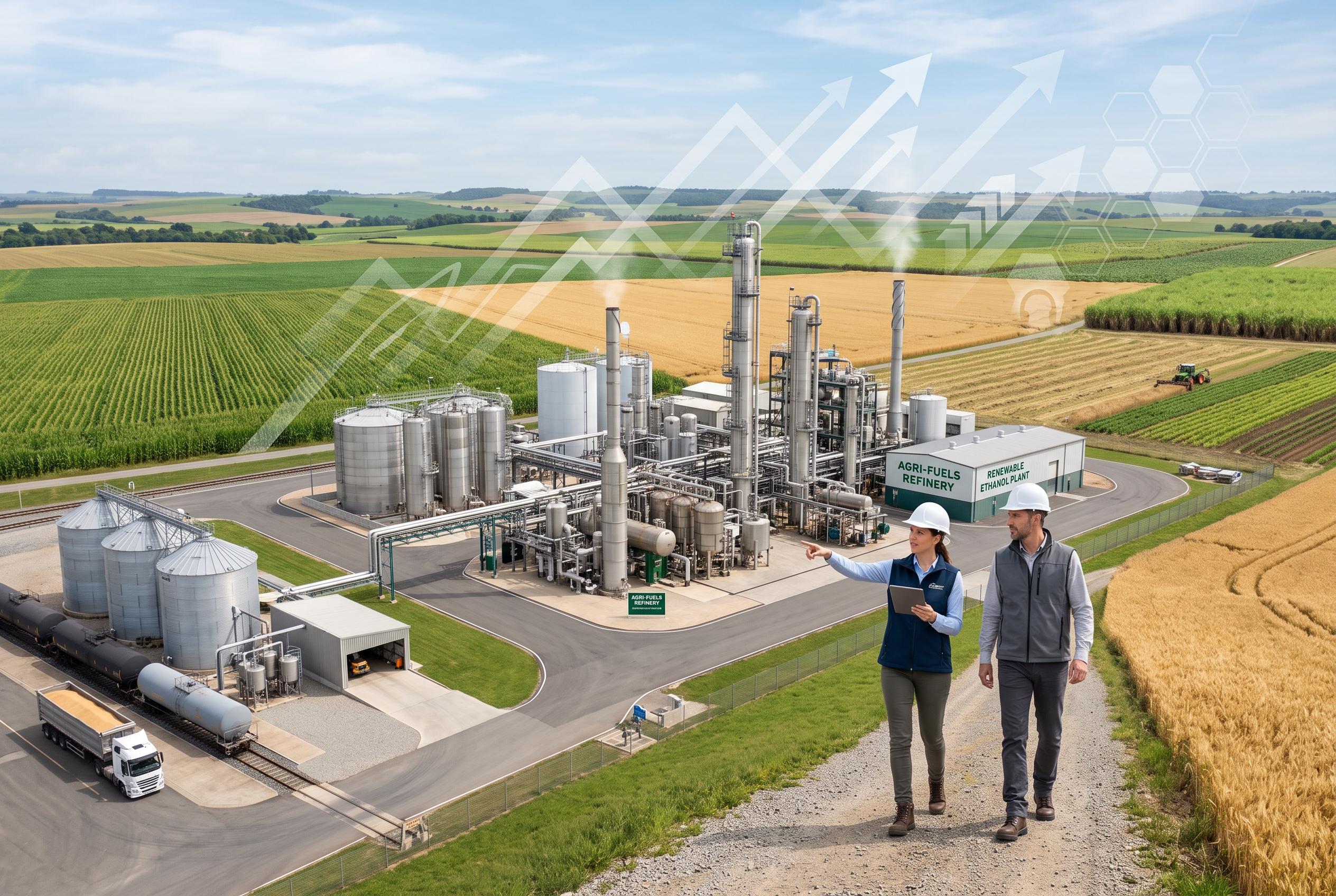

India has surpassed its ethanol blending target five years early, transforming the market from promise to scale. With a crowded investment landscape, the next phase hinges on plant design, feedstock choices, and strategic resilience, as sector growth becomes tied to precise economics and policy stability.
India’s ethanol sector has moved from promise to scale, but that does not make every new plant a safe bet. The country reached its 20% petrol-blending target in 2025, five years ahead of the original 2030 deadline under the National Policy on Biofuels, according to government briefings. Officials have said blending rose from 1.5% in 2014 to 20% in 2025, while ethanol production climbed from 38 crore litres in 2014 to 661.1 crore litres by June 2025.
That policy success has changed the investment case. What once looked like a straightforward play on demand growth is now a more crowded market with a much sharper focus on margins, procurement and plant design. Government data show the oil marketing companies had averaged 19.05% blending in the 2024-25 ethanol supply year by July 31, 2025, while July alone reached 19.93%. Officials also approved the diversion of 52 lakh metric tonnes of surplus FCI rice for ethanol in 2024-25 and 2025-26, alongside 40 lakh metric tonnes of sugar for 2024-25, underscoring how tightly the sector remains linked to state policy.
For investors, the central issue is no longer whether ethanol will be used, but how a plant will earn a return in a market where prices are administered and capacity is already large. The article published by IMARC Engineering argues that feedstock choice is decisive because procurement prices vary by route, with corn-based ethanol fetching the highest price among the main categories it cites. That means a project’s feasibility depends less on generic optimism and more on the economics of molasses, grain, dual-feed or second-generation production, plus the logistics of getting product to the right buyers.
The other risk is timing. IMARC Engineering says many projects only work when developers secure financing support, regulatory clearances and offtake certainty before construction begins. It points to interest subvention, state approvals and lender due diligence as sequential hurdles that can delay or derail a project if they are treated casually. The broader policy environment helps, but it does not eliminate the danger of stranded capacity if a plant is poorly located, too narrowly designed or dependent on a single feedstock exposed to weather or supply shocks.
That is why dual-feed flexibility and forward planning matter. The consultancy argues that plants built with room to adapt to future blending requirements, including a possible move beyond E20, are better placed than facilities engineered only to meet today’s threshold. Government figures suggest the sector’s expansion has already delivered major gains for farmers and fuel suppliers, but the next phase will reward projects that combine compliance, resilience and disciplined modelling rather than simply chasing the headline growth story.
Disclaimer: This article is intended to inform and educate, not to recommend or endorse any financial product, investment or strategy. Please consider your own financial circumstances and seek professional advice where appropriate before making financial decisions.