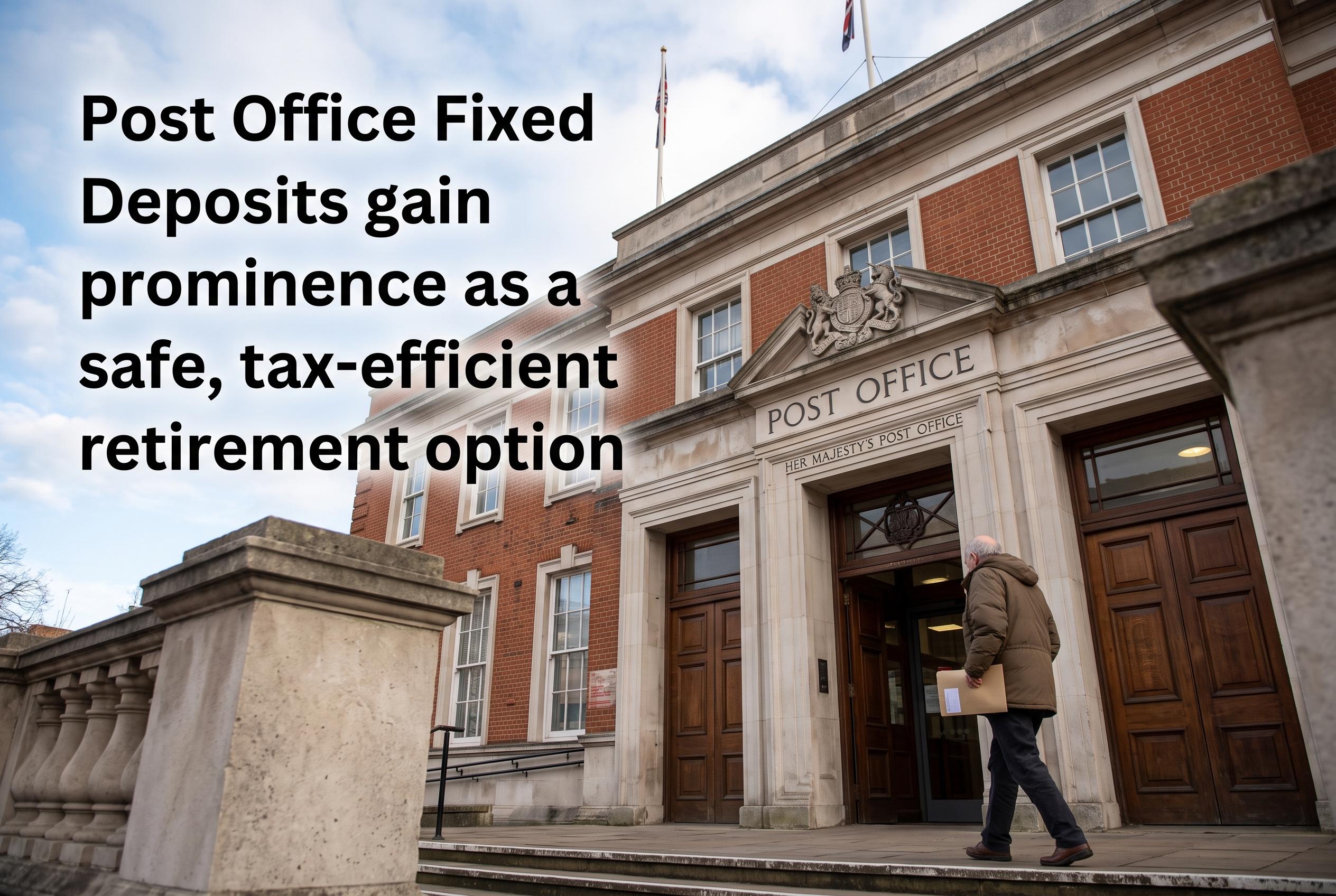

With fixed returns backed by government guarantee, Post Office Time Deposits are becoming an attractive choice for conservative savers aiming to build a secure retirement corpus, especially with added tax benefits and predictable yields.
For anyone building a retirement cushion, the priority is usually not chasing the highest possible return but preserving capital and securing steady growth. That is why Post Office Fixed Deposits, officially known as Post Office Time Deposits, often appeal to conservative savers: they combine government backing with fixed returns, giving investors clarity about what their money will earn over time.
The key attraction is safety. Post Office schemes are backed by the Government of India rather than the deposit insurance system that covers bank deposits, which means savers are relying on a sovereign guarantee rather than DICGC protection. Industry guides and consumer finance reporting also note that the interest rates are fixed for the chosen term, which can help retirees plan income more confidently than they might with market-linked products.
Tax treatment matters just as much as security. India Post says five schemes qualify for Section 80C deductions: Public Provident Fund, National Savings Certificate, the 5-year Time Deposit, Senior Citizens Savings Scheme and Sukanya Samriddhi Yojana. The 5-year Post Office Time Deposit is the only fixed deposit term in that group that qualifies, while shorter tenures do not. India Post also notes that the combined 80C limit is ₹1.5 lakh a year, not a separate allowance for each scheme.
That distinction is important because not every Post Office savings product offers the same tax advantage. The Times of India has reported that schemes such as Kisan Vikas Patra and the Post Office Monthly Income Scheme do not qualify for 80C deductions, which can catch out investors who assume all postal savings are tax-saving instruments. For older savers, the tax picture can be improved further because Section 80TTB allows eligible senior citizens to claim a deduction of up to ₹50,000 on interest income.
For retirement planning, the practical value of a Post Office Time Deposit lies in its predictability. Finpluss reports indicative rates of 6.9% for 1 year, 7% for 2 years, 7.1% for 3 years and 7.5% for 5 years, with the 5-year option combining fixed returns and 80C eligibility. That makes it useful as part of a broader strategy, especially when paired with laddering, where savings are split across different maturities so cash becomes available at regular intervals without forcing early withdrawal.
Disclaimer: This article is intended to inform and educate, not to recommend or endorse any financial product, investment or strategy. Please consider your own financial circumstances and seek professional advice where appropriate before making financial decisions.