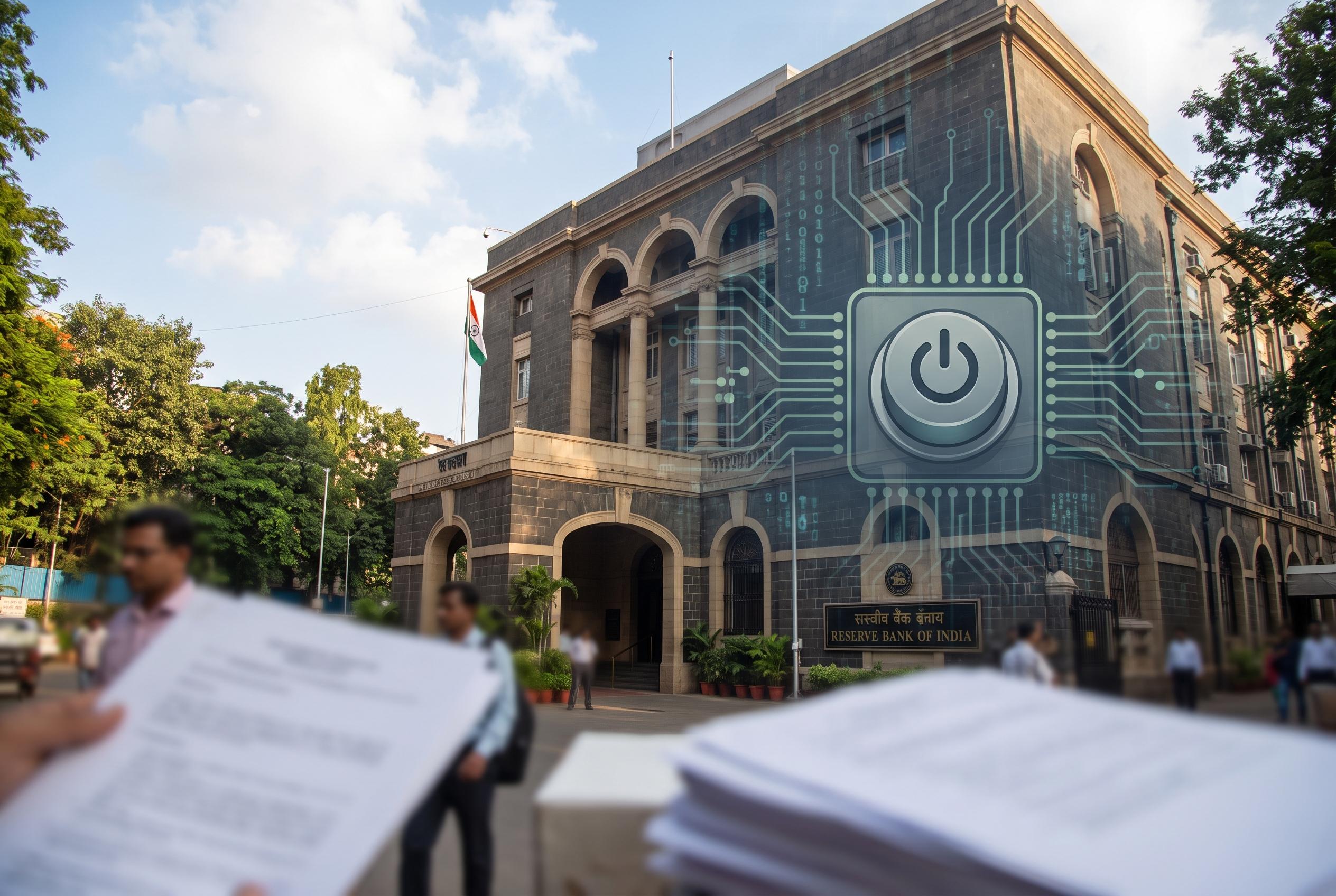

The Reserve Bank of India has proposed new guidelines requiring banks to implement kill-switches and rigorous oversight for AI systems, marking a shift towards treating AI as an operational risk rather than just a productivity tool.
Banks in India may soon be required to treat artificial intelligence as something that can be stopped as quickly as it is deployed. According to draft guidance from the Reserve Bank of India, regulated lenders should be able to override, suspend or shut down AI systems if they begin producing harmful or unreliable results, a move that reflects growing concern over models that can drift, hallucinate or behave unpredictably as conditions change. The proposal is part of a wider model risk management framework that would put AI governance under board-level oversight and make institutions accountable for the outcomes of models they use, whether built in-house or supplied by third parties, The Economic Times reported and LiveMint explained.
That marks a shift from treating AI as a productivity tool to treating it as an operational risk that needs constant supervision. The RBI’s draft calls for a risk-based approach in which firms classify models by level of risk and apply stronger controls to the most sensitive systems. High-risk models would need approval from a board committee before use, while all regulated entities would need structured oversight, validation and change-management processes, according to The Economic Times and other Indian business publications covering the draft.
The practical challenge is not just whether a bank can switch a model off, but whether it can see enough to know when that is necessary. The article by New Relic argues that banks need end-to-end observability across the full AI stack so they can trace prompts, model responses, tool calls and latency spikes before those issues reach customers or regulators. That point is echoed by LiveMint’s summary of the RBI proposal, which says firms should maintain human checks on outputs, guard against automation bias and ensure staff do not simply accept machine-generated decisions without independent judgement.
Consumer-facing systems will face added scrutiny. According to reporting on the draft, banks would need to tell customers when they are dealing with AI and provide a route to a human adviser if requested. The draft also appears to contemplate grievance handling for harms caused by automated systems, while the central bank’s emphasis on accountability suggests that even outsourced models would not shift liability away from the regulated institution. As the consultation remains open, some details may still change, but the direction is clear: Indian banks will be expected to know what their models are doing, prove it continuously and intervene fast when they are not behaving as intended.
Disclaimer: This article is intended to inform and educate, not to recommend or endorse any financial product, investment or strategy. Please consider your own financial circumstances and seek professional advice where appropriate before making financial decisions.