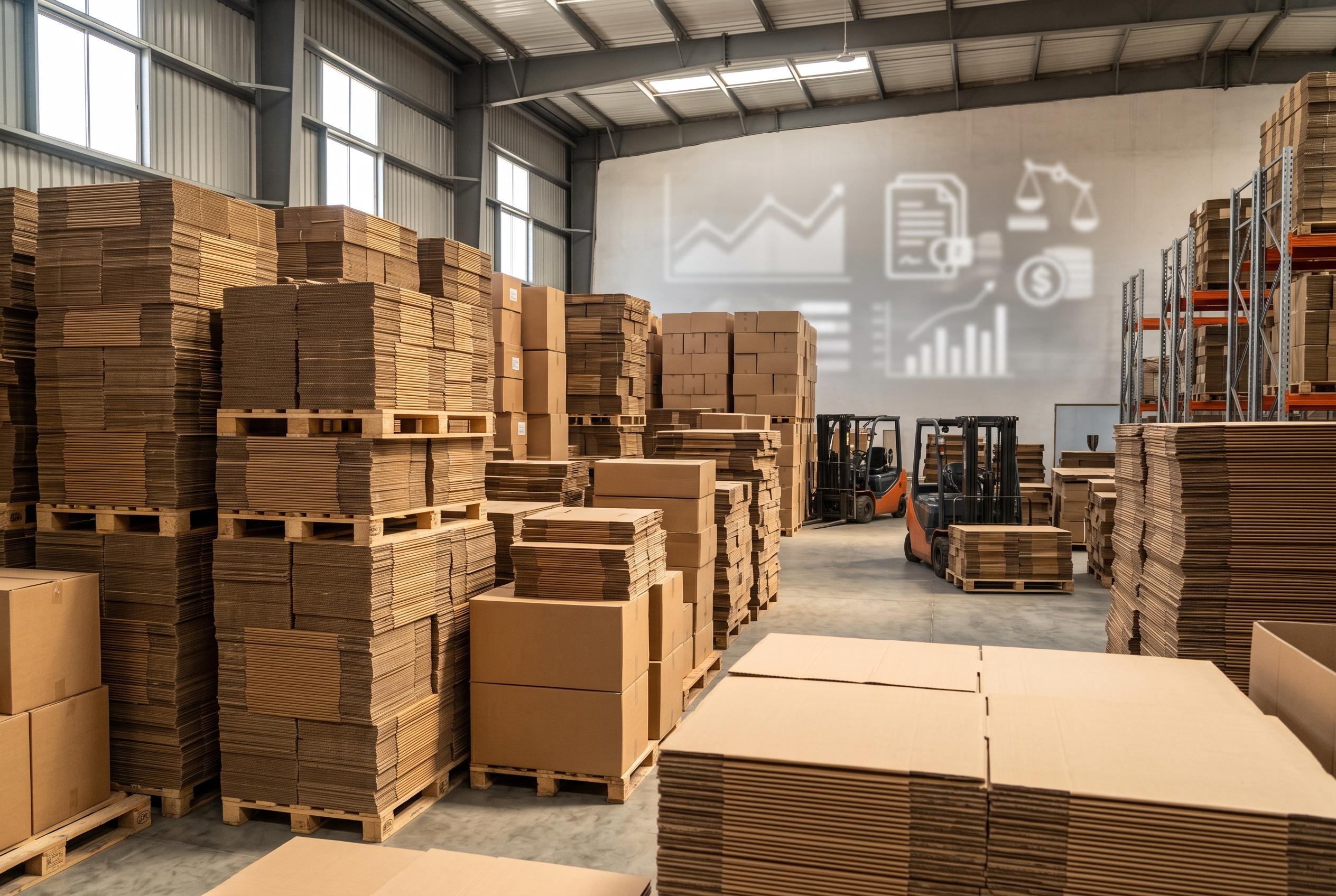

The Indian corrugated packaging industry warns that recent GST rate changes have created an inverted duty structure, locking up significant working capital and threatening the growth of a sector vital to logistics and circular economy initiatives.
India’s corrugated packaging industry is warning that a September 2025 GST overhaul has left it with a damaging mismatch between input and output taxes, despite the government’s broader push to simplify rates. The sector, which supplies the brown boxes used across food, farm produce, medicines, electronics, textiles, engineering goods and e-commerce, says the new structure has raised GST on kraft paper and other key raw materials to 18% while lowering the tax on finished corrugated boxes to 5%.
According to industry estimates, the sector is worth about ₹40,000 crore and includes more than 15,000 manufacturing units, most of them micro, small and medium enterprises. The Indian Corrugated Case Manufacturers’ Association says the change has created an inverted duty structure, a tax arrangement in which firms pay more tax on inputs than they collect on final sales. That leaves manufacturers sitting on large amounts of unutilised input tax credit, which they say cannot be fully offset against their output liability.
Trade groups argue the strain is not merely accounting. They say about ₹366 crore in working capital is locked up each month, limiting money available for machinery, automation, expansion, worker training and exports. While GST refund mechanisms exist, they say the process can be slow and paperwork-heavy, adding pressure on businesses that already work on thin margins. The association says the industry is not seeking special concessions, only restoration of tax neutrality so that levies do not cascade through the production chain.
The complaint comes as the government tries to strengthen domestic manufacturing and exports through more efficient logistics and packaging. Industry representatives say corrugated boxes already fit circular-economy goals because they are biodegradable, recyclable and made from recovered fibre. They have submitted representations to Finance Minister Nirmala Sitharaman, finance ministry officials, GST Council members and state governments, urging either a cut in the GST on kraft paper to 5% or a restoration of the 18% rate on finished boxes, paired with full input credit flow.
Disclaimer: This article is intended to inform and educate, not to recommend or endorse any financial product, investment or strategy. Please consider your own financial circumstances and seek professional advice where appropriate before making financial decisions.