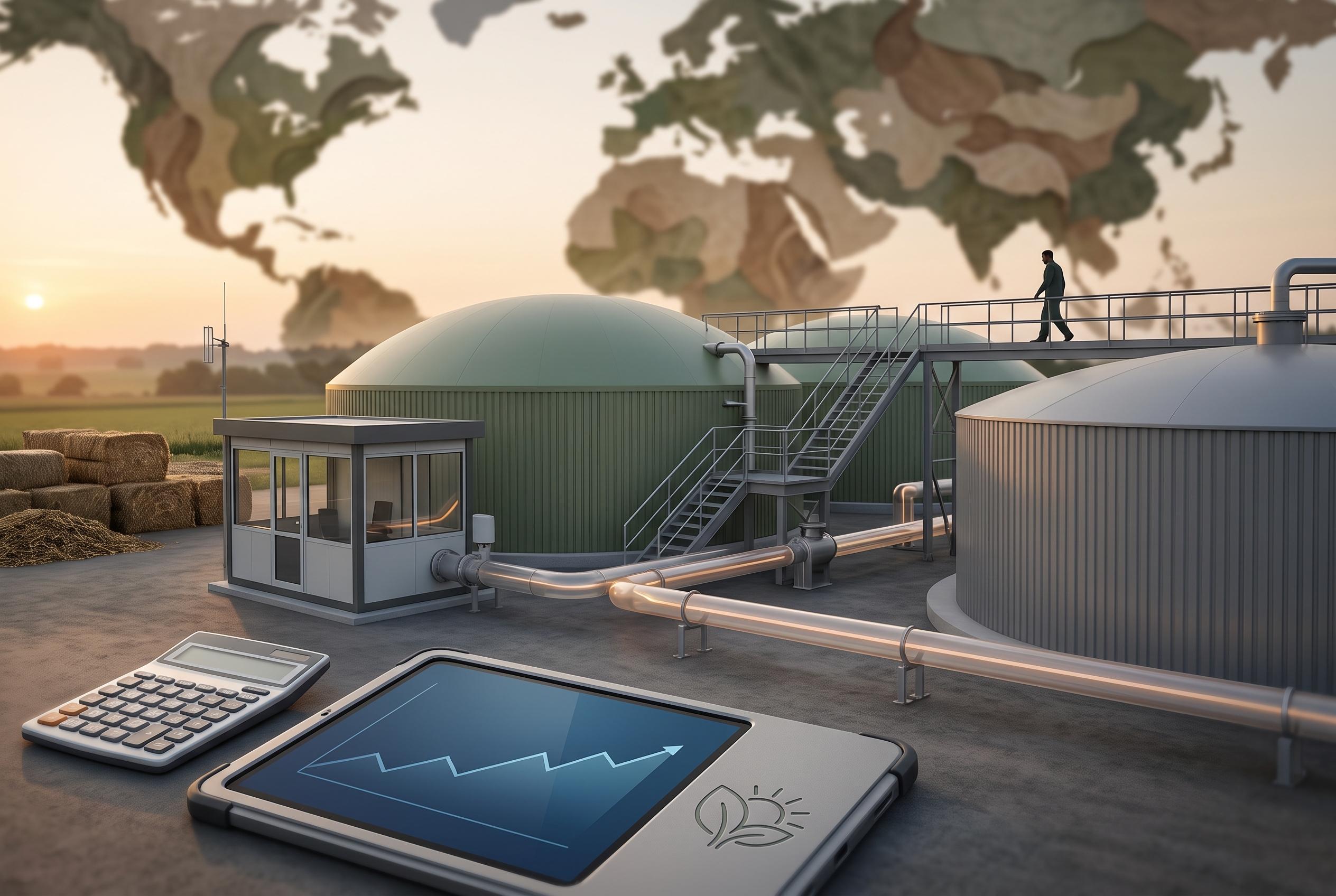

NexGen Energia is expanding its domestic biogas infrastructure across India, transforming agricultural and industrial waste into fuel and fertiliser, amid rising policy support and a push for energy self-reliance.
NexGen Energia is casting its business as part of India’s wider push for energy self-reliance, arguing that crop residue, organic waste and industrial by-products can be turned into a reliable domestic fuel stream rather than burned, dumped or imported. The Noida-based company, founded in February 2019, says its model is built around compressed biogas, or CBG, together with green diesel, bio-fertiliser, briquettes, EV charging and lubricants.
The company’s pitch comes at a time when India’s CBG industry is drawing growing policy support and investor attention. Business Standard reported in January that the sector is expanding quickly on the back of blending mandates and government incentives, but that feedstock sourcing and scale-up remain persistent hurdles. NexGen presents itself as a company designed to work through those bottlenecks rather than around them.
According to the company, its first plant was commissioned in Gorakhpur, Uttar Pradesh, and it now has operating facilities in Haridwar and Chennai. It is also building a wider pipeline across Uttar Pradesh, Bihar and Rajasthan, with sites planned at Bulandshahr, Fatehgarh, Balrampur, Arrah, Kota and Bikaner. The company says three further plants in Vijayawada, Indore and Rajkot are due by the end of this year.
One of NexGen’s central claims is that its structure gives it an advantage in a capital-heavy sector. Instead of buying land outright, it partners with landowners who can provide about 10 acres for a project, while NexGen handles design, installation and operations. The company says that approach allows it to keep control of execution and reduce the delays that often slow industrial energy projects.
That operational model is paired with technology designed to broaden the range of usable feedstock. NexGen says its plants use anaerobic digestion to process agricultural residue, food waste and animal manure into raw biogas, and can also handle spent wash and stillage from distilleries. For gas upgrading, the company says it works with partners that provide vacuum pressure swing adsorption, membrane separation and amine scrubbing systems.
The company’s plans also reflect a broader change in India’s clean-energy narrative, where waste is increasingly being treated as an economic asset. The Economic Times reported last year that NexGen was preparing one of the country’s early CBG plants in Padruana, Kushinagar, using Napier grass to produce fuel, cut emissions and support rural jobs. That aligns with the company’s wider claim that its projects can turn residue into fuel, fertiliser and income for farmers and landowners.
NexGen says the social case for its business is as important as the commercial one. By its account, the model offers first-time entrepreneurs, farmers and smaller investors a route into energy infrastructure that has traditionally been dominated by large firms and public-sector players. The company argues that every new plant reduces reliance on imported fuels while also creating a market for waste that might otherwise be burned in the open.
The larger backdrop is a national one. The government’s GOBARdhan National Circular Bioenergy Scheme is intended to accelerate domestic CBG production and deepen the circular economy around farm and organic waste. Against that policy push, NexGen is positioning itself as a private developer trying to scale a multi-state business around an idea it describes as energy freedom: replacing imported gas with fuel made from Indian residue.
Disclaimer: This article is intended to inform and educate, not to recommend or endorse any financial product, investment or strategy. Please consider your own financial circumstances and seek professional advice where appropriate before making financial decisions.