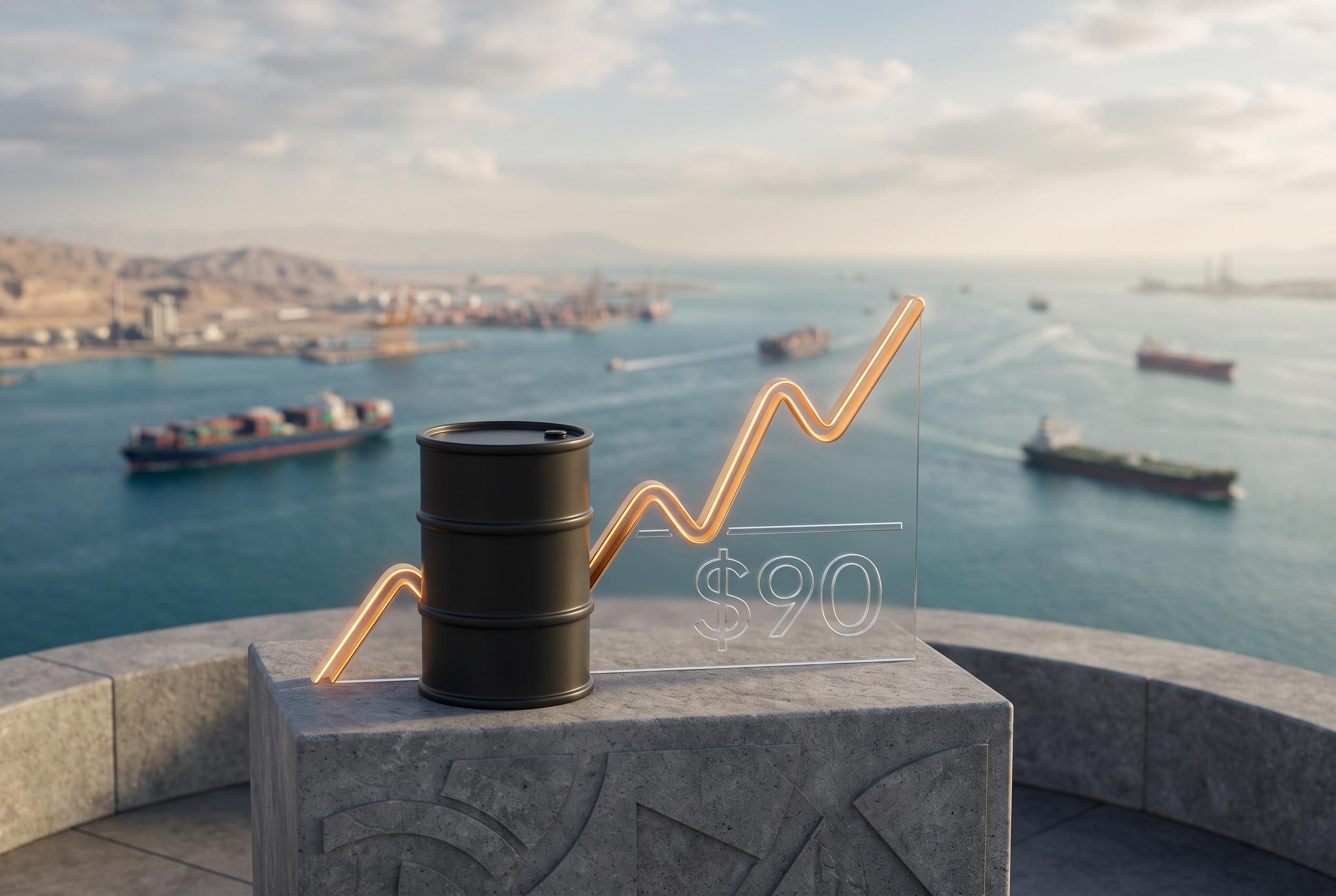

Oil prices continue their rally above $90 amid fears of sustained disruptions at the Strait of Hormuz, highlighting geopolitical risks and their impact on global markets and India’s economy.
Oil prices climbed further on Wednesday as traders focused less on swelling US inventories and more on the risk that shipping through the Strait of Hormuz could remain disrupted, keeping a geopolitical premium in the market. Brent crude was trading near $89.67 a barrel, up 0.9%, while West Texas Intermediate stood at $83.98, also 0.9% higher, extending a rally that has pushed Brent more than 7% higher this week.
The latest move comes against a broader backdrop of heightened tension around one of the world’s most important energy chokepoints. The Strait of Hormuz handles roughly a fifth of global oil flows, and reports on the 2026 crisis there have shown how quickly prices can spike when passage is threatened. A separate chronology of the oil market said Brent surged to $92.69 in March 2026 as the conflict intensified, while the crisis itself later drove prices above $100 a barrel.
That background helps explain why a large build in US crude stocks has not been enough to cool sentiment. Inventories rose by 9.07 million barrels in the week to August 7, far above expectations, but commercial holdings excluding the Strategic Petroleum Reserve have still fallen sharply over recent weeks. The market’s attention remains fixed on whether shipping lanes normalise, with conflicting diplomatic signals adding to the uncertainty.
For India, the price move matters not only because of the import bill but also because of pressure on the rupee. The currency was trading around ₹95.43 to the dollar, little changed on the day, but higher crude typically lifts dollar demand from refiners and widens external financing pressure. Care Ratings has said a $10 rise in oil prices could add 55 to 60 basis points to headline inflation, while a Union Bank of India note warned that the shutdown of Hormuz has already intensified strain on the rupee by raising energy import costs.
The broader lesson for markets is that geopolitics is now outweighing the usual inventory signals. If a credible reopening of the Strait of Hormuz emerges, some of the risk premium could unwind quickly. If not, oil may remain near elevated levels, with the combination of stronger crude and a softer rupee posing a growing risk for India’s inflation, trade balance and corporate earnings.
Disclaimer: This article is intended to inform and educate, not to recommend or endorse any financial product, investment or strategy. Please consider your own financial circumstances and seek professional advice where appropriate before making financial decisions.