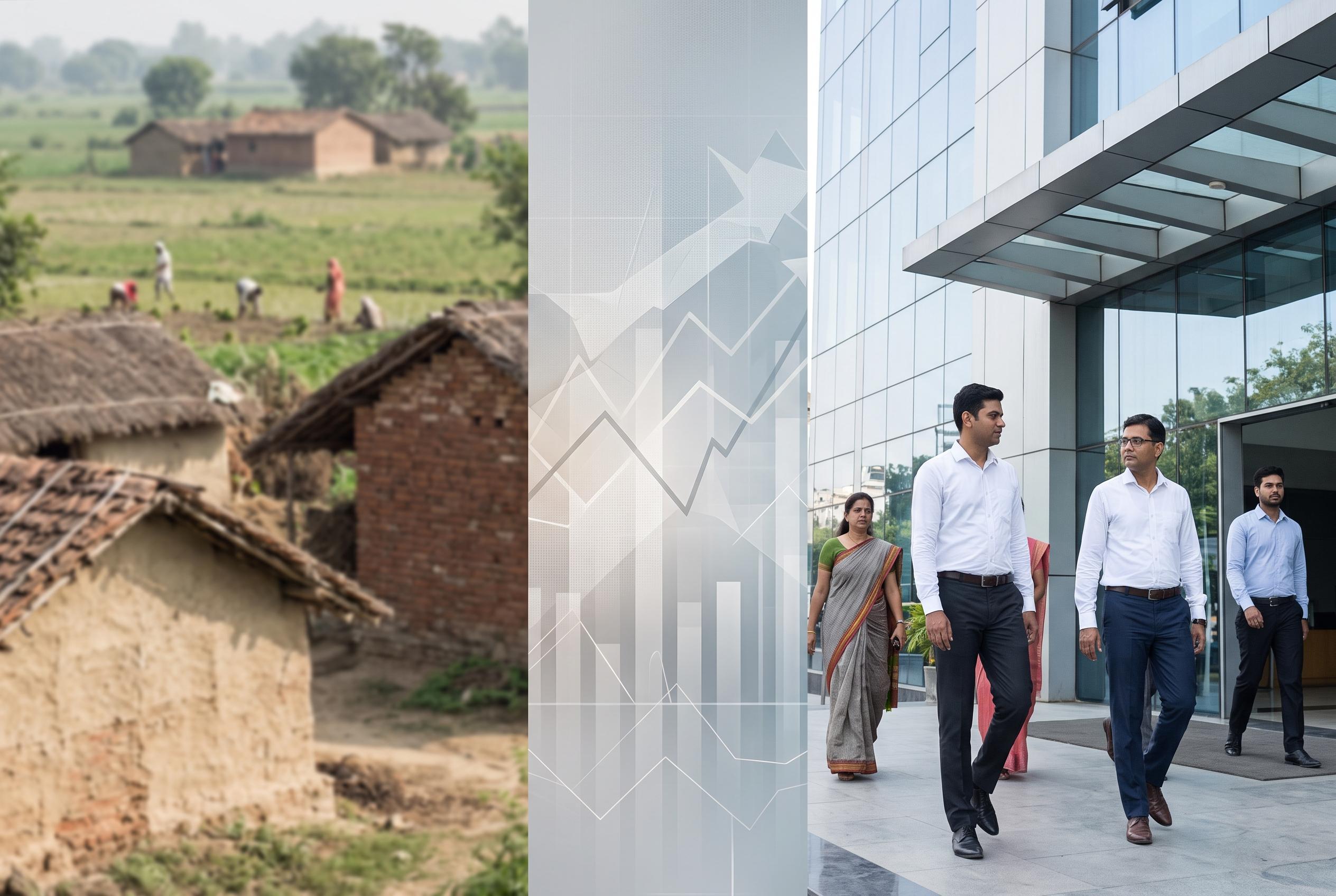

India’s April employment data reveals a marginal rise in overall unemployment driven by rural joblessness, with urban areas showing signs of recovery and persistent gender gaps highlight ongoing workforce disparities.
India’s job market remained broadly steady in April, though the latest government data showed a slight rise in unemployment, driven by weakness in rural areas even as cities improved. The National Statistics Office’s Periodic Labour Force Survey put the unemployment rate for people aged 15 and above at 5.2% in April, up from 5.1% in March and unchanged from April last year.
The increase was almost entirely rural. Rural unemployment rose to 4.6% from 4.3% a month earlier, while the urban rate eased to 6.6% from 6.8%, its lowest level in 12 months. Urban women saw the sharpest improvement, with joblessness falling to 8.5% from 9%, while the rate for urban men also slipped to 5.9%. Business Standard reported similar figures, pointing to a labour market that is stable overall but still uneven across regions and gender groups.
Women continued to face more difficult conditions than men. The overall female unemployment rate rose to 5.4% from 5.3%, while the male rate inched up to 5.1% from 5%. Labour force participation also weakened, with the participation rate for people aged 15 and above slipping to 55% from 55.4% in March. Female participation fell to 33.9%, an eight-month low, underscoring the persistent gap between men and women in India’s workforce.
The worker population ratio, another measure of employment intensity, also declined to 52.2% from 52.6%. Rural men continued to have the strongest attachment to work, at 74.5%, while rural women stood at 36.5%. In cities, the gap was even wider, with participation among women at 22.9% compared with 70.7% for men. The monthly bulletin covered 3,74,243 people across the country, according to the official release, and adds to a recent run of data suggesting that India’s labour market is changing only gradually rather than sharply.
Disclaimer: This article is intended to inform and educate, not to recommend or endorse any financial product, investment or strategy. Please consider your own financial circumstances and seek professional advice where appropriate before making financial decisions.