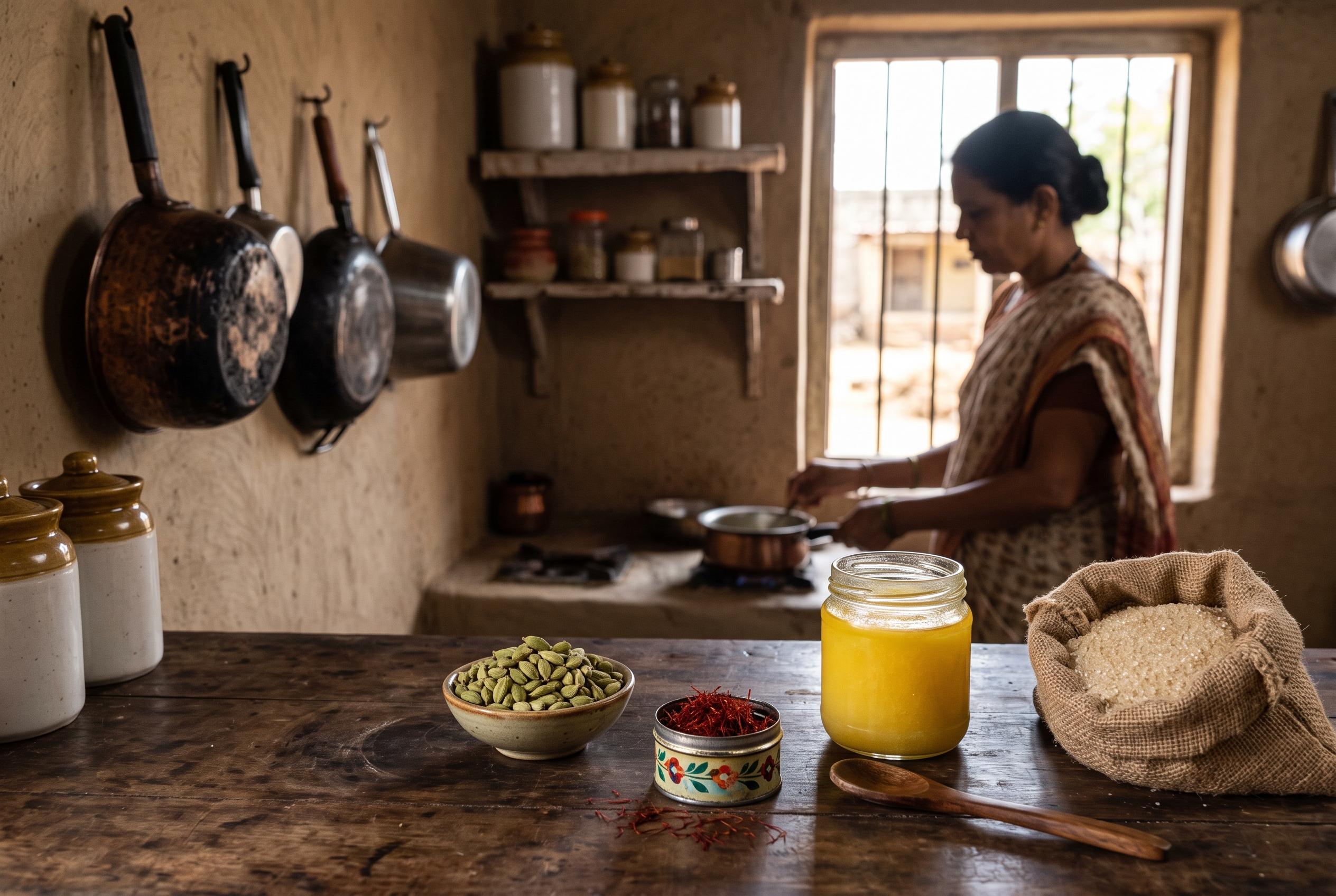

Rising temperatures and erratic rainfall are endangering key ingredients behind India’s beloved sweets, with potential impacts on availability, prices, and farming practices amid mounting climate challenges.
A box of mithai may look like a simple marker of celebration, but it also reflects a supply chain that is increasingly exposed to climate stress. From sugarcane and wheat to chickpeas, cashews and sesame, many of the ingredients behind India’s best-known sweets are vulnerable to rising temperatures, erratic rain and drought, with potential knock-on effects for both prices and availability.
Sugar sits at the centre of that chain. It is essential to gulab jamun, rasgulla, jalebi, peda and many types of ladoo, while jaggery also depends heavily on sugarcane. Reuters reported earlier this month that sugar prices climbed to a record high as supplies tightened before the festival season, with poor rainfall in key producing states such as Maharashtra and Karnataka adding to concerns. Researchers in the United Kingdom and Brazil have also found sugarcane yields are highly sensitive to future climate change and climate extremes, reinforcing the crop’s exposure to heat, rainfall shifts and other weather shocks.
That vulnerability is not limited to one region. A district-level study in Uttar Pradesh found marked changes in rainfall, temperature and evapotranspiration between 1986 and 2015, with those shifts materially affecting sugarcane output. Separate modelling work in Punjab reached a similar conclusion, warning that varietal choice will matter as climate scenarios change across different agro-climatic zones. In India, the Indian Council of Agricultural Research has called for sugarcane varieties that use water and nutrients more efficiently, an acknowledgement that adaptation will be as important as production.
Other sweet-making staples face similar pressure. Jalebi batter commonly uses refined wheat flour, and wheat is known to be vulnerable to heat during key growth stages. Gram flour, or besan, used in many ladoos and Mysore pak, depends on chickpeas, a crop whose yields can be sharply affected by climate change depending on where it is grown. Studies on chickpeas in South Asia and East Africa suggest drought- and heat-tolerant varieties could help reduce losses, but the broader picture remains one of rising risk for ingredients that once seemed reliably abundant.
Even cashews, the foundation of kaju katli, are not immune. The Directorate of Cashew Research says most Indian plantations are rain-fed and need contingency planning for delayed monsoons, rainfall deficits and drought. Research from Odisha has shown meaningful differences in how cashew varieties perform under changing conditions, suggesting that breeding and selection will be central to maintaining supply. A separate recent study in Maharashtra and Karnataka found that yield gains can coexist with climate and water risks, but only where irrigation, management and technology offset the strain of heat and moisture stress.
The larger lesson is that climate change does not hit every crop in the same way, or at the same pace. For consumers, the impact may show up first in costlier sugar, nuts or flour rather than empty shop shelves. For farmers, the challenge is increasingly unpredictability. And for a country where mithai is woven into weddings, birthdays and festivals, that means a familiar box of sweets may soon carry a less visible story about warming fields, changing seasons and the fragile agriculture behind a cherished tradition.
Disclaimer: This article is intended to inform and educate, not to recommend or endorse any financial product, investment or strategy. Please consider your own financial circumstances and seek professional advice where appropriate before making financial decisions.