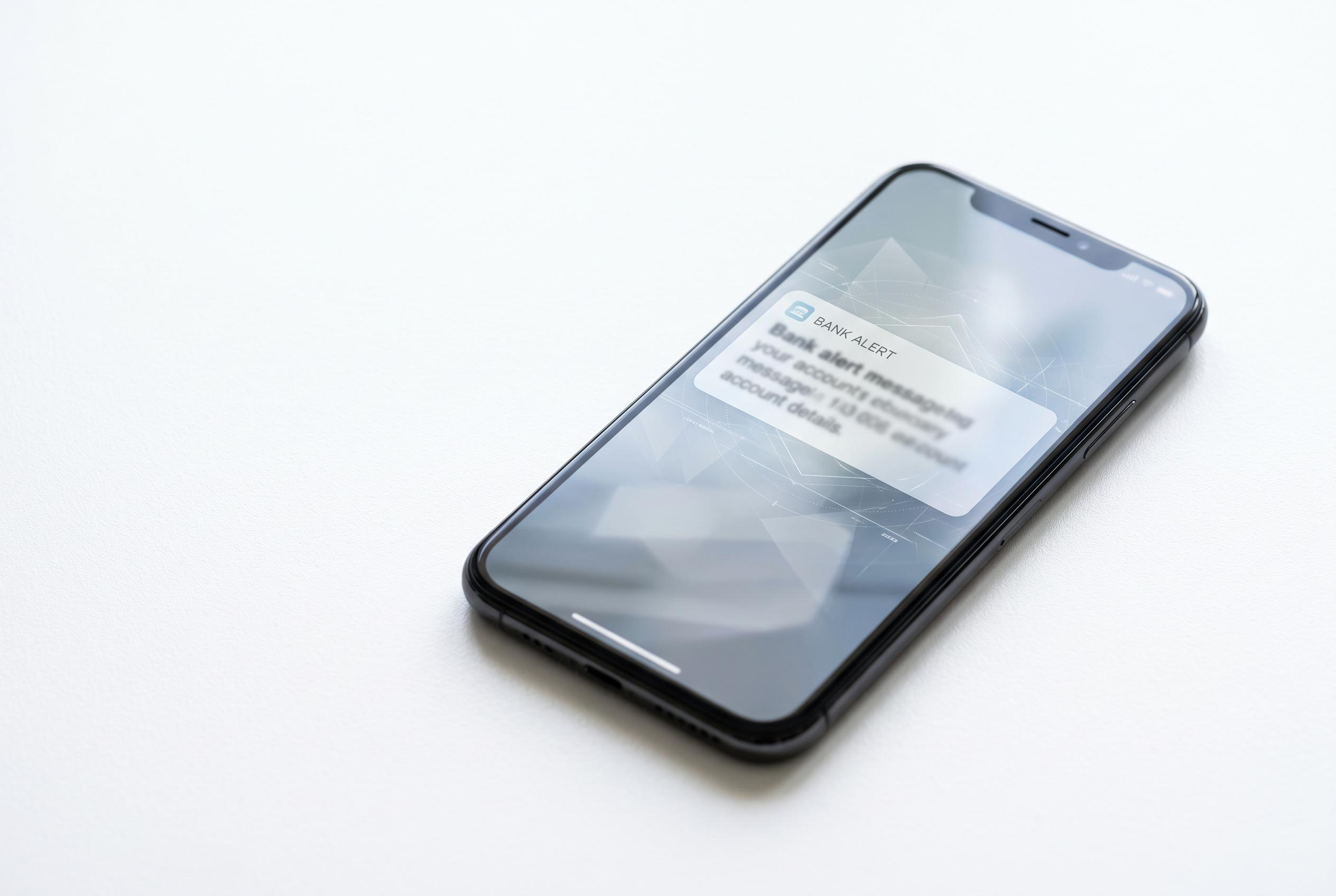

Criminals are now mimicking genuine bank text alerts to trick customers into revealing sensitive information, prompting urgent calls for consumers to verify transactions through official channels.
Banks have long encouraged customers to treat text alerts as an early warning system for fraud. That trust is exactly what scammers are exploiting. Criminals are now sending fake purchase confirmations that closely resemble genuine card security messages, hoping recipients will panic, click a link and hand over sensitive information before they have time to think.
The fraud usually begins with a message claiming that a sizeable card purchase has just been made, often for a high-value item such as a smartphone or electronics. The text then urges the recipient to act immediately, either by tapping a link to dispute the charge or by replying to cancel it. According to consumer protection warnings from the Georgia Attorney General’s office, that sense of urgency is deliberate: the aim is to push people into responding before they verify whether the message is real.
From there, the scam may lead to a fake bank page, a phoney dispute portal or a call to a bogus customer-service line. Victims are often asked to provide card numbers, security codes, login details or other personal data that can be used for identity theft or further fraud. The Georgia Attorney General’s office says similar scams have also involved fraudsters posing as card-company investigators in order to extract the three-digit security code on the back of a card.
Part of the danger lies in how convincing the messages can be. Scammers may mimic the wording used by real banks, spoof sender names or even make the text appear in the same message thread as legitimate alerts. At the same time, some banks do genuinely use automated text warnings and transaction checks, so consumers can be caught off guard by a message that looks routine. Amegy Bank, for example, says its mobile fraud alert service sends texts when suspicious activity is detected and asks customers to confirm whether a purchase is genuine.
The safest response is to ignore any link or phone number included in the message and verify the transaction through official channels instead. That means opening the bank’s app directly or calling the number on the back of the card. If the purchase is real, it will appear in the account record; if it is fake, the bank can handle the dispute securely. The Georgia Attorney General’s office and the Better Business Bureau both advise consumers to report suspicious messages, since doing so can help stop similar scams from spreading.
The broader pattern is familiar: fraudsters keep adapting well-known digital tricks to whatever consumers are most used to seeing. Text-based purchase alerts are useful, but they are now also a prime disguise for phishing attempts. The habit that matters most is simple: never trust an urgent financial message until you have checked it independently.
Disclaimer: This article is intended to inform and educate, not to recommend or endorse any financial product, investment or strategy. Please consider your own financial circumstances and seek professional advice where appropriate before making financial decisions.