

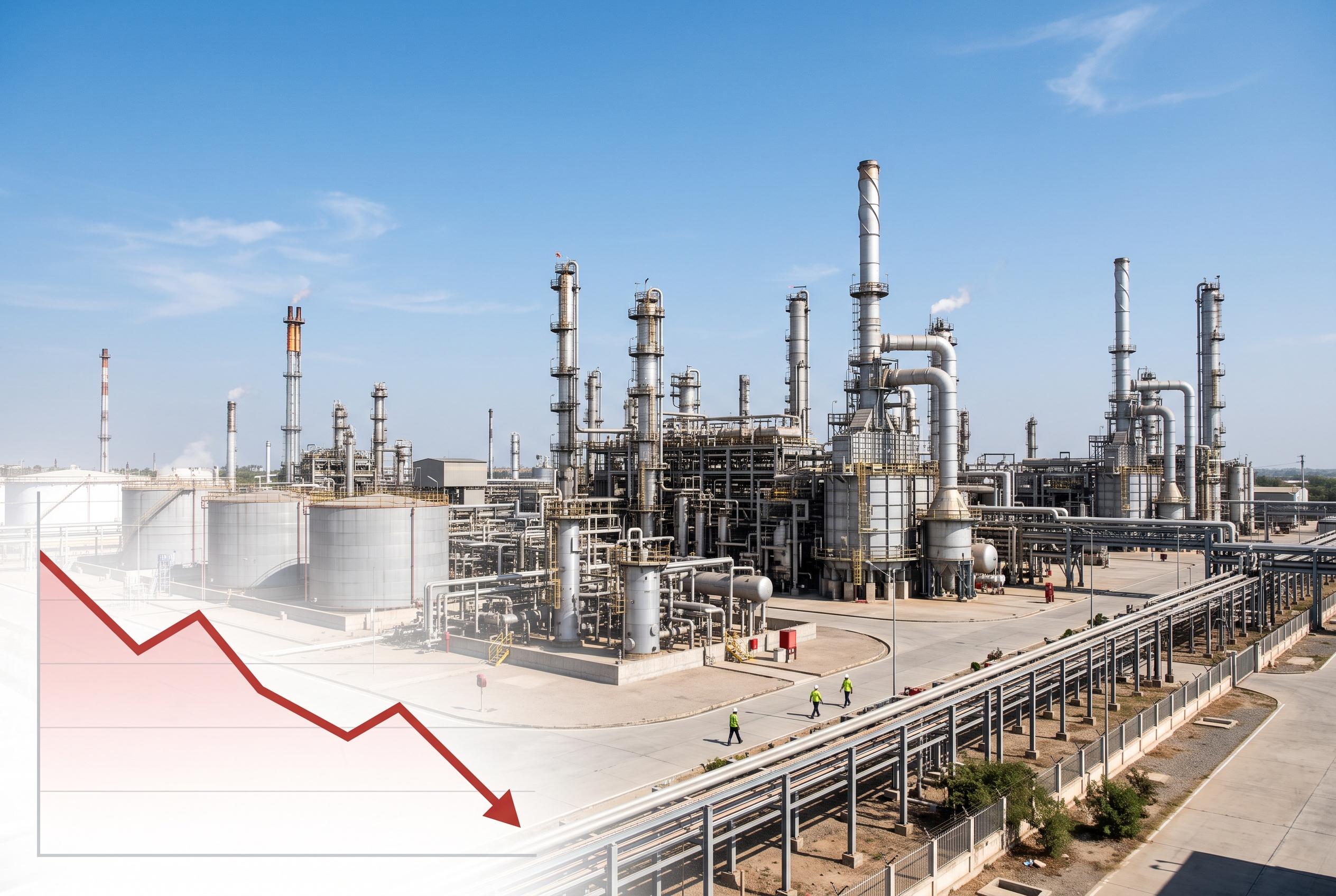

India’s state-run oil and gas companies have reported their first quarterly fall in capital expenditure in at least five years, raising concerns over energy security and refinery growth, despite ongoing investments in renewables and petrochemicals.
India’s state-run oil and gas companies have posted their first quarterly fall in capital spending in at least five years, a setback that comes at a sensitive moment for energy security and refinery expansion. Business Standard reported that combined capex by the public sector firms fell 3.8% year on year to ₹27,161 crore in the first quarter of 2026-27, ending a run of steady growth through recent first quarters.
The largest drags came from Oil and Natural Gas Corporation and Indian Oil Corporation. ONGC’s capex fell 16.7% to ₹6,834 crore, while IOC’s spending dropped 43% to ₹3,626 crore, according to the report. Oil India, Hindustan Petroleum Corporation and Numaligarh Refinery also recorded weaker spending, even as the sector’s overall balance sheets remained relatively healthy. IOC has separately outlined a ₹32,700 crore capex plan for FY27, including ₹5,000 crore for renewable energy projects and work to lift refining capacity to 75 million metric tonnes a year, according to a company update carried by Sahi.com.
Analysts say the quarterly dip may reflect timing rather than a lasting shift. Deepak Mahurkar of PwC India told Business Standard that project execution, clearances and disbursements can all affect when money actually gets spent, and that a single quarter is too short a window to judge the sector. Janak Raj of the Centre for Social and Economic Progress said price swings, geopolitical tension in West Asia, higher shipping insurance costs and pressure on refining margins likely made companies more cautious. He also noted that oil PSU capex has often been back-ended, with only 20% to 25% of annual targets typically spent in the first quarter.
Even so, the stakes are high. Raj said weaker upstream investment could eventually feed through to lower reserve replacement and production, while delayed downstream spending could hinder refinery and pipeline efficiency. At the same time, Prashant Vasisht of ICRA argued that one quarter should not be overread, pointing to ongoing investment plans in renewables, petrochemicals, refineries and fertiliser projects. His view was echoed by ONGC management in an August 5 analyst call, where the company said annual investment has been running at about $3.5 billion to $4 billion and is expected to continue along similar lines.
Disclaimer: This article is intended to inform and educate, not to recommend or endorse any financial product, investment or strategy. Please consider your own financial circumstances and seek professional advice where appropriate before making financial decisions.



