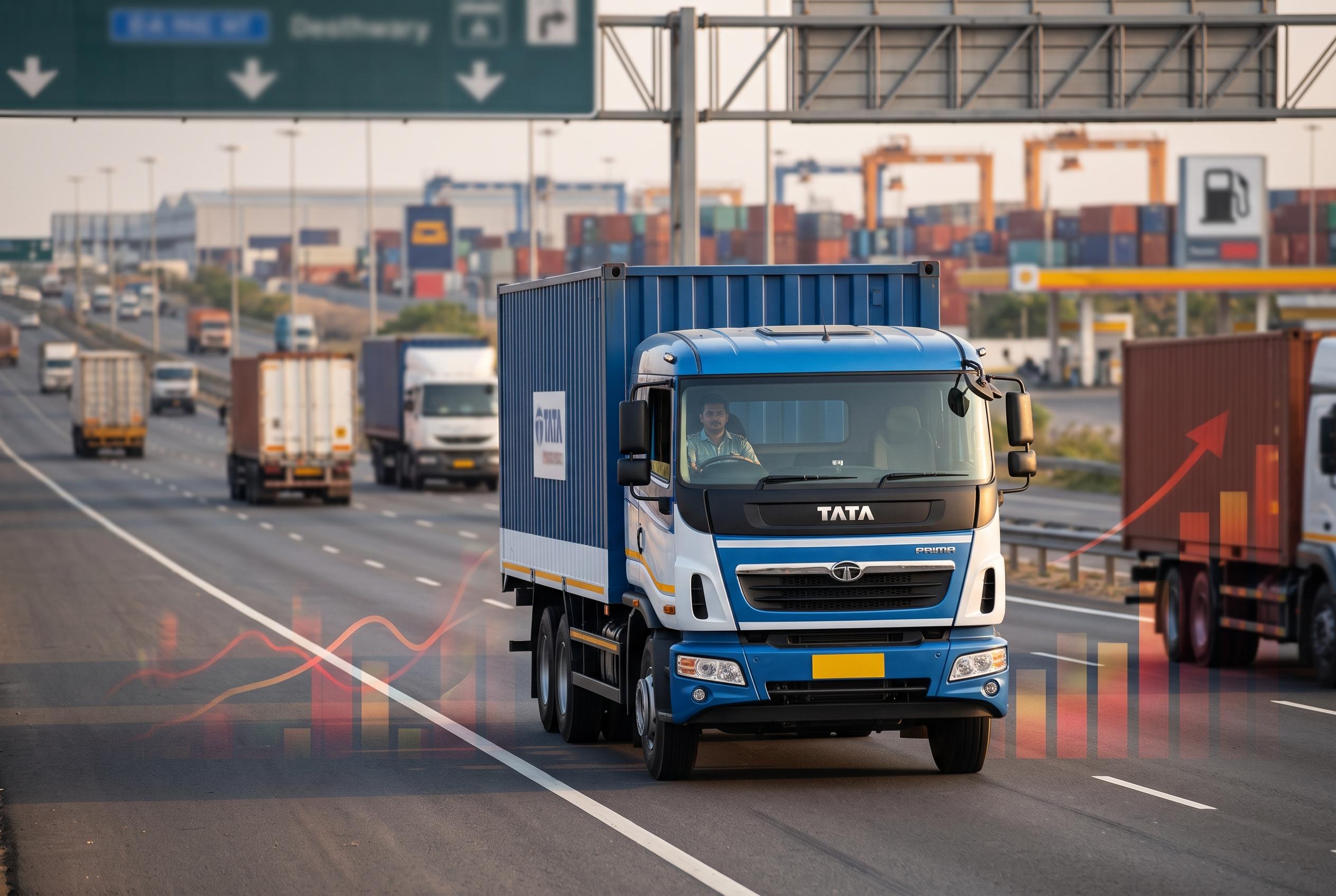

Renewed attacks near the Strait of Hormuz have pushed up oil prices, exposing India’s trucking industry to increased costs and highlighting the need for technological upgrades and policy support to maintain reliability and profitability.
India’s trucking sector is entering another period of strain as renewed attacks near the Strait of Hormuz have pushed oil markets higher again, underlining how exposed freight operators remain to geopolitical shocks. Reuters-style reporting from the region has described a fresh wave of tanker attacks in July 2026 that lifted Brent crude sharply, while The Guardian and The National said the latest escalation drove prices to their highest levels in weeks and cut crude flows through the strait. For Indian operators, whose businesses depend heavily on diesel, the effect is immediate: every rise in crude feeds quickly into operating costs.
That matters because trucking is the backbone of India’s freight network. The sector carries close to 70% of domestic cargo and supports more than 22 million livelihoods, according to the lead article. With India still importing the vast majority of its crude, fuel can account for roughly 40% of a trucking company’s monthly spending. Yet freight rates often lag behind diesel increases because customers can switch carriers easily, squeezing margins and forcing operators to decide what to defer.
The temptation, the article argues, is to cut back on maintenance, training and technology. That may protect cash in the short term, but it can weaken reliability and damage trust. Delayed servicing increases the risk of breakdowns and accidents. Poor driver oversight can worsen fuel waste and unsafe behaviour. Weak shipment visibility leaves customers chasing updates and erodes confidence, particularly among pharmaceutical and e-commerce clients that depend on dependable delivery windows.
The most practical response is not necessarily a grand digital overhaul. The article makes the case for relatively modest technologies that can pay back quickly, including fuel level sensors to flag theft or leakage, driver monitoring systems linked to advanced safety tools and mobile cargo-tracking applications that give customers live updates. It also points to longer-term options such as temperature monitoring for sensitive freight, smart locks for valuable loads, digital twins and blockchain-based contracts as the sector matures.
Policy support could accelerate that shift. The article says India’s logistics costs remain close to 14% of GDP, well above levels in many advanced economies, and argues for incentives for internet-of-things tools, lower GST on fleet digitisation and stricter enforcement of AIS 140 safety rules. It also highlights the PM GatiShakti National Master Plan, which has brought multiple ministries and states onto a single GIS-based platform to coordinate infrastructure planning. By giving private players more access to corridor data, the government can help trucking firms shift some long-haul freight to rail or coastal shipping and reduce exposure to diesel price swings.
Disclaimer: This article is intended to inform and educate, not to recommend or endorse any financial product, investment or strategy. Please consider your own financial circumstances and seek professional advice where appropriate before making financial decisions.