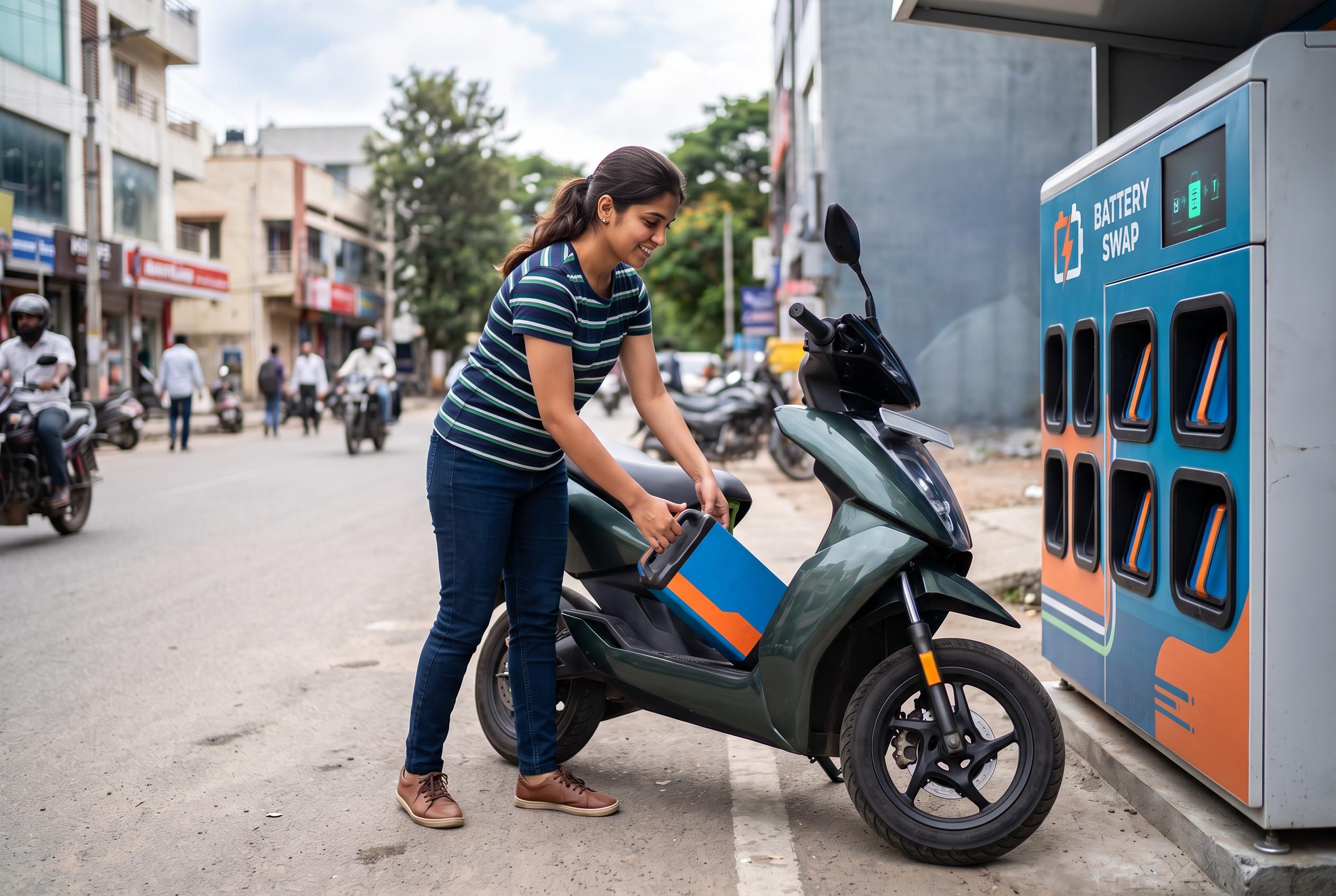

India’s battery swapping infrastructure is transforming from a niche to a rapidly expanding segment, driven by surging EV adoption and innovative ownership models, with projections reaching over half a billion dollars by 2034.
India’s battery swapping market is moving from a niche infrastructure play to a fast-growing part of the country’s electric vehicle ecosystem. IMARC Group estimates the market at $62.67 million in 2026 and projects it will climb to $517.92 million by 2034, implying a compound annual growth rate of 30.21% over the forecast period. The firm says the expansion is being fuelled by stronger EV adoption, a push towards 30% EV penetration by 2030 and pressure to cut purchase costs by separating battery ownership from the vehicle itself.
The appeal of swapping is practical as much as financial. For riders and fleet operators, it reduces downtime compared with conventional charging, while for buyers it eases one of the biggest barriers to EV adoption: the upfront price of the battery. IMARC Group also points to a broader shift in the market as manufacturers increasingly offer battery-as-a-service plans of their own, which helps normalise the model even as it fragments the competitive landscape.
The market’s current structure shows how early it still is. IMARC Group says manual stations accounted for 63.8% of activity in 2025, reflecting the relatively manageable weight of today’s swappable batteries and the labour-led operating model used by many networks. Pay-per-use was the leading service model at 57.6%, helped by low entry costs and flexibility for occasional users. West India held the largest regional share at 33.4%, with Mumbai, Gujarat and Pune emerging as important centres for deployment.
Competition is increasingly defined by scale, network density and partnerships. IMARC Group describes the sector as moderately concentrated, with Gogoro and BatterySmart among the best-known operators. It also notes growing interest from energy companies and oil retailers, along with consolidation through acquisitions and technology investment. In parallel, the wider Indian battery market and energy storage sector are expanding at a slower pace than swapping but remain major beneficiaries of the same EV and clean-energy shift, underscoring how battery infrastructure is becoming a broader industrial theme.
Disclaimer: This article is intended to inform and educate, not to recommend or endorse any financial product, investment or strategy. Please consider your own financial circumstances and seek professional advice where appropriate before making financial decisions.