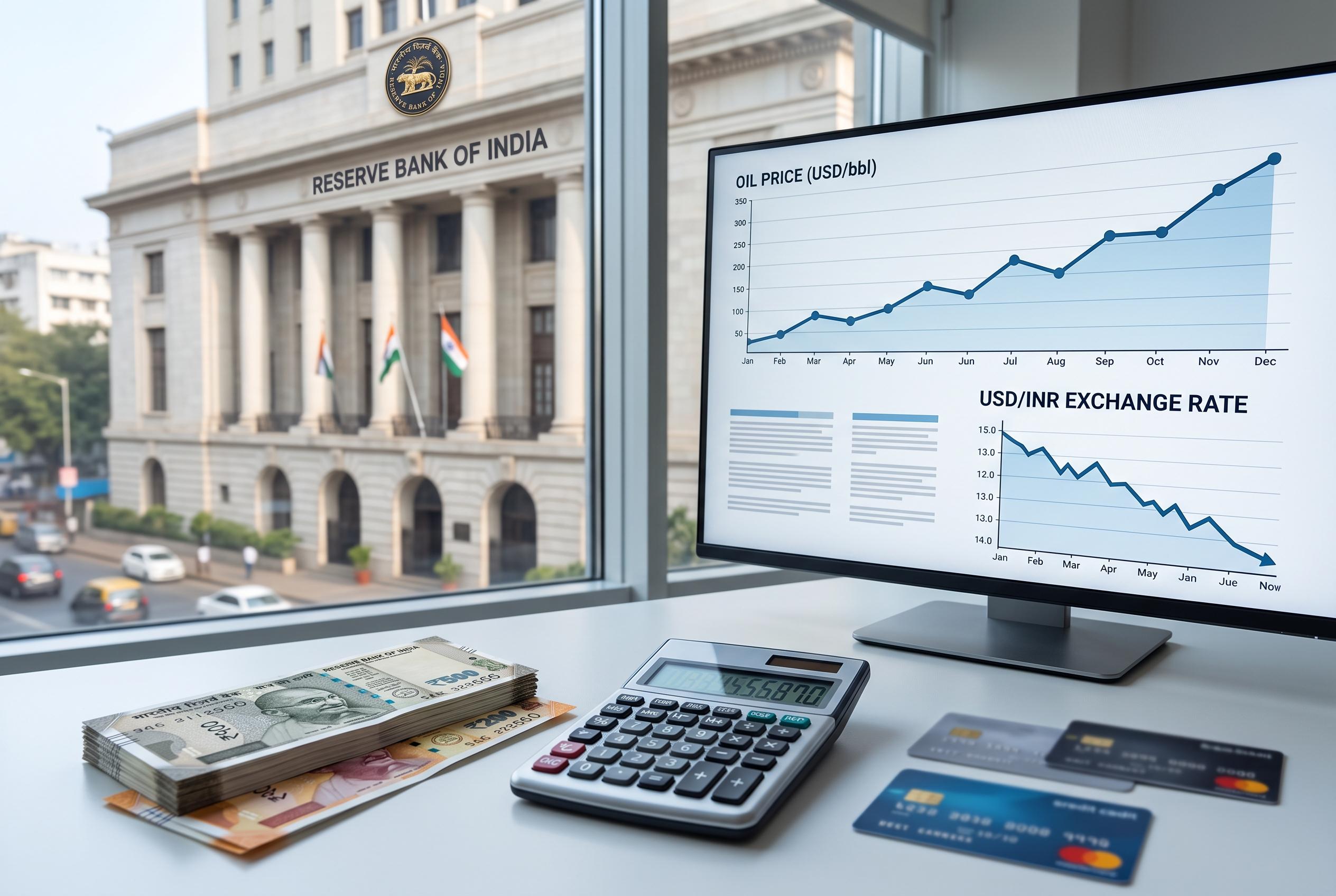

The Indian rupee is poised to weaken further as soaring oil prices increase dollar demand, prompting the Reserve Bank of India to once again intervene to defend the currency amidst geopolitical tensions and market uncertainty.
The Indian rupee is expected to start weaker on Tuesday, with traders saying a fresh rise in oil prices is likely to add to already heavy dollar demand and leave the Reserve Bank of India once again defending the currency. Market participants expect the rupee to open in the 95.35-95.40 range after closing at 95.30 against the dollar on Monday, when the central bank was thought to have sold dollars near 95.25 to slow the slide. Even so, the currency remained under pressure as importers continued to hedge their exposure and oil-linked dollar buying stayed firm.
The latest strain comes from the jump in Brent crude, which climbed about 5% on Monday as uncertainty over U.S.-Iran peace talks raised concern about the reopening of the Strait of Hormuz, a crucial shipping route for global energy supplies. Brent edged further higher in Asia trading on Tuesday, approaching $88 a barrel, while U.S. Treasury yields also rose as investors reassessed the inflation outlook. The move followed softer U.S. jobs data that had briefly pushed yields lower, underlining how quickly oil headlines are now feeding into broader financial markets.
For India, the impact of sustained high crude prices goes well beyond the daily currency move. Business Standard has reported that a prolonged oil shock can widen the current account deficit and force the RBI to use its foreign-exchange reserves more aggressively to steady the rupee. Other market analysis has warned that every $10 rise in crude can add roughly $12 billion to $15 billion to India’s annual import bill, increasing inflation pressure and, in turn, the risk of tighter monetary conditions. Because India relies heavily on imported oil, the rupee often becomes the first line of defence when energy costs surge.
That is why traders say the RBI’s presence in the market remains crucial. The central bank has a longstanding role in buying and selling foreign currency to smooth volatility, and market participants say it has been consistently supplying dollars to prevent a sharper fall. One trader told Reuters-style market reporters that, without that support, the dollar-rupee pair would already be well above 95.50. The immediate test for the rupee, then, is whether official intervention can keep pace with the combination of oil-driven demand, importer hedging and uncertainty over whether the geopolitical backdrop will improve soon.
Disclaimer: This article is intended to inform and educate, not to recommend or endorse any financial product, investment or strategy. Please consider your own financial circumstances and seek professional advice where appropriate before making financial decisions.