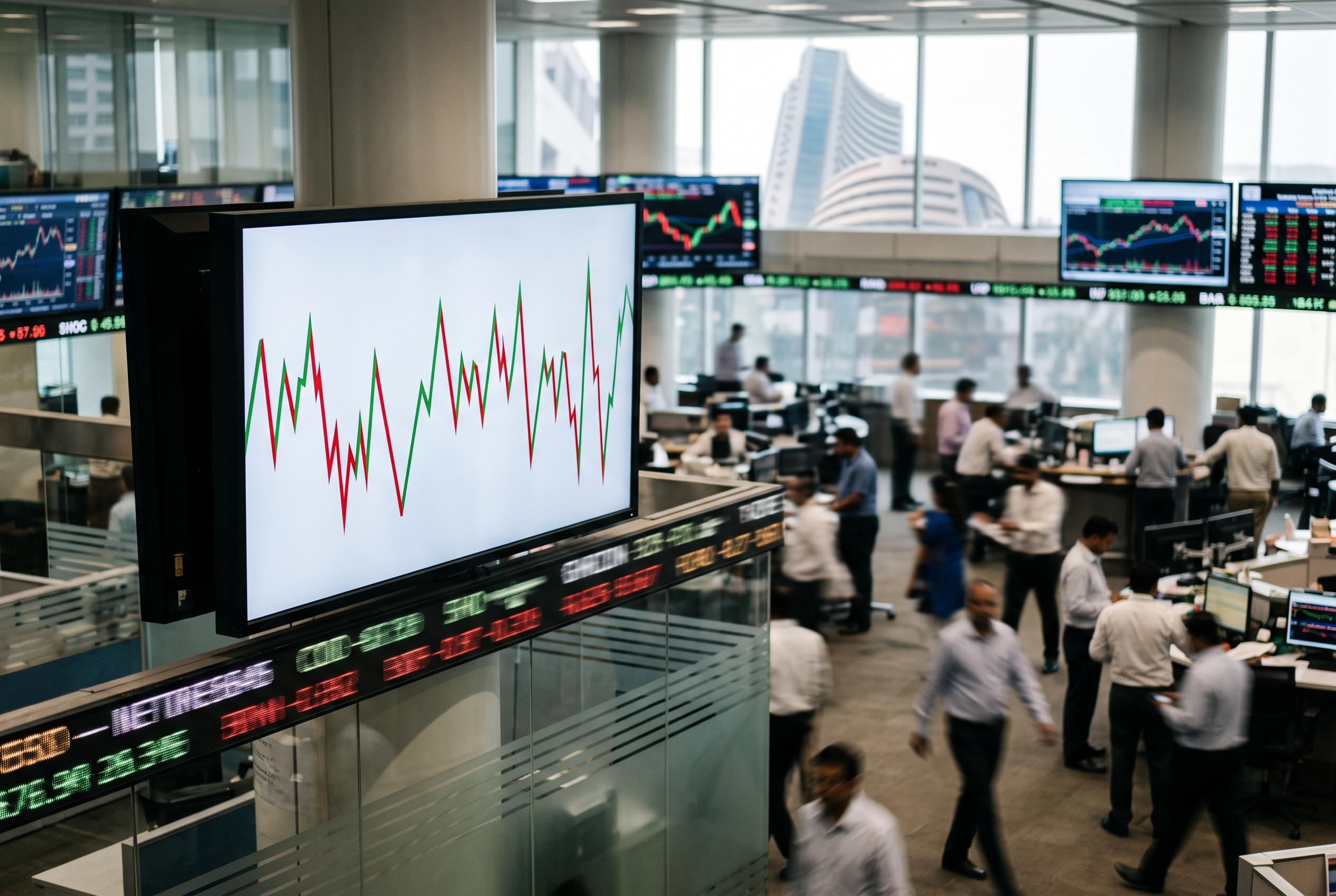

India’s introduction of a new closing auction system aims to improve price discovery but has experienced initial swings and volatility, highlighting the challenges of implementing phased market reforms.
India’s new closing auction system has had a bumpy start, but market watchers say the early turbulence should not be overread. The Securities and Exchange Board of India introduced the closing auction session, or CAS, as part of a phased shift towards a price-discovery mechanism already used by major exchanges in New York, London and Hong Kong. The aim is to produce a closing price that is harder to distort than the old volume-weighted average price method, which could be skewed by large orders placed near the end of trading.
The first sessions saw sharp swings, with the Nifty 50 moving notably away from the regular-session close and the gap between the Sensex and Nifty 50 widening. That was hardly surprising, given that the new auction was initially limited to cash-market stocks linked to derivatives while options trading continued uninterrupted. The result was a brief mismatch between the underlying share price and the derivatives market, leaving options especially volatile in the final minutes of trade. By the following sessions, however, the differences had narrowed and the market appeared to be settling.
According to the phased plan set out by SEBI in January, the auction runs for 20 minutes from 3.15pm to 3.35pm and is designed to collect orders in a dedicated window before establishing an equilibrium price. Moneycontrol reported that the regulator wants the mechanism to broaden participation and replace a closing process that could be distorted by institutional activity late in the day. Industry guidance from exchanges has also made clear that the system applies first to stocks with derivative contracts, before eventually being expanded to the wider market.
That transition is likely to take time. A recent survey cited by the International Organisation of Securities Commissions found that the value traded in closing auctions has generally risen between 2020 and 2025, but IOSCO has also warned that deeper auctions can bring risks of their own, including thinner liquidity during the day and greater volatility around the close. For that reason, intermediaries need to ensure that indicative prices and order-book quantities are displayed accurately across trading terminals. If instability persists, SEBI could yet consider additional safeguards, including designated market makers, as used on the New York Stock Exchange.
Disclaimer: This article is intended to inform and educate, not to recommend or endorse any financial product, investment or strategy. Please consider your own financial circumstances and seek professional advice where appropriate before making financial decisions.