
Eligibility for the PM Awas Yojana hinges on income, ownership status, and specific scheme rules, with interest relief-based subsidies aiming to make homeownership more affordable for targeted groups.
PM Awas Yojana can cut the cost of buying a home, but the benefit is not automatic. Eligibility depends on household income, whether the family already owns a pucca house, the size of the loan and the specific part of the scheme being used.
The programme is built around income bands, which help determine whether an applicant falls into a category such as Lower Income Group or Middle Income Group. A household earning Rs 5.5 lakh a year may fit the lower-income band under some rules, while a family on Rs 10 lakh may qualify for a middle-income category depending on the version of the scheme. But income is only one test. According to guides on the scheme, the family must also satisfy housing and ownership conditions, including the rule that it should not already own an all-weather home anywhere in India.
The subsidy works as interest relief rather than a cash grant in most cases. It is adjusted against the home loan, reducing the interest burden over time and, in some cases, lowering the outstanding principal. Earlier publicity around the scheme often cited a subsidy of up to Rs 2.67 lakh, but that figure related to the older Credit Linked Subsidy Scheme and is not a universal entitlement under every current application.
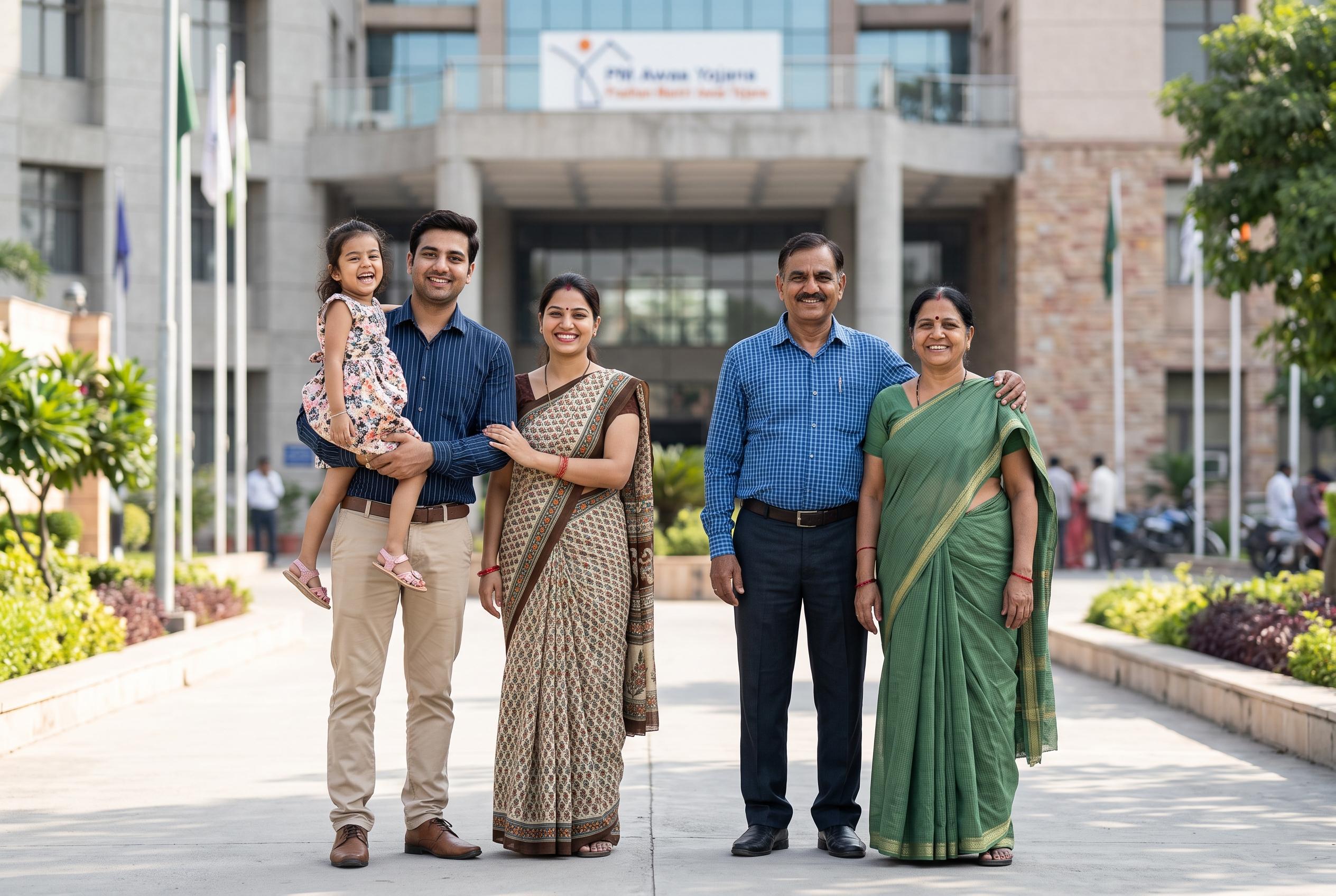
The rules are also strict on household definition. Under the mission, the beneficiary family includes a husband, wife and unmarried children. An adult earning member is treated as a separate household if that person does not own a pucca house in their name anywhere in India. In the case of a married couple, either spouse, or both together in joint ownership, can qualify for one home if the household meets the income test. An eligible beneficiary can use only one of the scheme’s verticals.
Several errors can lead to rejection. Common problems include existing ownership of a pucca house, incorrect income details, incomplete documents or a loan that does not meet the scheme’s conditions. The scheme also gave preference to women, widows, persons with disabilities, Scheduled Castes, Scheduled Tribes, Other Backward Classes, minorities and transgender people, with houses generally required to include basic services such as drinking water, power, sewerage and toilets. In some cases, a family with a pucca house smaller than 21 square metres could seek an upgrade to 30 square metres, or, if that was not possible, apply for housing elsewhere under the relevant rules.
Disclaimer: This article is intended to inform and educate, not to recommend or endorse any financial product, investment or strategy. Please consider your own financial circumstances and seek professional advice where appropriate before making financial decisions.