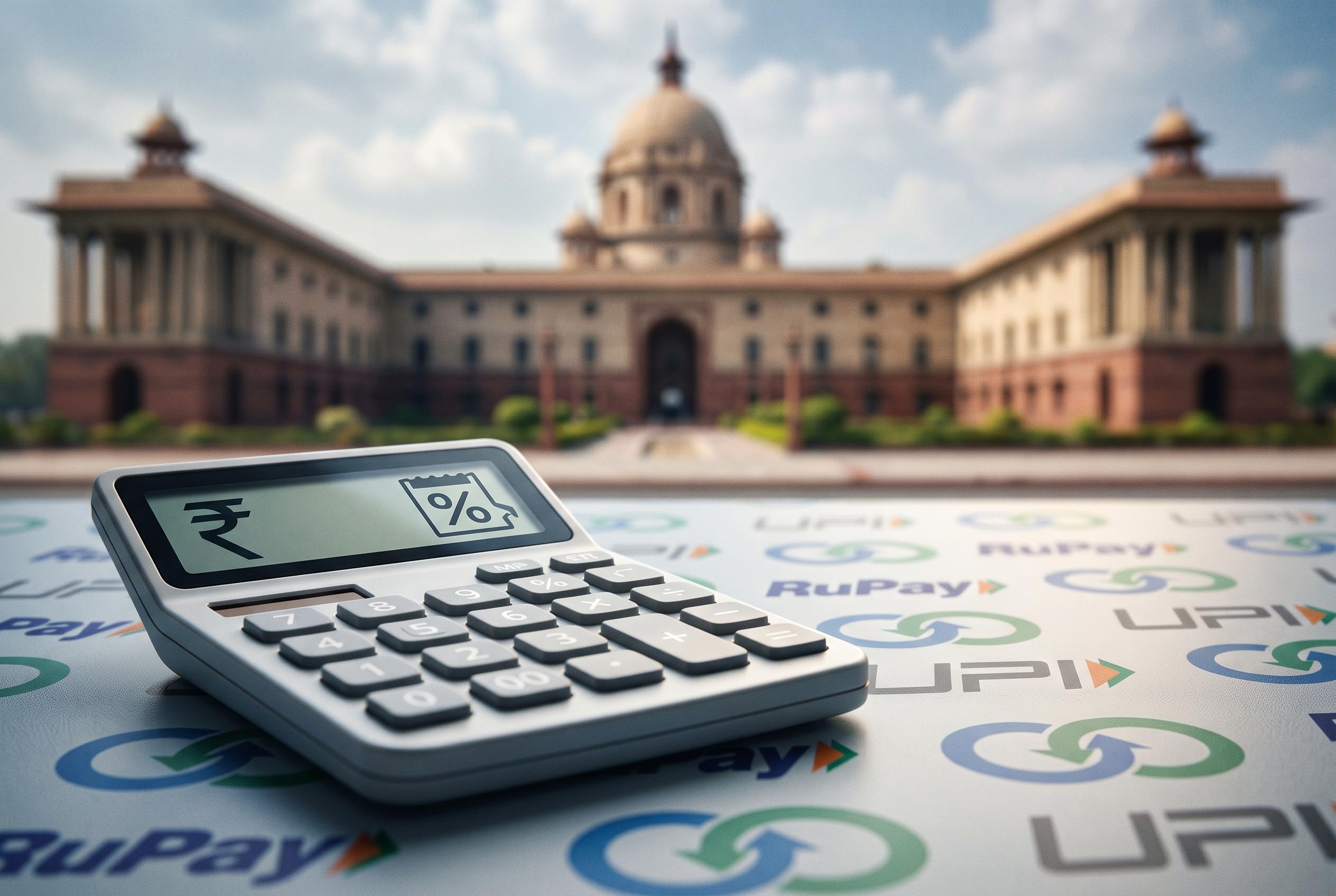

India is contemplating the introduction of processing charges on its dominant digital payment systems, risking a fundamental shift in an ecosystem that has transformed domestic commerce and attracted global scrutiny, as the government debates whether to treat UPI as a free utility or a self-sustaining infrastructure.
India is weighing a change that could end the free model at the heart of its digital payments revolution, with a Bill introduced in the Lok Sabha opening the door to fees on Unified Payments Interface transactions and RuPay debit card use. According to the proposal, the government would be able to authorise processing charges or merchant discount rates through future notifications, without returning to Parliament for another legal amendment. Supporters of the move say the system needs a sturdier funding model. Critics say it risks weakening one of India’s most important pieces of digital public infrastructure.
The immediate focus appears to be business payments above ₹2,000, where an MDR of 0.25 per cent to 0.4 per cent could be imposed, though the scope could widen later. That prospect matters because UPI has moved far beyond a convenience tool: government figures cited by DD India show the network’s user base crossed 55.49 crore in FY26, while transaction value reached a record ₹314.23 lakh crore by June 2026. The scale of use has made UPI central to everyday commerce, from street vendors to large retailers.
The policy debate also sits against a wider contest over who captures value from India’s payments boom. Visa and Mastercard have long profited from card networks that charge merchants for acceptance, but UPI cut deeply into that model by moving money directly between bank accounts at little or no cost. RuPay, which the government backed through public-sector banks and financial inclusion programmes, added to the pressure. Mint reported that RuPay credit cards linked to UPI now account for nearly 40 per cent of credit card transactions by volume, even though they make up only about 8 per cent of value, underscoring how often these rails are being used for small purchases.
The challenge for the old card networks has forced some adaptation. Visa told Mint it is promoting cheaper acceptance tools, card-based subscriptions and broader payment choice in India as it seeks to remain relevant in a market increasingly shaped by UPI. Yet the competition is not only between card brands. India’s UPI ecosystem itself is becoming more crowded, with Outlook Business reporting that PhonePe and Google Pay’s combined market share fell below 80 per cent for the first time in May 2026, while Business Standard said BHIM’s volumes rose five-fold in January 2026, taking it closer to a 1 per cent share.
That shifting landscape has sharpened concerns about foreign influence over India’s payments rails. The original article argues that the latest policy debate has drawn scrutiny from Washington, where the United States Trade Representative has criticised India’s zero-MDR approach, RuPay’s rise and related data localisation rules as barriers to American firms. At the same time, the article notes, companies such as Google and Walmart-owned PhonePe already dominate UPI traffic, meaning the system is now heavily used by large foreign-backed platforms even though it was built with public policy support and taxpayer-funded infrastructure.
The core question is whether India should treat UPI as a utility that must pay for itself or as national infrastructure that justifies public support. RBI Governor Sanjay Malhotra has said someone must pay to keep the system secure and reliable. But the counter-argument is that any direct charge could drive small merchants and low-value transactions back towards cash, which is expensive to print, move and replace. The Reserve Bank spent ₹4,875 crore on banknote printing in FY26 alone, not counting the wider costs of handling cash. With UPI now deeply embedded in domestic commerce and expanding abroad, including in Bhutan, Nepal, Singapore, Sri Lanka, France, Mauritius and the UAE, India is being asked to decide whether to tax success or protect it.
Disclaimer: This article is intended to inform and educate, not to recommend or endorse any financial product, investment or strategy. Please consider your own financial circumstances and seek professional advice where appropriate before making financial decisions.