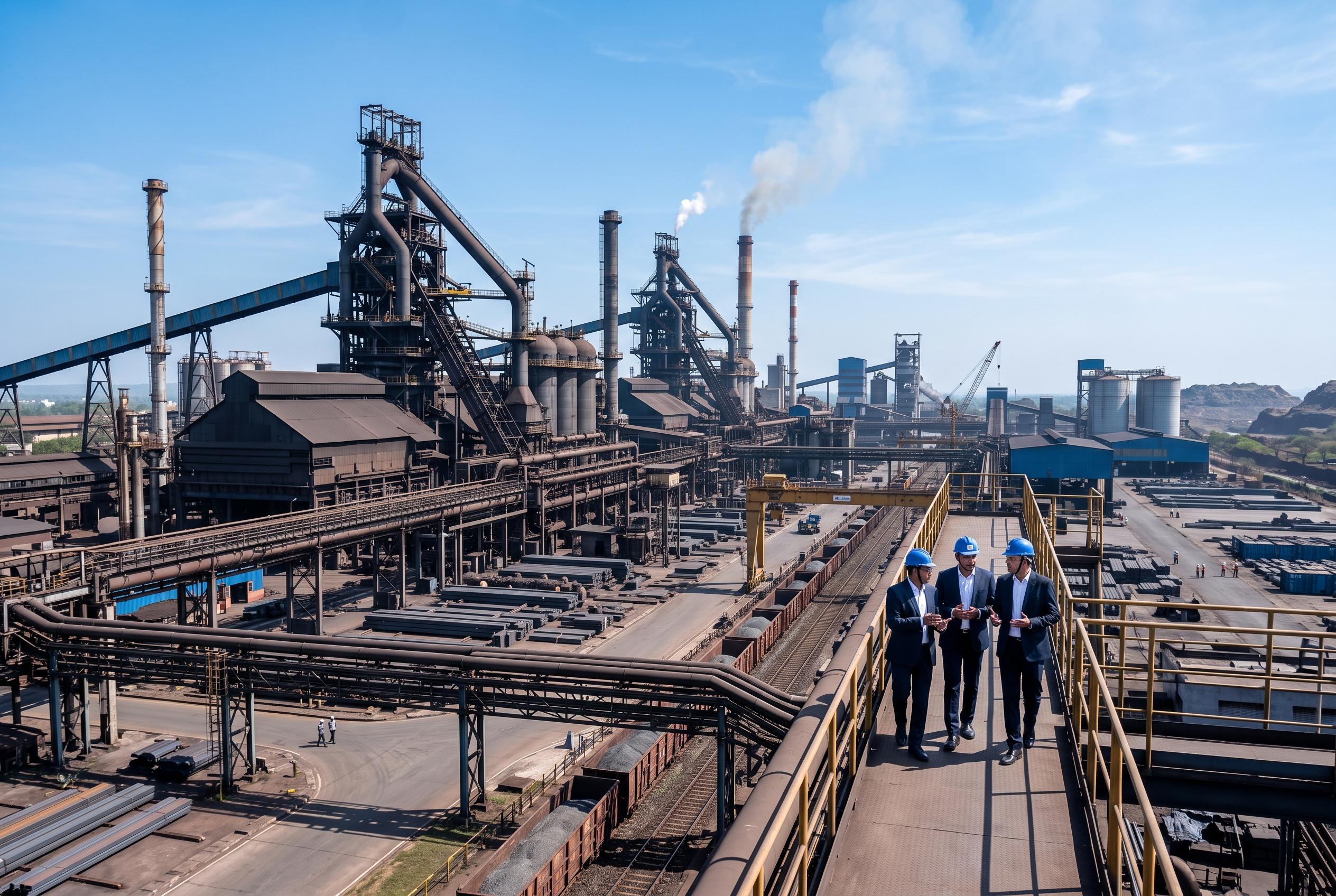

Decades after liberalisation began in 1991, India’s steel industry has undergone a dramatic transformation, moving from state-controlled plants to private-sector dominance and aiming for greater self-reliance in high-value products.
India’s steel industry has spent more than three decades moving from state control to private-sector dominance, and the shift began with the New Industrial Policy announced in July 1991. The reforms made steel the first core sector to be delicensed, ended the need for capacity-expansion licences except for locational restrictions and, from January 1, 1992, removed price and distribution controls. They also opened the sector to foreign capital and cut import barriers on key inputs and equipment, marking a decisive break from the tightly managed system that had defined Indian industry since Independence.
Before liberalisation, steel was treated as a strategic but heavily constrained business. The state built large integrated plants at Bhilai, Durgapur, Rourkela and Bokaro, yet the wider policy framework remained suspicious of scale and profit. Industry veterans recall a regime in which the government, through the Iron and Steel Controller in Kolkata, dictated production, sales and prices. Tata Steel’s then chairman, JRD Tata, complained in the mid-1970s that the industry had long been forced to sell at uneconomic prices, a reminder of how little room producers had to respond to demand or invest freely.
The opening of the market transformed the ownership map. In 1990-91, the public sector accounted for 46% of India’s 13.2 million tonnes of steel output, while the private side was fragmented and largely secondary. By 2025-26, according to BigMint data cited by Business Standard, public-sector firms such as SAIL, Rashtriya Ispat Nigam and NMDC Steel make up just 14.5% of finished steel production, as four integrated private groups led by JSW Steel, Tata Steel, ArcelorMittal Nippon Steel India and Jindal Steel now dominate. That rise was aided by the wider liberalisation drive of the early 1990s, which also encouraged foreign investment across heavy industry.
The industry’s rebound was not smooth. After the Soviet Union collapsed, low-cost exports from former Soviet republics pushed down global prices, while the Asian financial crisis later deepened the pressure. Tata Steel, then widely seen by consultants as a sunset business, instead entered a major turnaround. Koushik Chatterjee, Tata Steel’s executive director and chief financial officer, said the company modernised plants, overhauled its supply chain, cut costs and resized its workforce. Similar restructuring followed at SAIL, where Sanak Mishra said McKinsey helped draw up a recovery plan focused on efficiency, marketing and raw material management.
The next phase was one of consolidation and expansion. Debt restructuring in the early 2000s helped firms such as JSW Steel and Essar Steel recover, while the Insolvency and Bankruptcy Code later transferred stressed assets to stronger owners, including Tata Steel, JSW Steel, ArcelorMittal and Vedanta. India’s steelmakers have since moved up the global value chain, with companies such as JSW and AM/NS India building capabilities in automotive, oil and gas, electrical and specialty grades. Yet the industry still relies heavily on imported coking coal, and analysts say the next frontier is not just more capacity but deeper self-reliance in higher-value products.
Disclaimer: This article is intended to inform and educate, not to recommend or endorse any financial product, investment or strategy. Please consider your own financial circumstances and seek professional advice where appropriate before making financial decisions.