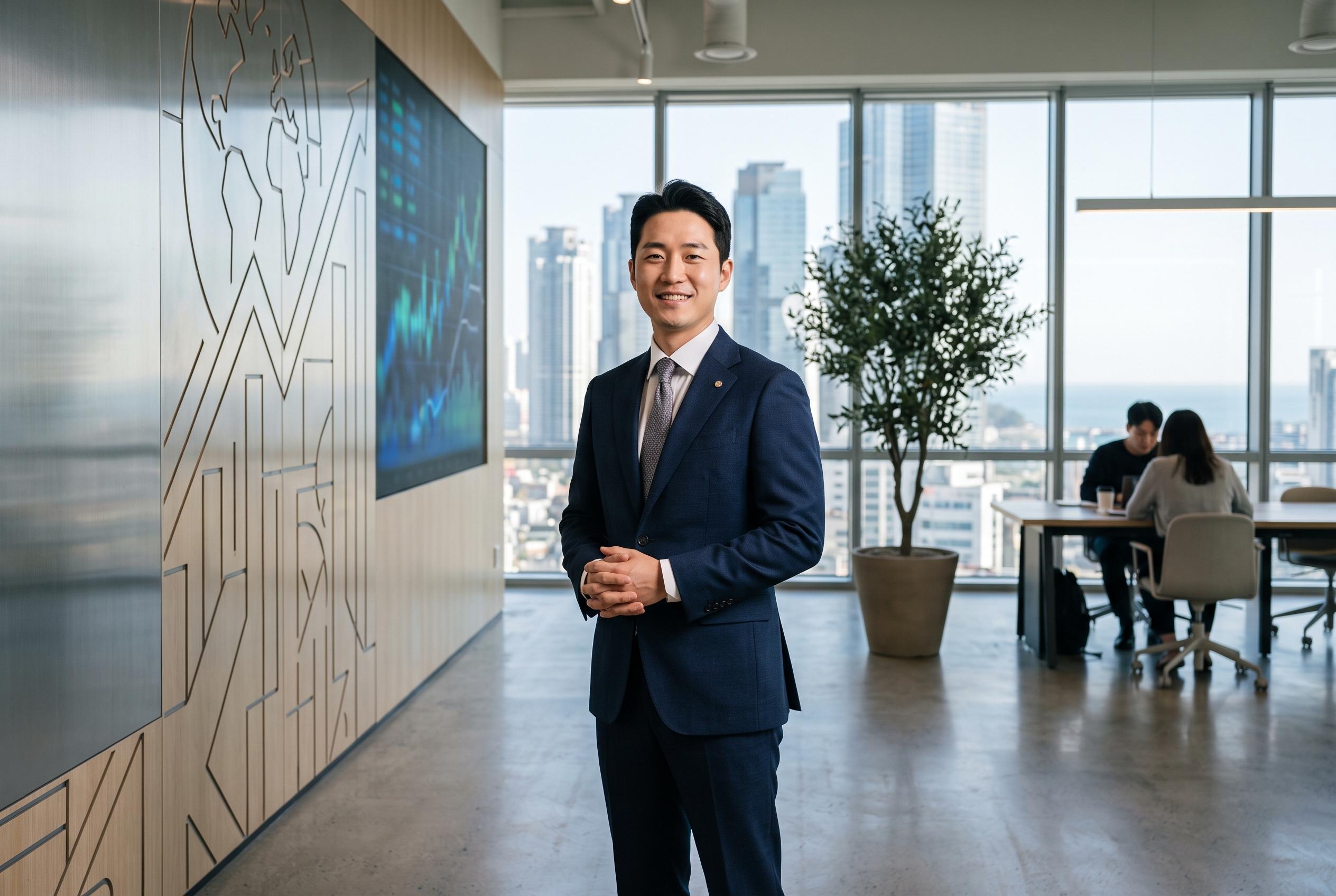

Experts caution Korean founders against mistaking initial overseas customer interest for long-term market traction, emphasising the importance of repeatability and scale readiness before committing substantial resources.
The first overseas customer can feel like vindication. Meetings come more easily, a local contact responds quickly and a paid pilot appears to confirm that the market is ready. But founders who scale on that basis too soon can mistake a promising opening for durable demand.
That is the central warning from Shakeel Ahamed, chief executive of WisePrince LLP, who told KoreaTechDesk that the real trap is confusing an early adopter’s enthusiasm with evidence of a broader market. In cross-border expansion, he argued, the first sale often reflects novelty, personal trust or unusual tolerance for incomplete localisation rather than repeatable demand.
For Korean startups, that distinction matters because international growth is often pursued out of necessity as much as ambition. The domestic market is limited, and public and private support programmes continue to encourage overseas expansion. Yet a 2025 report from the Science and Technology Policy Institute found that only 2.9% of general domestic startups generated export revenue in 2023, underlining how hard it remains to turn overseas exposure into commercial traction.
Relationships can help a company get through the door, but they do not prove the door leads to a market. The Singapore Business Federation’s 2025 internationalisation survey found that 41% of businesses in or planning overseas expansion considered existing clients when choosing a market and 38% looked to existing networks. Even so, 43% said uncertainty about overseas demand was their biggest concern, a reminder that access and demand are not the same thing.
That is why the second customer matters more than the first. A second, independent buyer begins to show whether the startup can reproduce the same result without relying on the same introduction, the same champion or the same unusual amount of founder attention. Product-market fit, in the broad sense, is about finding a product that meets a strong market need and can do so repeatedly, not just once.
The useful test is whether the company can keep winning business under similar conditions: similar needs, similar pricing, a similar sales process and a similar level of support. If the next buyer comes through a different channel and still accepts roughly the same offer, the company is moving from a one-off win towards something that resembles a market.
Korea’s own support system increasingly reflects that logic. The Seoul Startup Hub’s 2026 global expansion initiative split participants into proof-of-concept, scale-up and acceleration tracks across 13 countries. That structure recognises an important distinction: a proof-of-concept test is meant to answer a narrow question, not justify a permanent office, a larger headcount or a major inventory commitment.
Ahamed’s broader advice is to treat the first year in a new country as structured learning rather than proof. Founders should use early deals to learn who really makes buying decisions, what price points hold up, how implementation works, which regulations matter and whether customers stay once the initial excitement fades. If demand disappears when discounts, grants or heavy customisation are removed, the company may have found interest, not fit.
The lesson, for Korean startups eyeing foreign growth, is to slow the pace of capital deployment until the evidence improves. Access shows that a conversation is possible. Commitment shows that one customer is willing to take a risk. Repeatability, durability and scale readiness are what justify bigger bets. Or, as Ahamed put it, the best founders are the ones willing to admit they do not fully understand the market yet.
Disclaimer: This article is intended to inform and educate, not to recommend or endorse any financial product, investment or strategy. Please consider your own financial circumstances and seek professional advice where appropriate before making financial decisions.