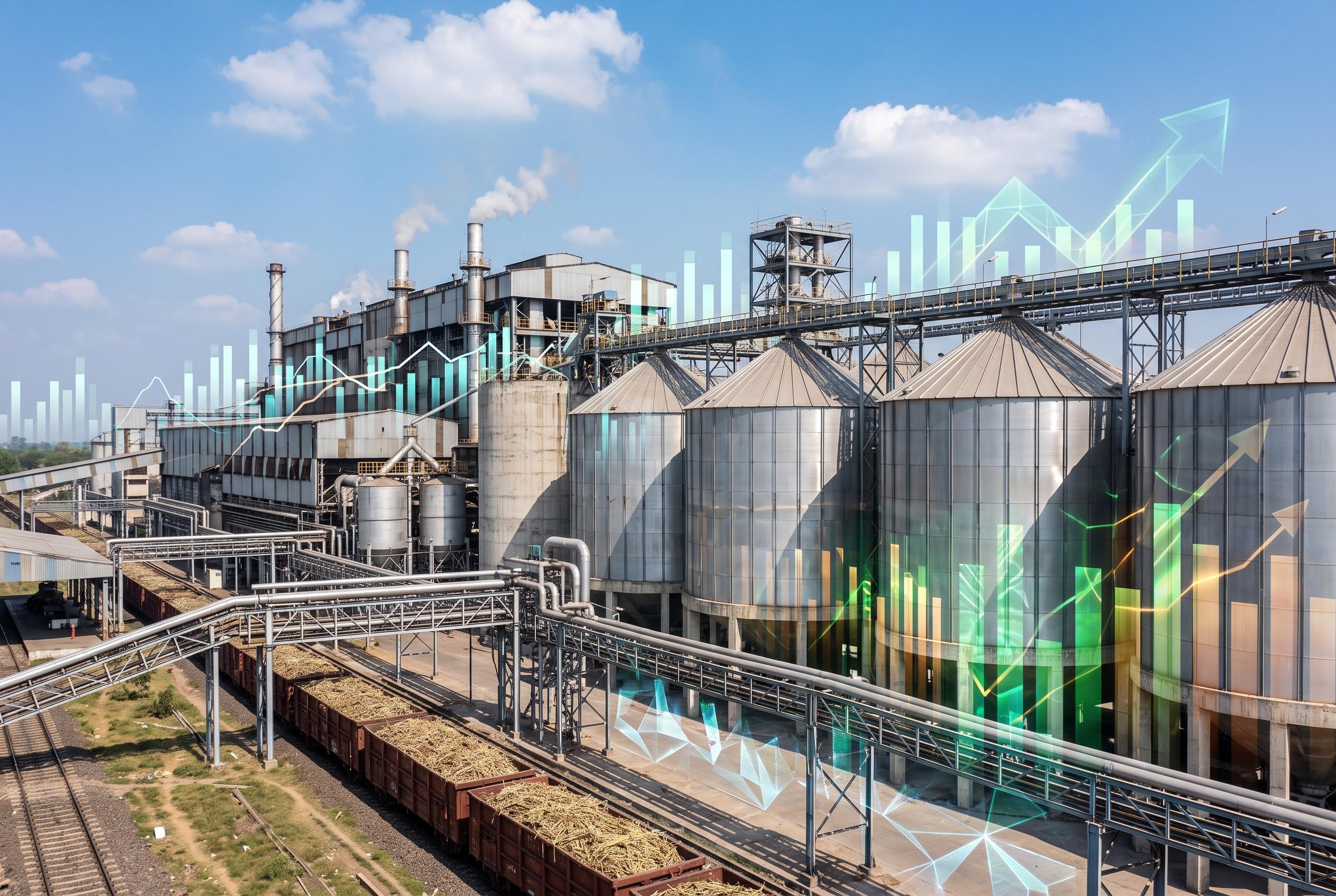

India’s push for ethanol blending from sugarcane by-products faces challenges as a weaker harvest prompts policy shifts to balance domestic sugar supplies with the country’s renewable energy goals.
India’s sugar industry has moved well beyond its traditional role as a sweetener supplier, becoming a key part of the country’s biofuel push. Ethanol made from sugarcane by-products now supports petrol blending, and the government has set its sights on a 20% blending target by 2025-26, a goal that has shaped policy for several seasons. But as the latest crop outlook points to a tighter sugar year, the balance between fuel and food is becoming harder to manage.
That tension is not new. When sugar output has been strong, New Delhi has encouraged mills to divert cane juice, syrup and molasses into ethanol, helping to support distillery investment, reduce inventories and strengthen energy security by cutting crude oil imports. In August 2024, the government removed caps on sugar diversion for ethanol in the 2024-25 supply year, and in September 2025 it went further by lifting restrictions for 2025-26 as well.
A weaker harvest, however, changes the equation. Industry observers say the first duty in a deficit year is to protect domestic sugar availability and keep retail prices stable, especially because households account for a large share of consumption and food manufacturers rely on dependable supply. In December 2023, the government had already shown it was prepared to calibrate the policy by allowing only limited diversion of sugar for ethanol during the 2023-24 marketing year.
The industry also wants more certainty on pricing. Mills have argued that ethanol rates have not kept pace with firmer sugar prices, leaving them to juggle returns across sugar, ethanol and by-products. The broader point, as the policy debate now shows, is that the economics of diversion cannot be separated from opening stocks, carry-forward inventories and the pace of crushing at the start of the new season.
For now, the government appears to be keeping both objectives in view: preserving enough sugar for the home market while allowing ethanol to remain a structural part of the country’s energy strategy. The challenge in a low-production year is not whether to choose one over the other, but how to adjust the mix without unsettling either consumers or the fuel programme.
Disclaimer: This article is intended to inform and educate, not to recommend or endorse any financial product, investment or strategy. Please consider your own financial circumstances and seek professional advice where appropriate before making financial decisions.