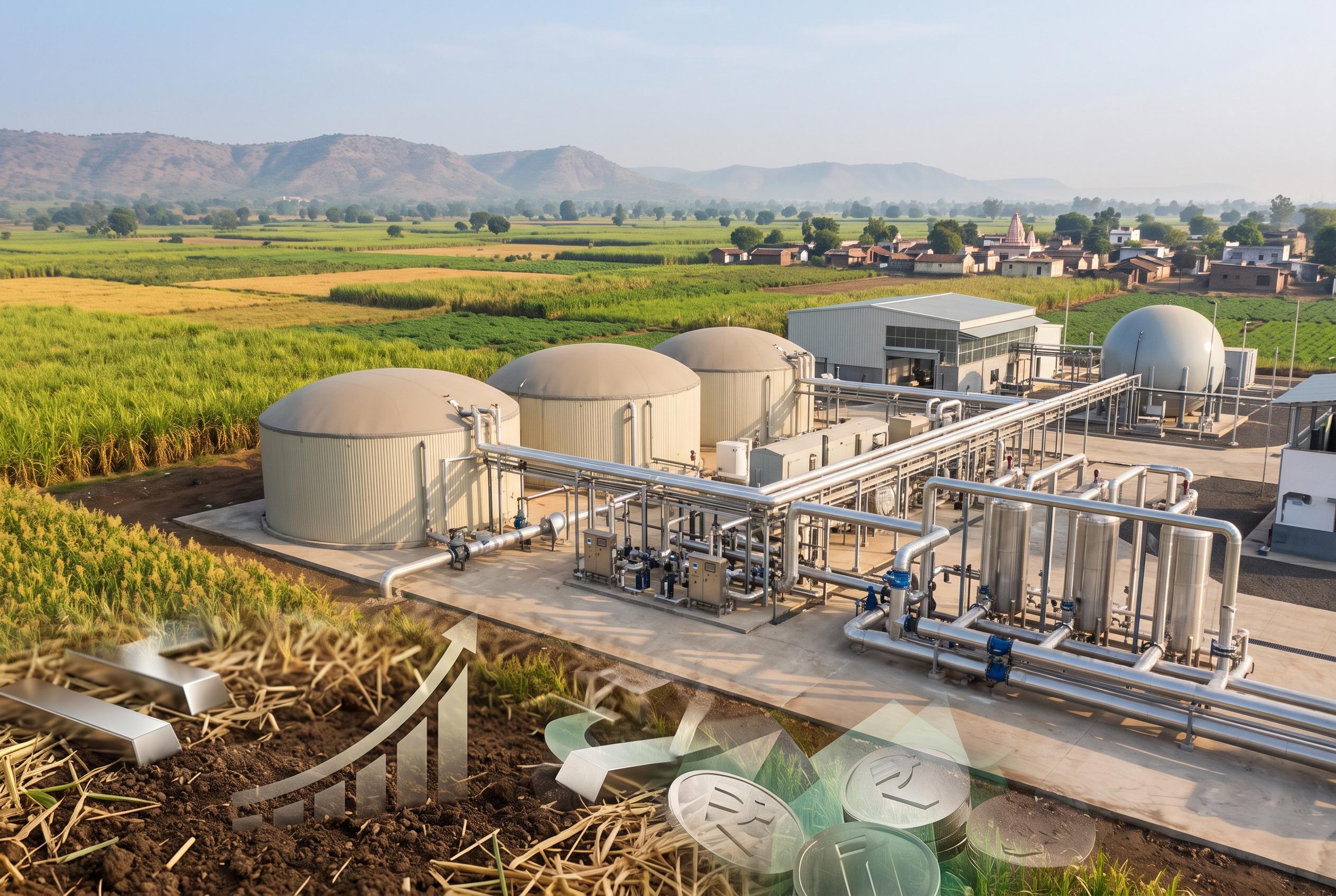

India’s GOBARdhan programme is poised to transform its biogas sector by addressing financing and operational challenges through new policies, aiming to mobilise Rs 50,000 crore by 2030 and expand sustainable energy use across agriculture and industry.
India’s GOBARdhan programme is emerging as a potential inflection point for the country’s compressed biogas industry, with policymakers hoping it will help move the sector from paper ambition to completed plants. The core problem is not a lack of interest: nearly 1,900 projects are registered on the government’s portal, but only 216 have been commissioned so far, according to the material supplied. That gap has long exposed a familiar weakness in clean-energy infrastructure: developers can line up projects, but they still struggle to make them financeable and operational at scale.
The new framework is designed to tackle those barriers more directly. According to the reports cited, it combines assured offtake, a 10-year pricing structure, capital support, pipeline connectivity and credit guarantees. Together, those measures are meant to reduce revenue uncertainty and make compressed biogas, or CBG, look more like a conventional infrastructure asset than an experimental green opportunity. The Financial Express reported that the Centre’s wider Sampoorn GOBARdhan plan is intended to give producers the pricing visibility and offtake certainty that lenders typically want before committing capital.
The push comes as India looks to expand CBG capacity quickly. Envisioning’s research on the sector says the country is aiming to lift CBG use through SATAT and GOBARdhan, alongside a blending obligation that begins in 2025-26 and rises to 5% by 2028-29. The policy logic is straightforward: India has abundant agricultural waste, which gives it an advantage in converting residue into gas, while also reducing waste burning and supporting a lower-carbon fuel mix. Official material from the Press Information Bureau also shows that the government has already created a unified registration portal for GOBARdhan, with hundreds of biogas and CBG plants enrolled and eligible for market development support.
Even so, the economics still depend on execution. The article supplied says India will need to add about 1,000 tonnes per day of CBG capacity each year to reach roughly 4,000 tonnes per day by FY29, requiring close to Rs 24,000 crore in investment over three years. It argues that, with stronger policy backing, the sector could attract at least Rs 50,000 crore by 2030. But that outcome will depend on two stubborn operational issues: reliable feedstock aggregation and consistently high plant utilisation. The next phase of growth is therefore likely to favour developers that can control the full chain, from sourcing waste and building plants to running operations and selling the gas.
Disclaimer: This article is intended to inform and educate, not to recommend or endorse any financial product, investment or strategy. Please consider your own financial circumstances and seek professional advice where appropriate before making financial decisions.