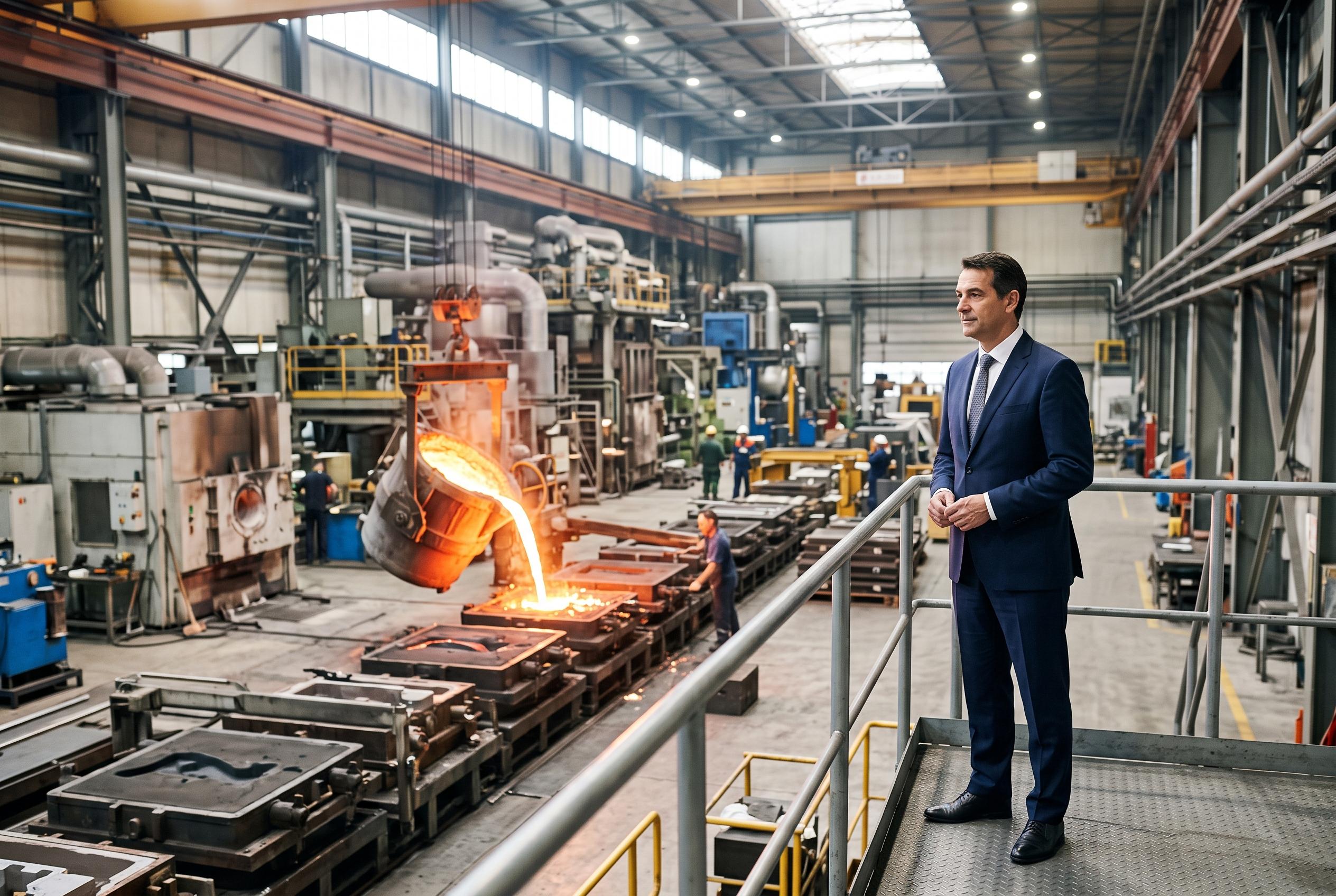

Despite robust growth in casting, the company’s margins face headwinds from rising input costs and volatile markets, even as it invests in capacity and forward integration.
Kirloskar Ferrous Industries said its casting business remained the main engine of growth in the June quarter, with production up 19% and sales rising 18% from a year earlier as demand held firm across tractor, automotive, commercial vehicle and earthmoving equipment markets. Management also struck an upbeat tone on the rest of the year, telling investors it expects at least 15% volume growth overall and stronger realised prices as commodity trends stabilise.
The company’s latest earnings call, as summarised by GuruFocus, showed a more mixed picture elsewhere in the portfolio. Tube production fell 8% and sales dropped 14% year on year, reflecting softer oil and gas demand and weaker export orders. Management said the segment remains under pressure from a lack of immediate recovery in high-margin energy-related work, even as it looks for demand from reconstruction activity in the Middle East and new applications such as high-pressure storage systems and premium couplings.
Cost inflation was another drag. The company said power and fuel expenses rose sharply, with most of the increase linked to higher rates and higher consumption as production picked up at Rajpura and operations normalised at Jejuri. Management also pointed to regulatory changes that have curbed power trading and reduced the benefit of green power usage hours. According to the company, these factors have lengthened the payback period on renewable investments from roughly 3 years to about 3.6 or 3.7 years.
Even so, Kirloskar Ferrous is pressing ahead with capacity additions. The company said work is on track at its Solapur two-part foundry, its Rajpura Foundry expansion and the rolling capacity upgrade at Jejuri. Management also highlighted a forward-integration push, with machine shops at Koppal, Solapur and Rajpura already supplying fully machined components and child parts ready for assembly. It said that approach should lift value addition and improve realisations over time.
The company’s earlier results suggest the quarter was a step forward from a still-uneven base. In February, the company reported 21% growth in pig iron production at Koppal and a 10% rise in casting output, while tube sales at Ahmednagar were up 17%, according to a separate market summary. That momentum was tempered by weaker pig iron pricing, volatile industrial commodity markets and import dumping, all of which have continued to weigh on margins.
Management now expects pig iron volumes to approach 700,000 tonnes this year, casting sales to rise to about 188,000 tonnes and steel external sales to reach at least 110,000 tonnes. It also sees tube volumes growing at least 10%. The medium-term target remains ambitious: revenue of ₹14,000 crore, casting sales of 300,000 tonnes and tube sales of 400,000 tonnes over the next 3 to 4 years, supported by new foundry capacity, a planned steel plant at Koppal and an expander mill for tubes.
For now, the margin story remains a work in progress. EBITDA came in at 12% to 13%, below the company’s 15% goal, as pig iron pricing, input costs and volatility in end markets continued to cloud the picture. Management said it expects improvement as commodity prices settle and price increases are passed through in castings and steel, but it also acknowledged that coal and LPG costs may peak in the September quarter and that some segments may take longer to absorb the pressure.
Disclaimer: This article is intended to inform and educate, not to recommend or endorse any financial product, investment or strategy. Please consider your own financial circumstances and seek professional advice where appropriate before making financial decisions.