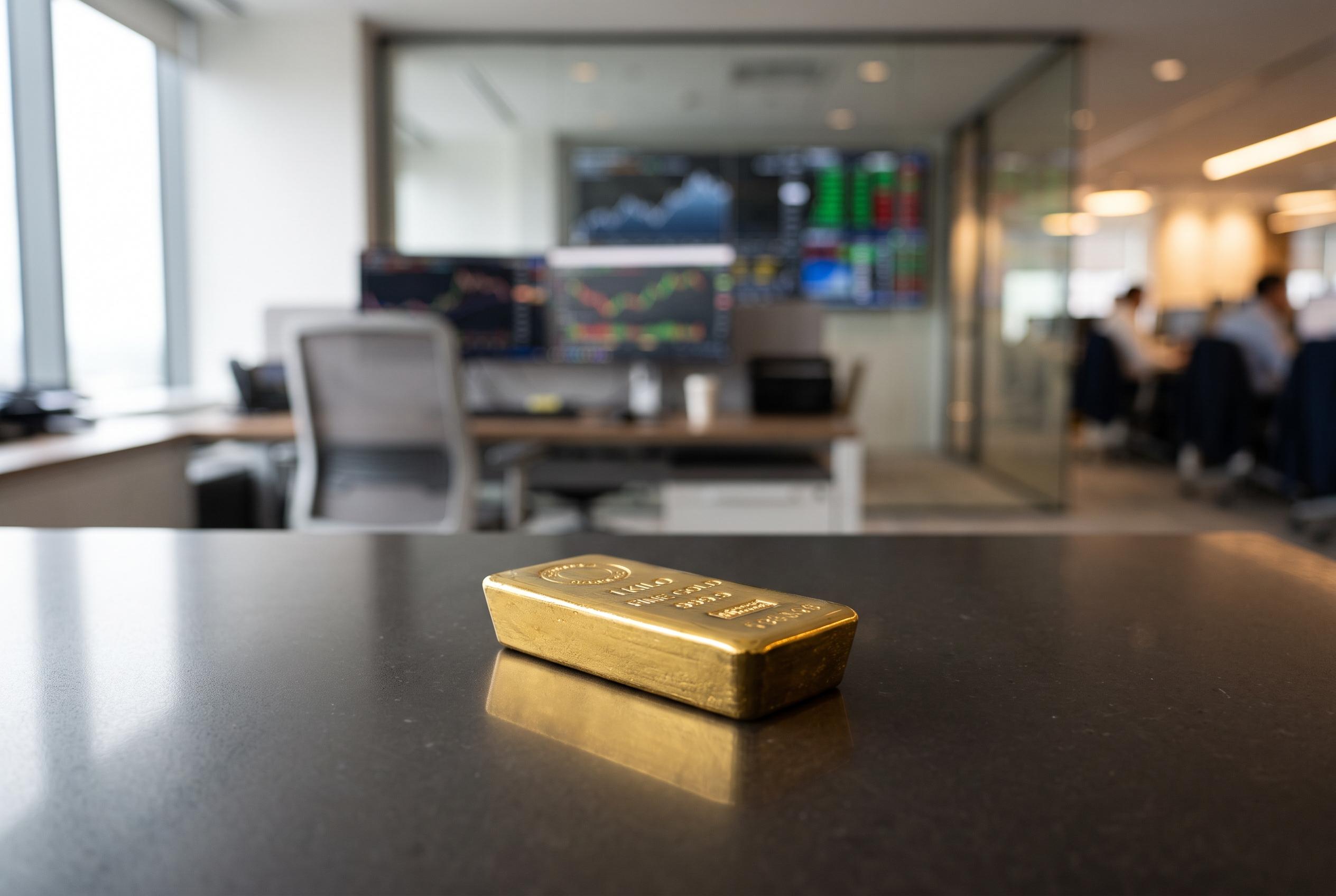

UBS remains optimistic about gold’s leap beyond $4,300, citing easing inflation, softer US labour data, and geopolitical tensions, as analysts debate whether the rally can sustain or face headwinds.
Gold’s sharp rebound has revived a familiar Wall Street question: is the metal merely catching its breath, or is another leg higher taking shape? UBS thinks the latter remains possible, even after a powerful run that lifted gold from about $4,000 an ounce to above $4,300 in recent trading.
In its latest view, UBS said the case for gold rests on cooling inflation, softer labour-market data and the expectation that the Federal Reserve will eventually move towards easier policy again. That combination, the bank argues, would reduce the appeal of cash and bonds relative to a non-yielding asset such as gold. UBS has also suggested that pullbacks towards $4,000 or below could offer strategic buying opportunities for investors willing to tolerate volatility.
The bank’s optimism is not based on gold’s price action alone. Analysts have pointed to a weaker US dollar, lower Treasury yields and renewed demand from central banks and Asian buyers as key supports. They have also noted that shifting expectations for Fed rates have helped sentiment, while concerns about geopolitical tensions, including risks around oil supplies and the Strait of Hormuz, continue to underpin demand for defensive assets.
At the same time, the wider market has not been uniformly bullish. Kitco reported in May that UBS trimmed its 2026 gold forecast to $5,500 an ounce, saying elevated yields and a strong dollar were still raising the opportunity cost of holding gold. Earlier this year, the bank had projected gold could reach $5,000 by September 2026 and potentially climb to $5,400 if US political and economic risks intensified. Other banks have also turned more positive: Investing.com reported that JPMorgan, HSBC, Goldman Sachs and UBS have all recently lifted their gold forecasts, reflecting the strength of the rally and persistent uncertainty.
Still, the path higher may not be smooth. The World Gold Council has said gold tends to benefit from financial-market volatility and geopolitical risk, but it also cautions that stronger growth, firmer inflation or a rising dollar can quickly change the picture. That leaves gold caught between two forces: the safety bid that has driven it higher, and the macroeconomic headwinds that could test whether a move towards $5,000 is durable or simply another powerful burst in a volatile market.
Disclaimer: This article is intended to inform and educate, not to recommend or endorse any financial product, investment or strategy. Please consider your own financial circumstances and seek professional advice where appropriate before making financial decisions.